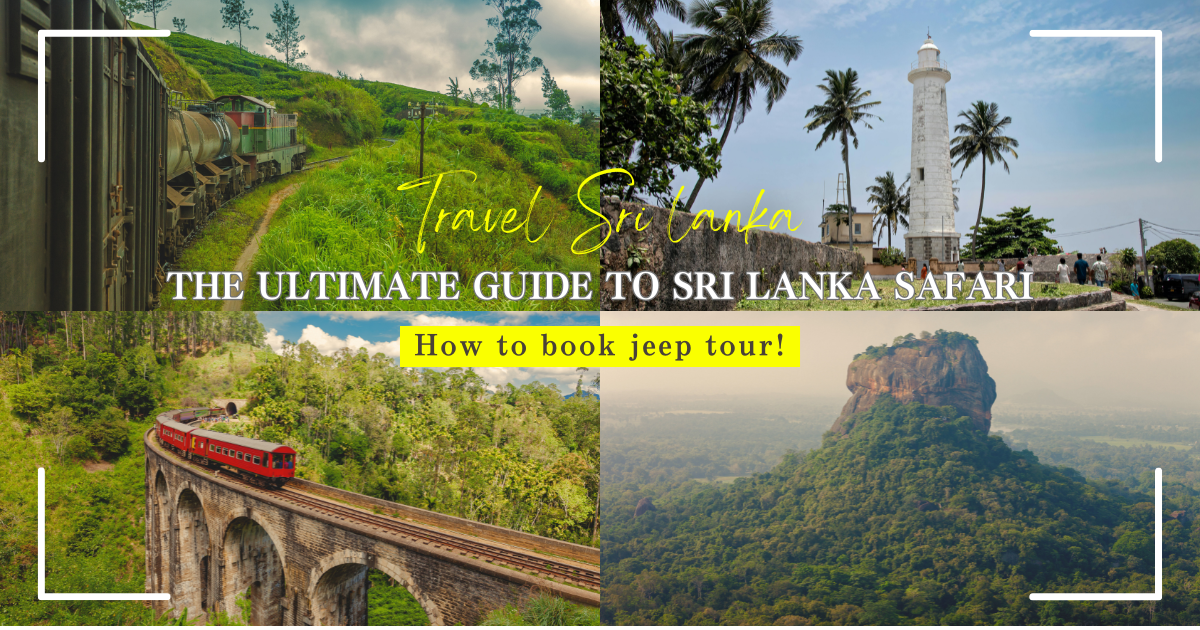
“Can you enjoy a proper safari without going all the way to Africa?” — Many would be surprised to hear that.
However, it is actually Sri Lanka that is the hidden gem for encountering wildlife in tropical jungles.
With approximately 10% of its land designated as national parks, Sri Lanka boasts one of Asia’s highest levels of biodiversity.
 Lily
LilyThis island, home to vast herds of wild elephants, thrilling encounters in one of the world’s premier leopard habitats, and even the largest creature on Earth, the blue whale, is truly a wildlife treasure trove.
Such is Sri Lanka that in 2023, it was selected as the “best country outside Africa for safari experiences”. Its appeal lies in the fact that it is safe for families with children to enjoy, as there are very few man-eating predators such as lions.
 Raja
RajaCome on, hop aboard a jeep in the South Asian paradise of Sri Lanka and set off on an adventure into the real wild world!
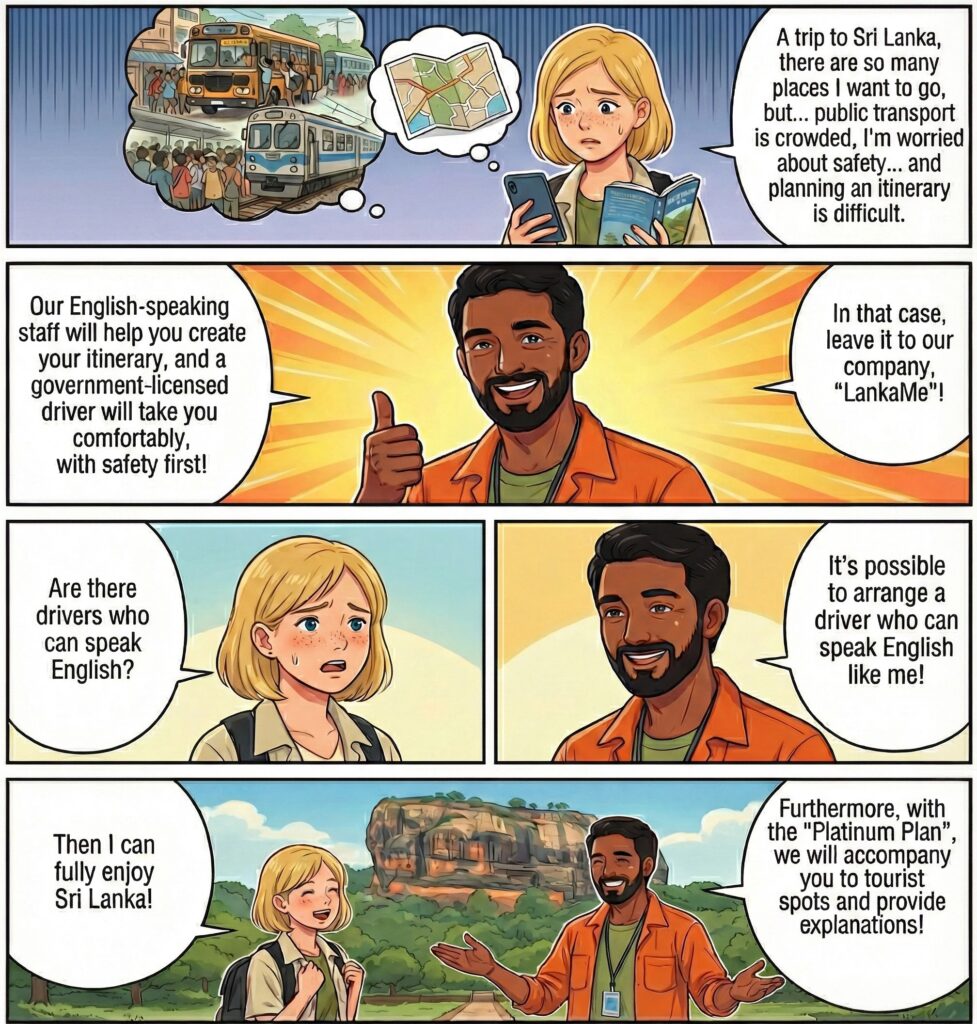
LilyFor jeep tours, our Lanka Mee Platinum Plan includes the option for a driver to be arranged! We can also accompany you in the jeep and provide commentary!
 Dilshan
Below are the prices for the jeep tours! Credit card payments are accepted!
| 1 ppl | 2ppl | 3ppl | 4ppl | 5ppl | |
|---|---|---|---|---|---|
| Fururu Eco Park | 75USD | 90USD | 120USD | 140USD | 150USD |
| Minneria | 85USD | 140USD | 180USD | 240USD | 260USD |
| Kadulla | 90USD | 150USD | 190USD | 250USD | 270USD |
| Yalla | 90USD | 150USD | 190USD | 250USD | 270USD |
| Wilpattu | 90USD | 150USD | 190USD | 250USD | 270USD |

What is the appeal of Sri Lanka safaris?
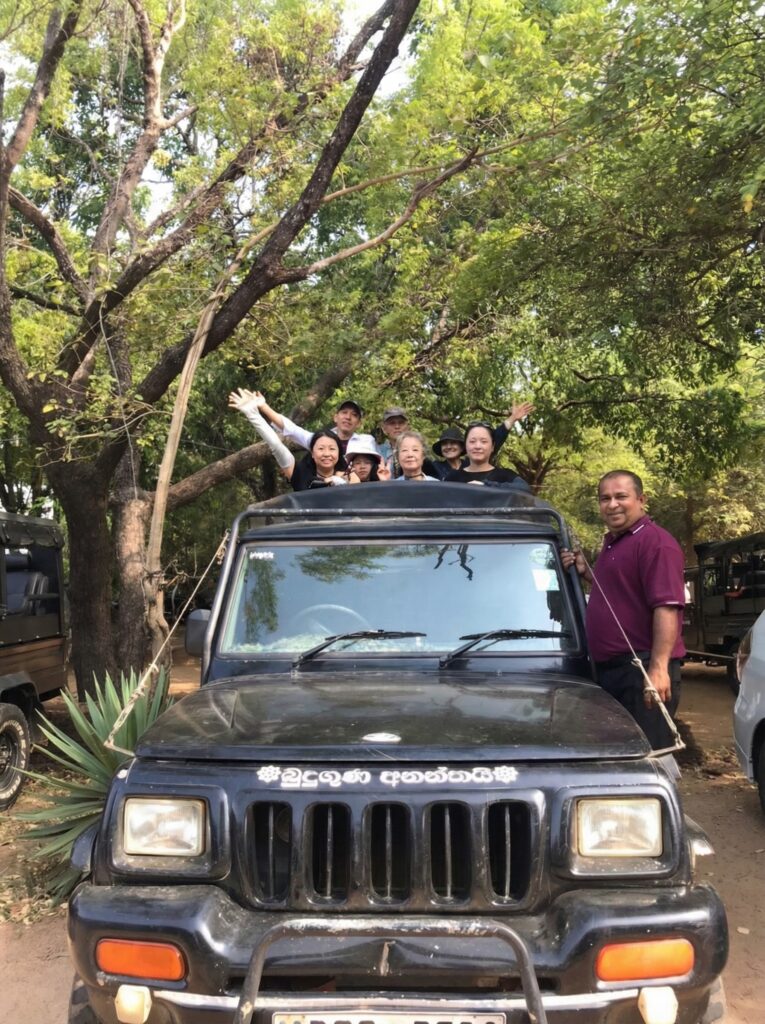
Sri Lankan safaris are exciting tours where you travel around national parks in open four-wheel-drive jeeps in search of wildlife.
Some may picture the African savannah, but in Sri Lanka too, authentic safari experiences are possible across more than 20 national parks. Here we introduce some of their attractions.
A treasure trove of wildlife
Sri Lanka is home to a diverse array of animals, ranging from large mammals such as elephants, leopards and bears to crocodiles, water buffalo, deer, monkeys and peacocks.
Particularly renowned are the endemic Sri Lankan subspecies of leopard and elephant.
These form part of Sri Lanka’s ‘Big Five’, with the addition of the sloth bear (Sri Lankan bear), the ocean’s blue whale, and the sperm whale, making five species considered ‘must-see wildlife’.
Across the entire island, wild birds number over 450 species (including 33 endemic species), while amphibians number approximately 140 species – among the world’s highest counts – demonstrating biodiversity of the highest level in Asia.
It is rare anywhere in the world to observe such a variety of animals within a single country, making it truly a safari paradise condensed into a small nation.
Encountering wildlife at close range
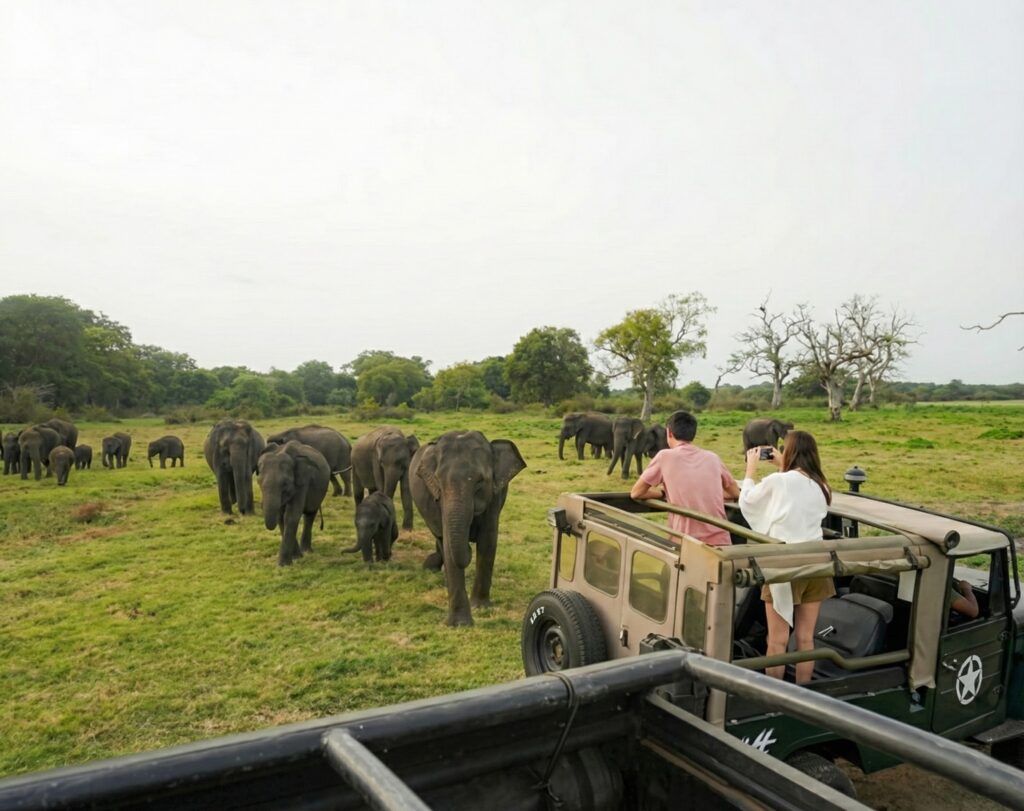
Explore Sri Lanka’s jungles in a jeep along unpaved jungle tracks, your heart pounding with anticipation as you wonder, “What will appear next?” This wild experience will captivate everyone from children to adults.
 Dilshan
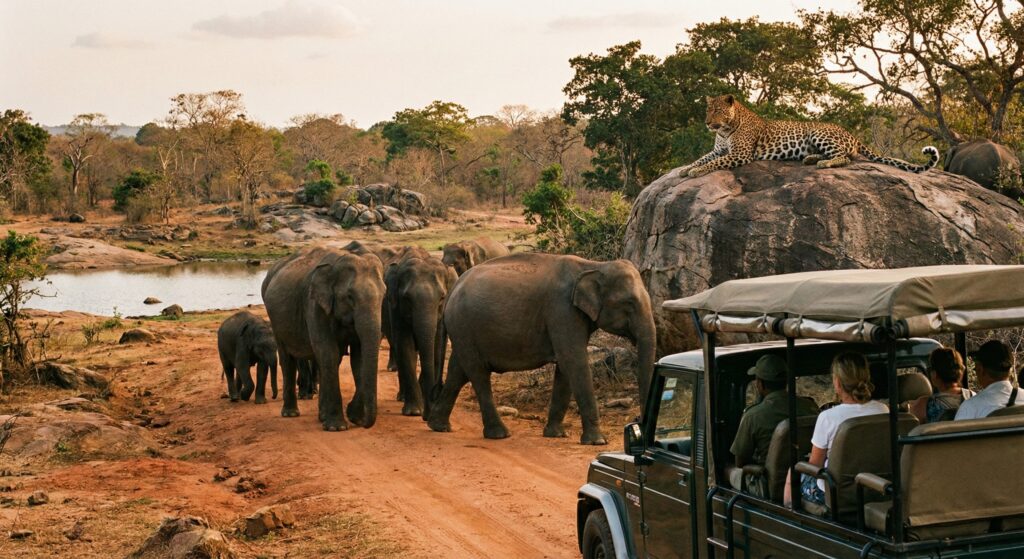
If you’re lucky, you might encounter a herd of elephants crossing right before your eyes, or witness the moment a leopard emerges from the shade of the trees.
For example, Yala National Park in the south is renowned as one of the world’s premier habitats for leopards, with its population density said to be among the highest globally.
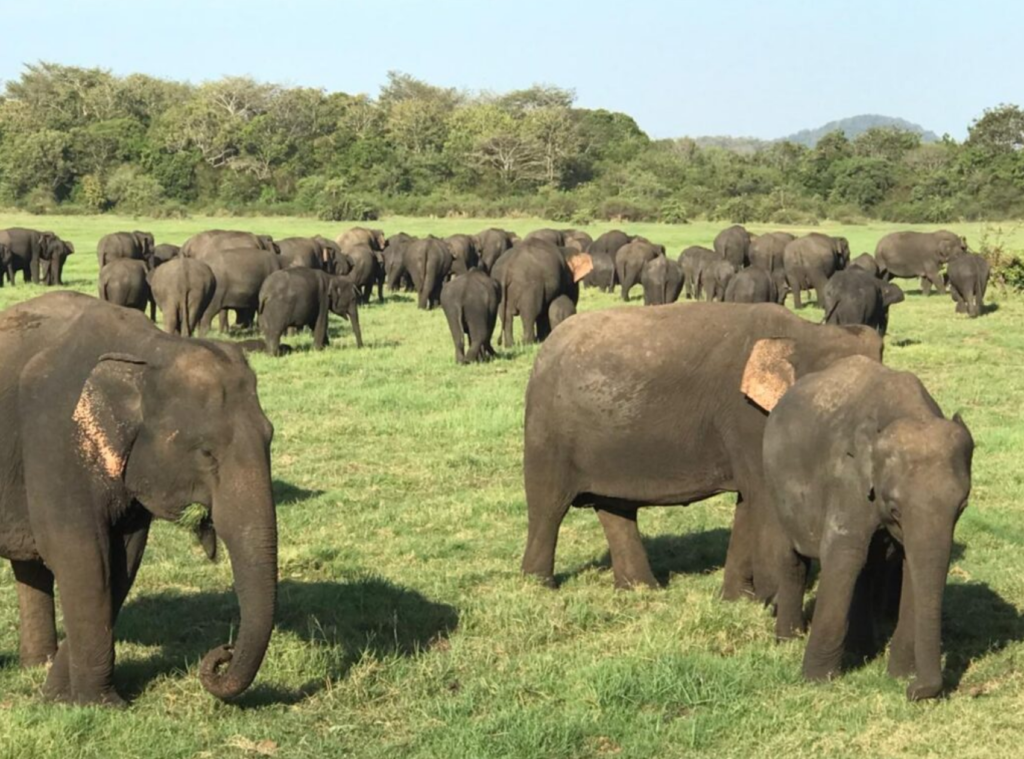
Setting off on an early morning safari increases your chances of encountering leopards. Furthermore, Minneriya National Park in the central region is renowned for the spectacle of over 100 wild elephants gathering en masse by the lakeshore during the dry season.
This ‘Elephant Gathering’ is so spectacular that it was selected by the global travel magazine Lonely Planet as one of the ‘World’s Top Ten Wildlife Events’. In Sri Lanka, you can experience such unforgettable moments up close on an affordable itinerary.
Family-friendly and accessible
What makes Sri Lanka safaris so appealing is their safety and accessibility. With virtually no man-eating predators such as lions or cheetahs present, families with children can participate with relative peace of mind.
Indeed, many travellers bring young children along, and heartwarming anecdotes have been reported, such as “the highlight of my three-year-old’s trip was encountering wild elephants.”
DilshanMoreover, Sri Lanka offers direct flights from Japan, making it easy to plan your itinerary, and safari fees are more affordable than in Africa.
LilyFor example, a jeep safari in Yala National Park starts from around ¥10,000 per person (approximately $75), inclusive of the park entrance fee, making it considerably more affordable than high-cost African safari tours.
Moreover, as most parks can be explored in half a day, they offer the advantage of being easily combined with other objectives such as World Heritage sightseeing.
Indeed, even on itineraries centred around cultural heritage visits, slipping in a half-day safari midway should add a delightful contrast to the journey.
As outlined above, safaris in Sri Lanka offer an appealing experience that combines both encounters with abundant wildlife and convenience that allows the whole family to enjoy themselves with peace of mind.
It’s easy to see why people say, “If you’re going to Sri Lanka, a safari is an absolute must!” Next, we’ll introduce recommended spots by area, specifically covering which national parks you should experience a safari in.
Recommended Safari Spots in Sri Lanka by Region
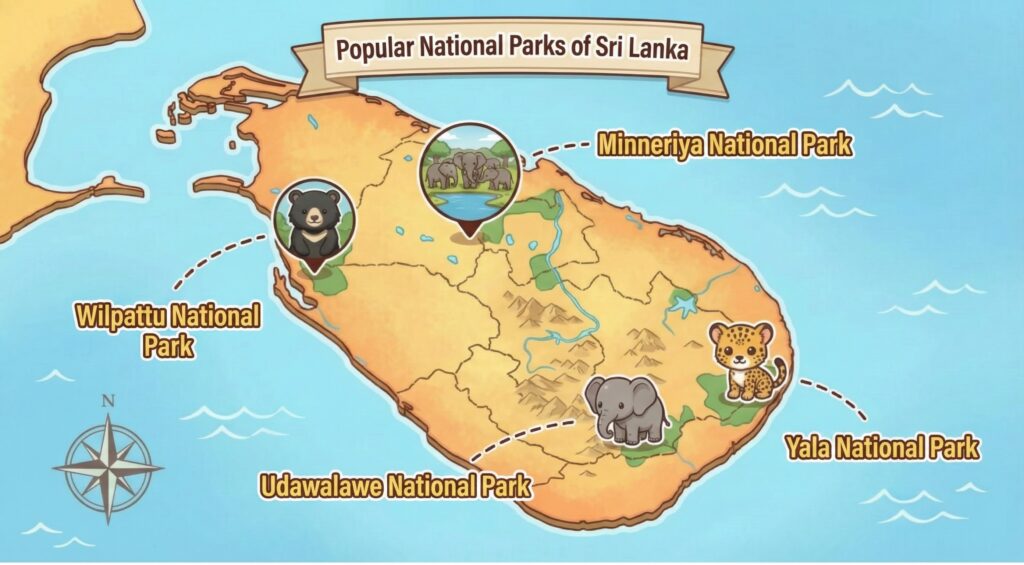
Sri Lanka boasts national parks across the island where safaris are possible, but for first-time travellers, the following four main areas are recommended.
We explain the characteristics and highlights of each, along with how to arrange a jeep.
Yala National Park (Southern) – The most popular safari spot for encountering leopards
Located in south-eastern Sri Lanka, Yala National Park is the country’s most popular safari destination. Spanning approximately 979 km² (the second largest in the nation), its vast expanse encompasses diverse environments including dry scrubland, grasslands, lakes, and coastline.
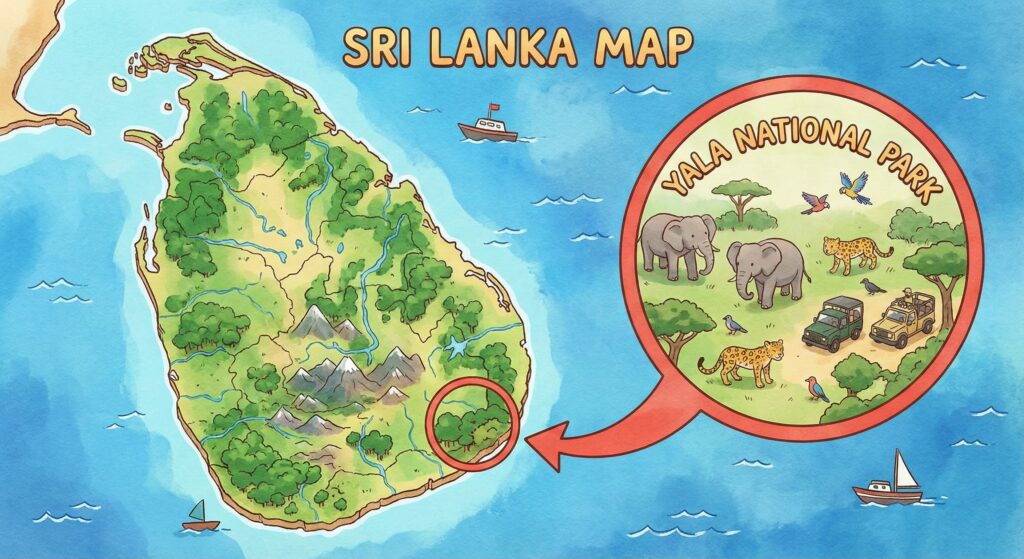
Yala is divided into Zones 1 to 5, with the characteristics of each zone as follows.
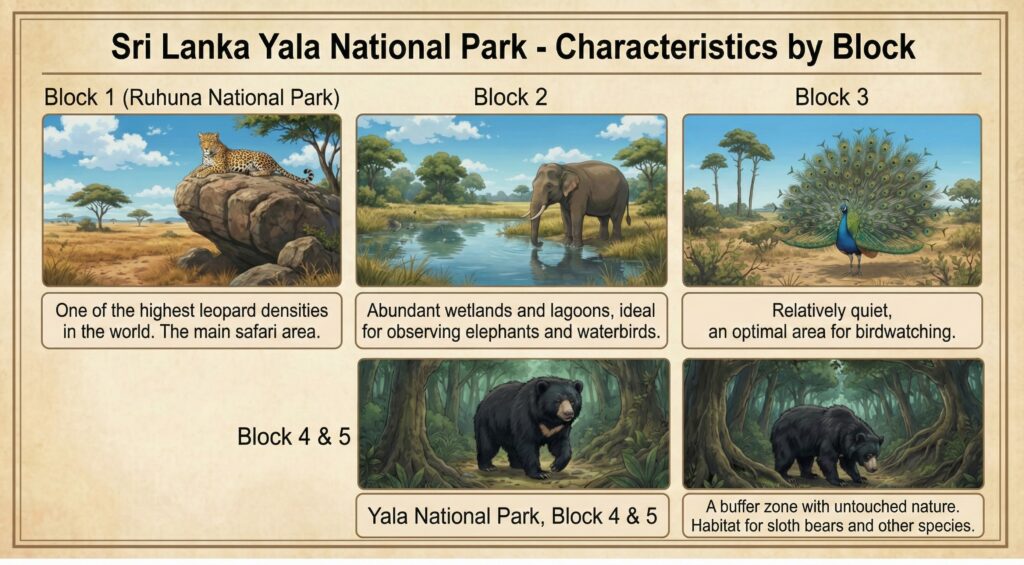
| Block 1 | Highest density of leopards in the world. The main safari area. |
| Block 2 | Abundant in wetlands and lagoons. Best for observing elephants and waterbirds. |
| Block 3 | Relatively quiet. The ideal area for birdwatching. |
| Block 4 & 5 | Buffer zone with untouched nature. Habitat for sloth bears and other wildlife. |
DilshanThe greatest attraction here is the Sri Lankan leopard!
LilyAn estimated 40 to 50 individuals inhabit the park, boasting one of the world’s highest densities. With a bit of luck, you might even encounter a leopard crossing the road during an early morning safari…
However, they are extremely rare, with sightings said to occur roughly once every three or four visits. If you’re specifically hoping to see leopards, the morning safari departing shortly after the park opens at 6 a.m. is your best bet.
Elephants are also frequently encountered alongside leopards. Whilst large herds are uncommon in Yala, numerous Asian elephants live here either alone or in small groups, often creating dramatic scenes as they cross directly in front of jeeps.
Moreover, there are wild boar, deer, monkeys, crocodiles (peering out from the water), water buffalo, and colourful peacocks – the list is endless. Wild birds are also abundant, with around 200 species, and with a bit of luck, you might encounter the elegant sight of a wild peacock displaying its feathers.
RajaOn the other hand, Yala’s popularity means that safari jeeps are constantly numerous, and when animal sightings are reported by radio, vehicles gather en masse, sometimes causing ‘jeep traffic jams’.
Dilshanarticularly around the main gate on the south side, crowds tend to gather, so those wishing to observe quietly may wish to consider tours using alternative entrances such as the Kataragama Gate on the east side.
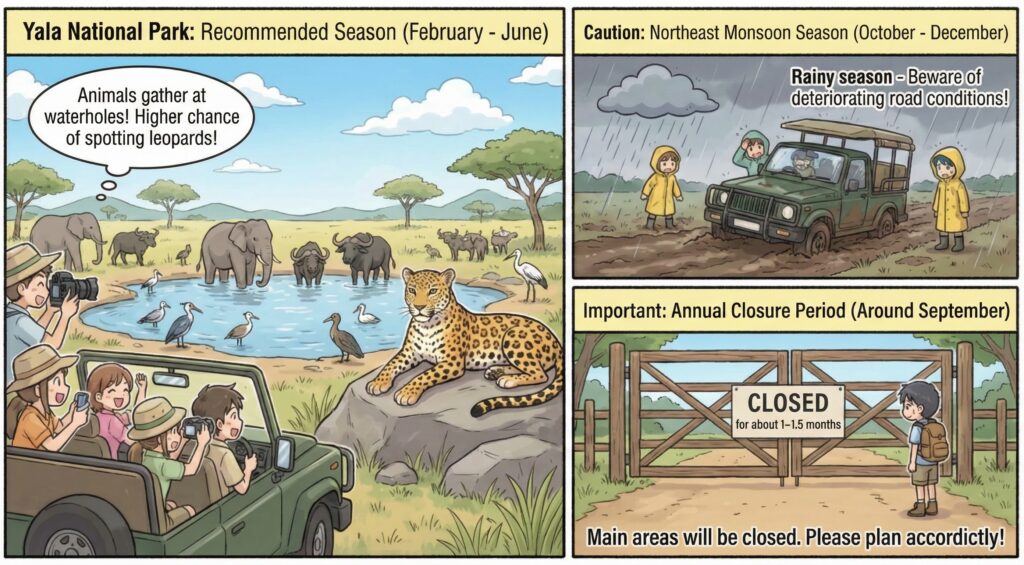
It should also be noted that Yala is divided into five blocks, with the main area closing for approximately one to one and a half months each year around September (for environmental conservation purposes).
The best season is from February to June, with the period after the rainy season ending being particularly favourable as animals tend to gather around water sources.
Conversely, during the rainy season around September, trails become muddy and some areas may be closed. Conditions vary depending on the time of visit, so please check the latest information beforehand.
Park entry permits can be purchased in advance via the government’s official e-service, but this is for the “ticket only” and separate from arranging a jeep.
LilyYala cannot be driven through independently (self-driving is not permitted). Be sure to book a jeep!
DilshanAs mentioned earlier, Lanka Mee can arrange a jeep for you! There’s no need to worry about pick-up points or similar details!
For those who wish to make their own arrangements, please refer to the following. The main Jeep booking sites are listed below.
| Site name | Bookable items (examples) | Features and Additional Information |
|---|---|---|
| Viator (Tripadvisor系) | Private jeep (morning/afternoon options available), Tissamaharama transfers and numerous other plans | Many plans offer free cancellation up to 24 hours prior. Plans where admission fees are charged separately are clearly marked, making it easy to confirm whether they are included or not. (Viator) |
| Yala Safari Holidays | Morning, afternoon and full-day jeep safaris in Block 1/5/6 (Lunugamwehela). Packages including accommodation and transfers are also available. | Comprehensive arrangements from ticket purchase to collection. Operated by dedicated drivers with local expertise. (Yala Safari Holidays) |
RajaThe most straightforward full-day jeep tour is Viator’s this tour (click)! You can select your own hotel for pick-up (hotels near Jetwing Yala, Hilton Yala, etc.)!
 Dilshan
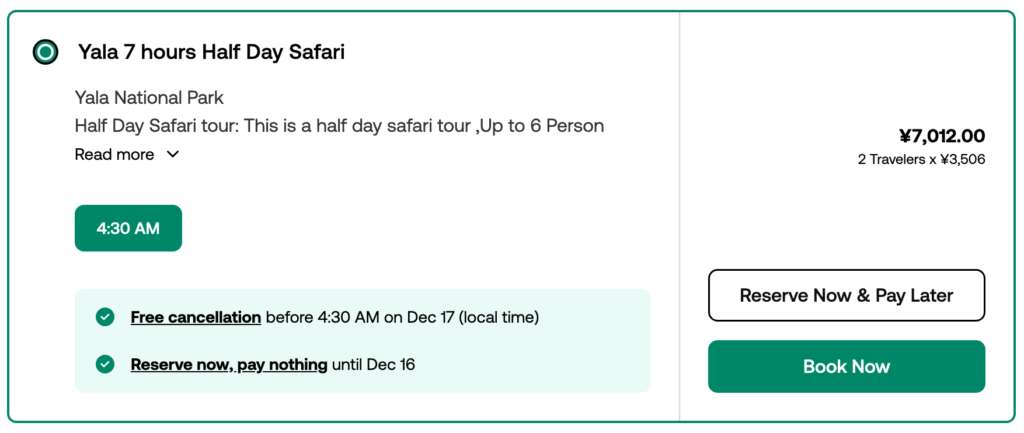
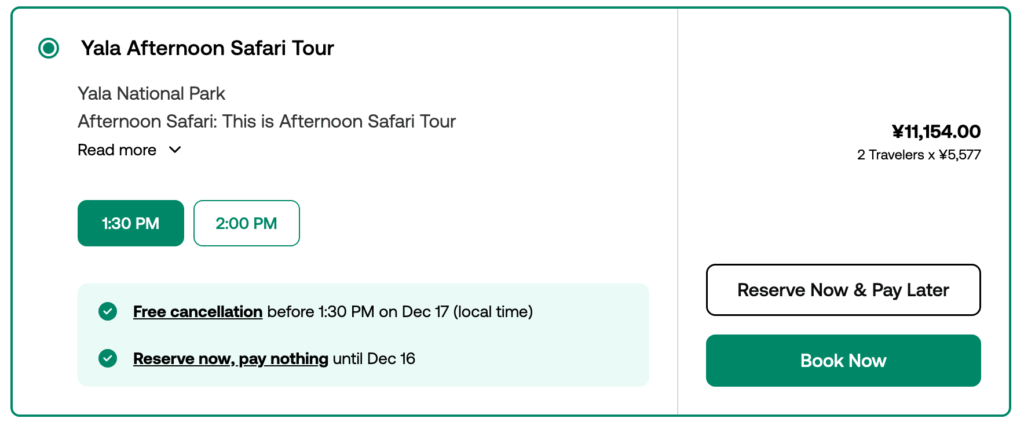
The most straightforward half-day jeep tour is this one (click)! You can choose between jeep tours starting at 4:30 am, 1:30 pm, or 2:00 pm! Pick-up locations can also be specified as nearby accommodation hotels (such as those near Jetwing Yala or Hilton Yala), as mentioned above!
 Lily
LilyWith our LankaMe Platinum Plan, should you encounter any uncertainties while in the country, we can arrange for the tour company to contact you and clarify matters!
DilshanDoor-to-door transfers are naturally available to Yala National Park, so please utilise this service as part of your itinerary! As Sri Lanka’s public transport system is underdeveloped, chartering a taxi is the most practical option.
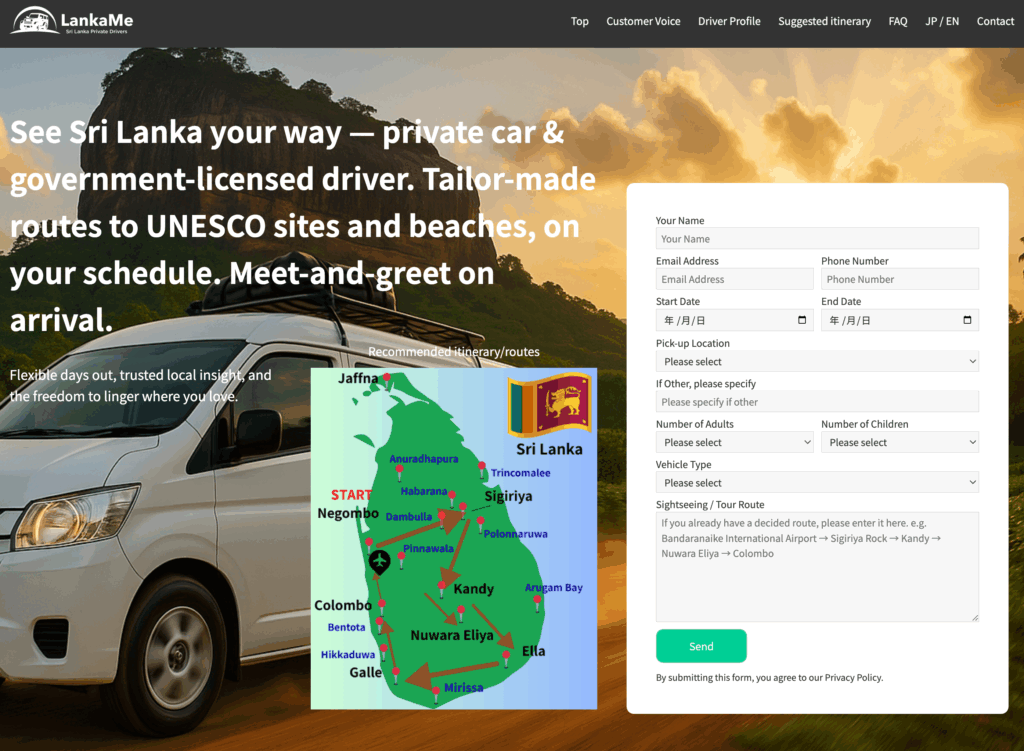
Udawalawe National Park (Southern) – A paradise for wild elephants, ideal for beginners
Udarwalawe National Park is situated in the southern inland region, approximately a 1.5-hour drive from Yala.
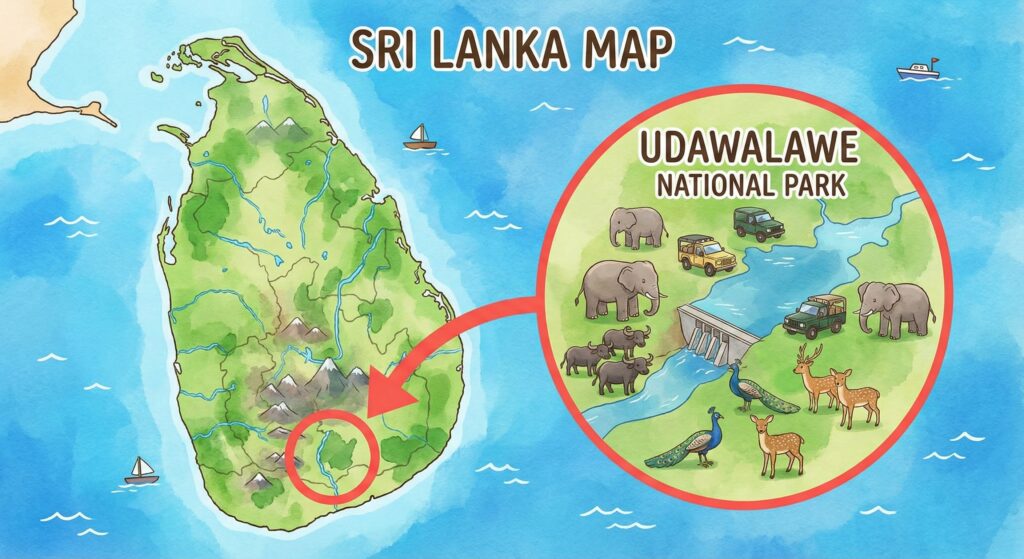
This park is renowned, as its name suggests, for its exceptionally high population of wild elephants. Across its vast, arid savannah-like grasslands, elephants can always be seen grazing or bathing somewhere, and it is said that one is almost certain to encounter Asian elephants here.
LilyIndeed, some travellers report encountering dozens of elephants during a three-hour safari. For families with children in particular, the sheer power of seeing these magnificent creatures up close promises to be an unforgettable experience.
The star attraction is, of course, the elephant, but you can also observe a diverse array of other animals, including water buffalo, crocodiles, monkeys, deer, and wild boar. Birds are also abundant, with peacocks, eagles, and colourful tropical songbirds visible throughout the park.
With a bit of luck, you might encounter the dynamic sight of a peacock spreading its feathers. Additionally, a very small number of leopards inhabit Udawarawe, but sightings are extremely rare – consider yourself extremely fortunate if you do spot one. (As most visitors come specifically to see elephants, it’s best not to get your hopes up about leopards).
Udawarawe, while not as large as Yala at approximately 308 km², is characterised by its open terrain, which makes it easier to spot wildlife.
DilshanThere are not as many safari vehicles as in Yala, and some visitors have remarked that ‘there were frequent periods when no other jeeps came into view’.
The safari takes approximately three hours, which is relatively short, so it should be easy to complete without becoming bored, even with small children in tow.
The park also houses an orphan elephant sanctuary (Elephant Transit Home), where visitors can observe the daily milk feeding of the baby elephants at set times. We recommend stopping by before or after your safari to see the adorable baby elephants drinking their milk.
RajaOfficial guidelines explicitly state that driving within the park is restricted to safari vehicles registered with the Department of Wildlife Conservation (DWC). Local information also specifies that “private vehicles are not permitted to enter the park; a dedicated jeep is required“.
DilshanAs mentioned earlier, Lanka Mee can arrange a jeep for you! There’s no need to worry about pick-up points or similar details!
For those wishing to make their own arrangements, we recommend referring to the following tours.
| Site name | Bookable items (examples) | Features and Additional Information |
|---|---|---|
| Viator | Private / Half-day (approx. 3–4 hours) / With pick-up and drop-off / Includes admission ticket or separate etc. | Many plans offer free cancellation. Plans requiring separate ticket purchase are clearly marked, making it easy to confirm whether tickets are included or not. (Viator) |
| Udawalawe Safari Fun | 3-hour, 4-hour, half-day or full-day private jeep tours, can be combined with ETH visits | You can choose a pricing structure that includes the entrance fee. Within the Udawalawe area, complimentary hotel transfers are available, and instant communication via WhatsApp and similar platforms is straightforward.(udawalawesafarifun.com) |
Park entry permits can be pre-booked and paid for via the government official e-service (separate from jeep arrangements).
Wilpattu National Park (Northwest) – A hidden gem for tracking leopards amidst tranquil wilderness
Wilpattu National Park, stretching across the north-western region near Anuradhapura, is Sri Lanka’s largest national park (approximately 1,317 km²).
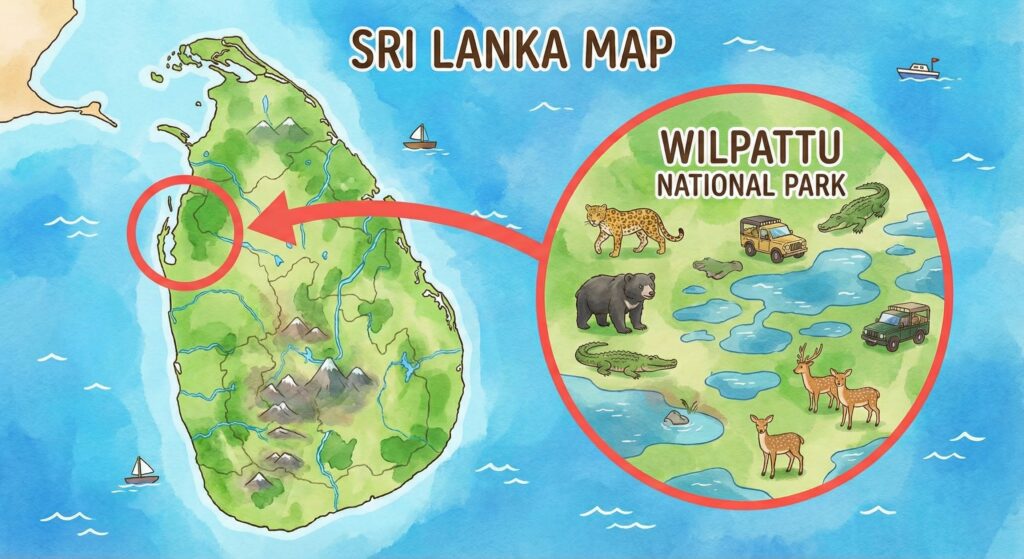
Its expanse is approximately twice that of Tokyo’s 23 wards, and numerous natural lakes and ponds, referred to as ‘villas’, are scattered throughout the grounds.
RajaWith fewer tourists and untouched natural landscapes remaining, it has gained attention in recent years as a hidden gem safari destination.
The animals that can be seen include elephants, bears (sloth bears), wild boar, deer, crocodiles, and a wide variety of birds, but the main attraction remains the Sri Lankan leopard.
Indeed, Wilpattu’s leopard population is said to exceed that of Yala, with some even calling it “the most highly recommended park for anyone simply wanting to see a leopard”.
However, the grounds are immensely vast and the undergrowth is dense, so encounter rates cannot be compared across the board.
DilshanNevertheless, among seasoned safari-goers, many seem to favour Wilpattu over Yala for leopard spotting. The time spent holding one’s breath in the hushed, still jungle, waiting for a leopard to emerge from the thickets, must be a uniquely tense experience.
Wilpattu’s greatest charm is undoubtedly its vast wilderness enveloped in silence. Unlike other parks, jeeps rarely crowd together, allowing you to search for wildlife in such tranquillity that you may even wonder, “Are we truly the only ones here?”
Due to the terrain’s abundance of water bodies, one may witness scenes of waterfowl alighting upon the lake surface, or water buffalo coming to bathe, and occasionally crocodiles making an appearance. Even during the rainy season, the plentiful water sources make it easier for animals to remain within the park grounds. During the dry season, focusing your patrols around watering holes will allow for more efficient sightings.
Wilpattu is essentially open year-round and does not have regular closure periods like Yala (though it may close temporarily depending on rainfall).
LilyThe best season is generally considered to be from February to September. Conversely, from October to December, heavy rains brought by the north-west monsoon can cause some roads to flood, so caution is advised.
Accommodation in the surrounding area centres on eco-lodges in Anuradhapura town or near the park gates. While tourist infrastructure is not as well-developed as in the south, this offers the unique pleasure of immersing oneself in the great outdoors through tented stays or bungalow accommodation with a camping feel.
Entry permits (e-tickets) can be purchased in advancefrom the government’s DWC official e-service (QR code included). Official posts also state that this includes Wilpattu among the applicable parks.
DilshanAs mentioned earlier, Lanka Mee can arrange a jeep for you! There’s no need to worry about pick-up points or similar details!
For those wishing to make their own arrangements, we recommend referring to the following tours.
| Site name | Bookable items (examples) | Features and Additional Information |
|---|---|---|
| Viator(Tripadvisor系) | Private Jeep/Ticket included or separate, 4 to 12 hours duration, etc. | Many plans offer free cancellation. Easy-to-compare overview of transfers, duration, and inclusions/exclusions.(Viator) |
| WilpattuNationalPark.com(Sri Lankan Expeditions) | Morning (6–10)/Afternoon (14–18)/Full day (6–18) Private Jeep | Book instantly with credit card. Includes guided tour and park admission ticket, with clearly specified time slots.(wilpattunationalpark.com) |
Minneriya National Park (Central) – Cultural Triangle Safari: Encounter the Great Elephant Gathering
For a safari experience in the Cultural Triangle area of central Sri Lanka, dotted with World Heritage sites such as Sigiriya and Dambulla, Minneriya National Park is an absolute must.
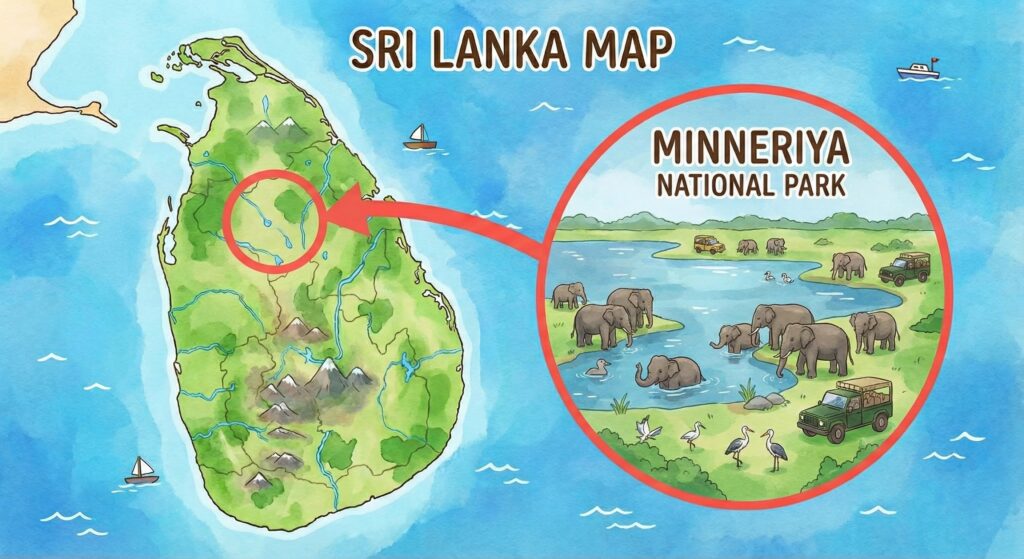
Covering a compact area of approximately 89 square kilometres, it is renowned for its ‘elephant gathering’, where over 100 wild elephants congregate each year during the dry season from July to October, drawn to the park’s reservoir (Lake Minneriya) in search of water.
You will be utterly captivated by the herds of elephants appearing one after another on the lakeshore during the evening safari. The sight of mother and calf elephants frolicking and bathing is truly magnificent, and the children’s eyes are sure to light up.
Indeed, reports from travellers visiting during the dry season in August indicate they were able to encounter herds numbering in the dozens.
LilyAt peak times, it is said that the number can reach nearly 300, making it a truly miraculous experience.
Minneriya is conveniently located within an hour’s drive of Sigiriya Rock and the Dambulla Cave Temple, making it easy to incorporate into your itinerary. A plan involving morning sightseeing at the ruins followed by an afternoon safari is entirely feasible.
The safari lasts only two to three hours, making it easily manageable even for families with young children. While you can observe buffalo, deer, crocodiles, and various birds besides elephants, the experience of seeing so many wild elephants in one place is truly precious and highly recommended for family trips.
Moreover, this area is adjacent to the Kaudulla National Park and Hulhu (Hulhu Eco Park), with elephants migrating seasonally between Minneriya, Kaudulla, and Hulhu.
LilyWith Lanka Mee, we can arrange the most suitable safari jeep for you, depending on the season and local conditions!
DilshanEntrusting arrangements to professionals is the best way to maximise your chances of seeing elephant herds at all times!
If you wish to make your own arrangements, please refer to the following website.
| Site name | Bookable items (examples) | Features and Additional Information |
|---|---|---|
| Viator(Tripadvisor系) | Private Jeep/Duration: 3–4 hours/Includes hotel transfers and more | Many plans offer free cancellation and pay later. Entrance fee included plans are also available (varies by product).(Viator) |
| Sri Lankan Expeditions | Afternoon Safari (e.g. 15:00–18:00) Transfer from Habarana, All-inclusive package | Jeep hire, park entrance fees and taxes included – clearly displayed pricing. Select your dates online → instant booking available.(srilankanexpeditions.lk) |
Entry permits (e-tickets) can be pre-booked and paid for via the government’s official DWC e-service. Safari vehicles must be DWC-registered and licensed (per the SLTDA’s official guidelines). Driving private vehicles within the park is not permitted.
LilyHere’s how to make a booking! Please see Viator’s here (click)!
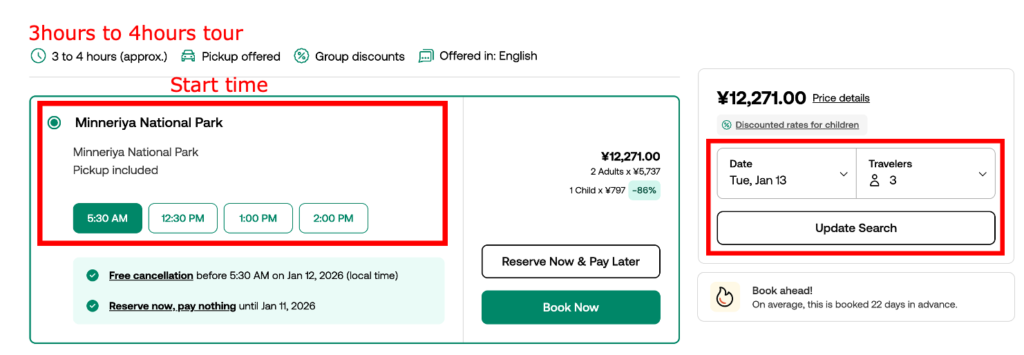
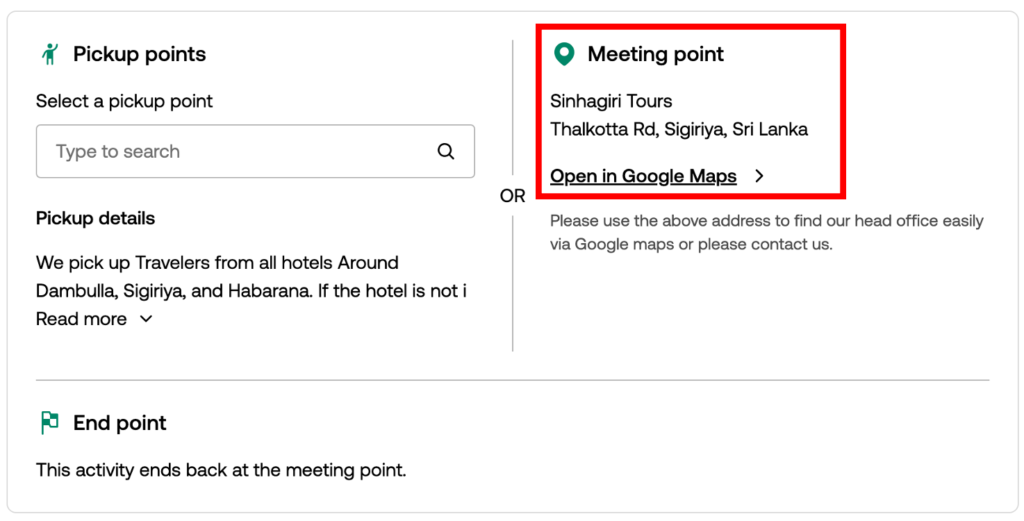
Scroll down to the pick-up point and note (or copy) the address and location on Google Maps below.
Heritance Kandalama is outside the designated pick-up points, so we cannot arrange a transfer to the hotel. Therefore, you will need to charter a taxi to the Meeting Point.
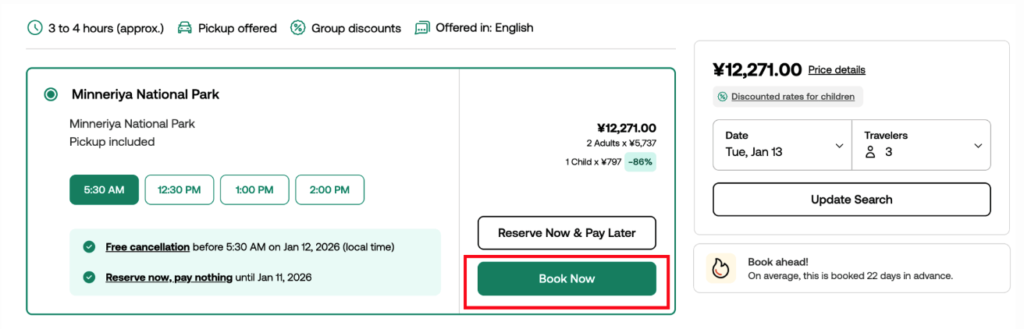
Then, scroll back up once more and click ‘Book Now’ to proceed with your reservation.
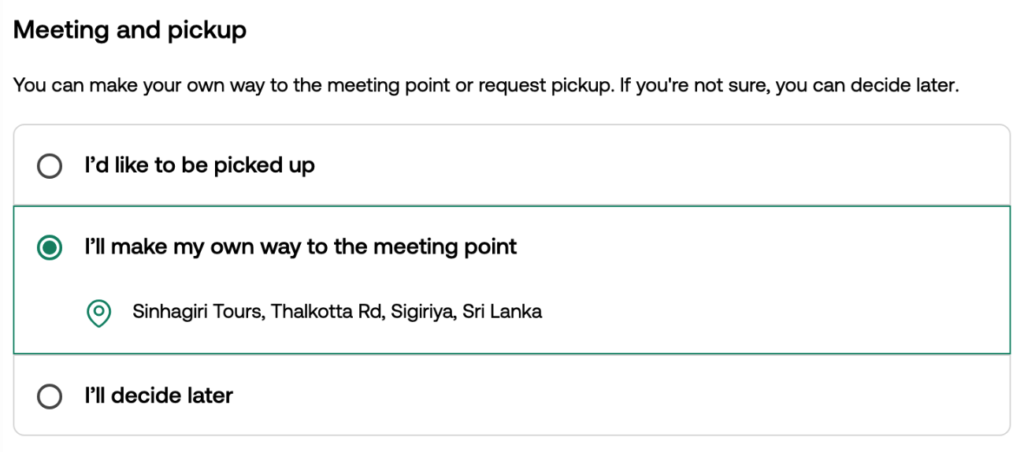
For Meeting and Pickup, I shall select “I’ll make my own way to the meeting point” and arrange for a chartered taxi to take me to the pickup point on the day.
Other notable safari spots
Beyond the above, Sri Lanka also boasts parks offering unique safari experiences.
- Bundara National Park (Southeast): A wetland area near Yala, renowned as a prime destination for birdwatching. As a migratory stopover, it offers unparalleled close encounters with diverse waterbirds including flamingos, making it irresistible for bird enthusiasts. Crocodiles and wild elephants also inhabit the park, providing tranquil surroundings for nature observation.
- Kumana National Park (Southeast): Located in the eastern part of Yala, this park is also known as ‘Yala East’. It is also renowned as a bird sanctuary, where pelican and stork colonies can be observed. Elephants and leopards also traverse between Yala and here. With fewer tourists, it offers a more private safari experience.
- Garu Oya National Park (Eastern): Home to the island’s largest reservoir, this unique park offers the experience of a boat safari. Observe elephants swimming from the lake and flocks of waterbirds, enjoying a safari experience distinct from land-based safaris. Elephants can be seen year-round, though due to limited facilities, visiting via specialised lodge-based tours is the norm.
- Wasgamuwa National Park (Central East): Also renowned as an elephant habitat, it is known for the possibility of encountering the endangered Sri Lankan bear (sloth bear) if one is fortunate. Though visitor numbers are lower due to the time required to access it, one can enjoy safaris through pristine forests.
These are somewhat suited to intermediate to advanced travellers, but if you’re interested, do consider incorporating them into your itinerary. However, as some parks have poor road conditions or limited signage, it’s advisable to gather the latest information beforehand and visit with a reliable guide.
Comparison of Major National Parks
We have compiled a list of popular safari spots in Sri Lanka, summarising their features. We hope this proves useful for comparing and planning your travels.
| National Park Name | Area (region) | Principal animals and characteristics | Best season | Example Jeep Booking Website |
|---|---|---|---|---|
| Yala NP | Southeast (Hambantota District) | Leopards (world-leading population density), elephants, bears, water buffalo, diverse bird species, and more. Most popular attraction, but expect jeep traffic jams. Closed temporarily in September for major area maintenance. | Approximately February to June ※Partially closed in September | Veltra (Japanese) (Numerous tours departing from and returning to the south) |
| Wilpattu NP | Northwest (Anuradhapura Province) | Observe leopards (among the most abundant), bears, elephants, deer, waterfowl and other wildlife in tranquil surroundings. Lakes and ponds dot the landscape, with animals gathering at watering places being a particular highlight. | Approximately February to September ※ Be mindful of heavy rainfall from October to December | KLOOK (English) (Tours departing from Anuradhapura available) |
| Udawalawe NP | Southern (Sabaragamuwa Province) | Elephants (almost certain to encounter numerous), buffalo, crocodiles, monkeys, birds. Open grasslands make spotting animals easy, ideal for safari novices. | Around January to June (dry season) ※Relatively stable throughout the year | KLOOK (Colombo/Southern Departure Plans) |
| Minneriya NP | Central Region (Cultural Triangle) | Elephants (herds of over 100 during the dry season), water buffalo, deer, and birds. Elephant migration occurs seasonally from the adjacent Kaudulla National Park. Combines well with sightseeing at the ruins. | July to October (dry season) ※November to February: held in the adjacent park | Veltra (offering tours departing from Sigiriya) |
※Other options include the Bundala National Park (southeast), ideal for birdwatching, and the Galle Oya National Park (east), where safaris can be enjoyed from the lake. However, the above destinations are likely to be the standard choices for a first visit.
Summary & Key Points for Peace of Mind (Conclusion)
- Sri Lanka is a wildlife treasure trove, with approximately 10% of its land area designated as national parks, offering authentic safari experiences where you can encounter diverse creatures including elephants and leopards.
- Yala National Park, which boasts one of the world’s highest densities of leopards, and Minneriya National Park, where large herds of elephants can be seen, are just two examples of the distinctive safari spots found across the region. Each park offers a different experience.
- Sri Lanka Safari is perfect for families. With fewer big cats and a relatively calm environment in terms of safety, everyone from children to adults can enjoy thrilling adventures.
- Participation in the safari requires a jeep; if you are in Lanka Mee, we can arrange a jeep tour.
- Costs are relatively affordable, and as experiences can be completed in half a day to a full day, they are easily combined with other sightseeing. You can fully enjoy your Sri Lanka trip with a greedy plan combining World Heritage tours and safaris.
- The sight of wildlife up close from atop a jeep is guaranteed to move you. It will undoubtedly be the highlight of your trip. Prepare thoroughly and enjoy a safari adventure unique to Sri Lanka to the fullest!

コメント