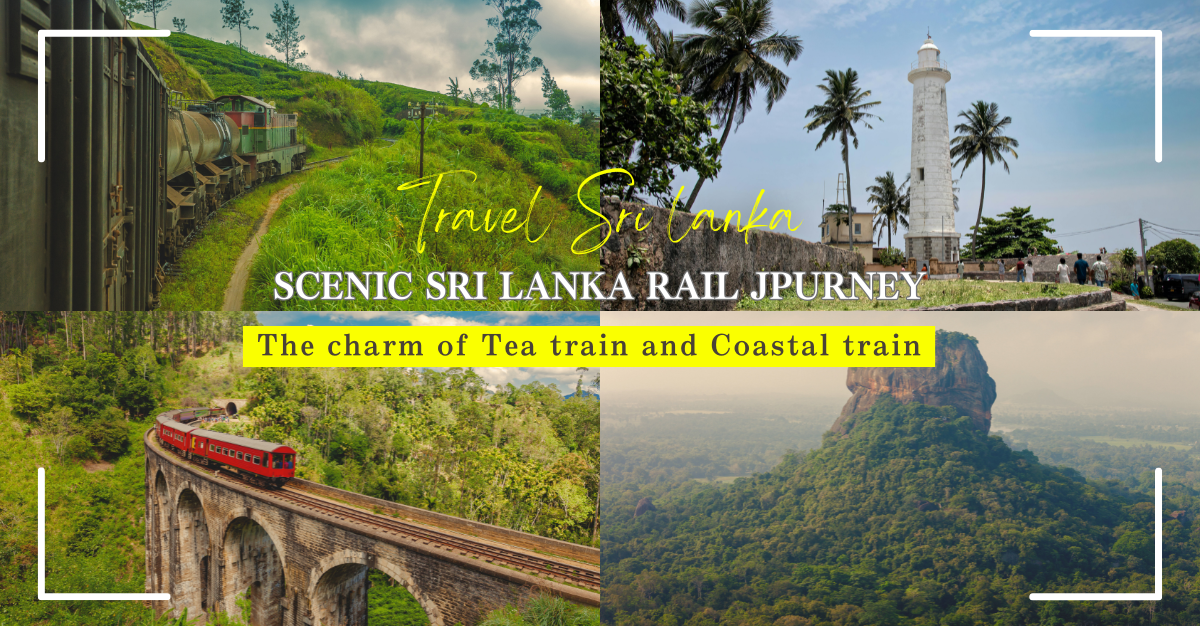
One of Sri Lanka’s must-see attractions is undoubtedly the Tea Train! In recent years, there has been a sharp increase in the number of visitors travelling to Sri Lanka specifically to experience the Tea Train.
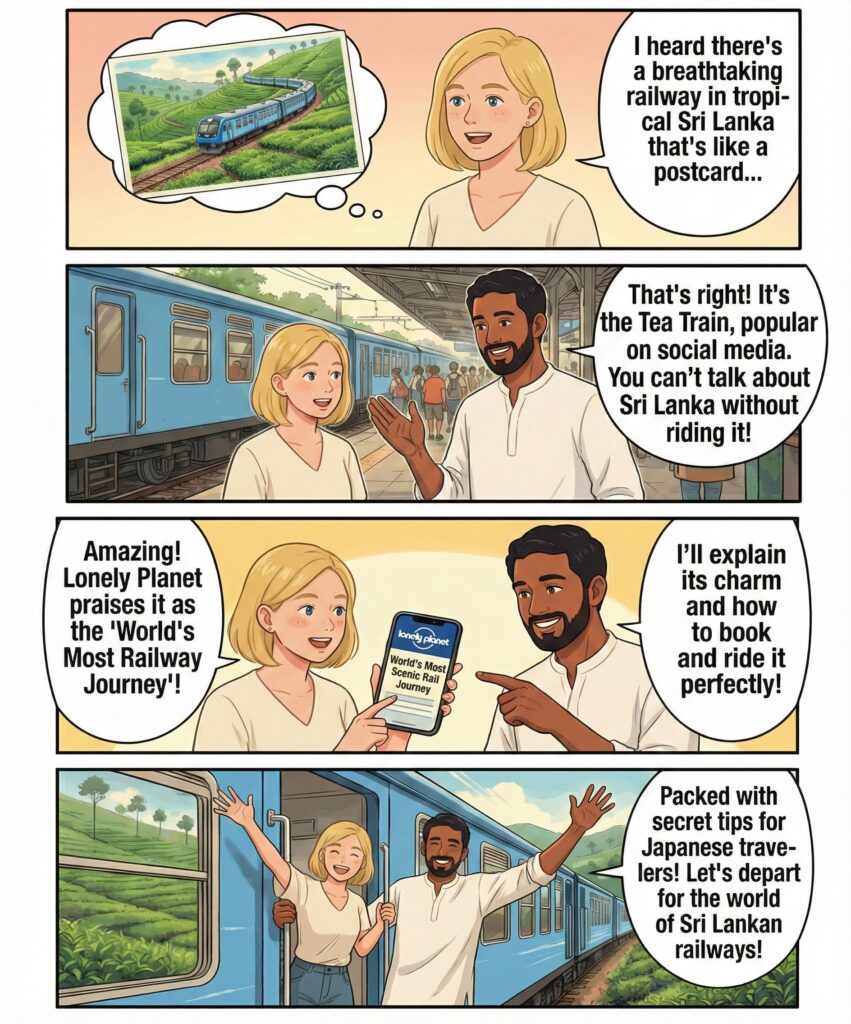
If you’re planning a trip to Sri Lanka, reading this article will give you a clear understanding of the key points for enjoying a scenic train journey with peace of mind.
Right then, let’s depart and guide you into the world of Sri Lankan railways!
The Charm of Sri Lanka’s Railways and Why the World is Taking Notice
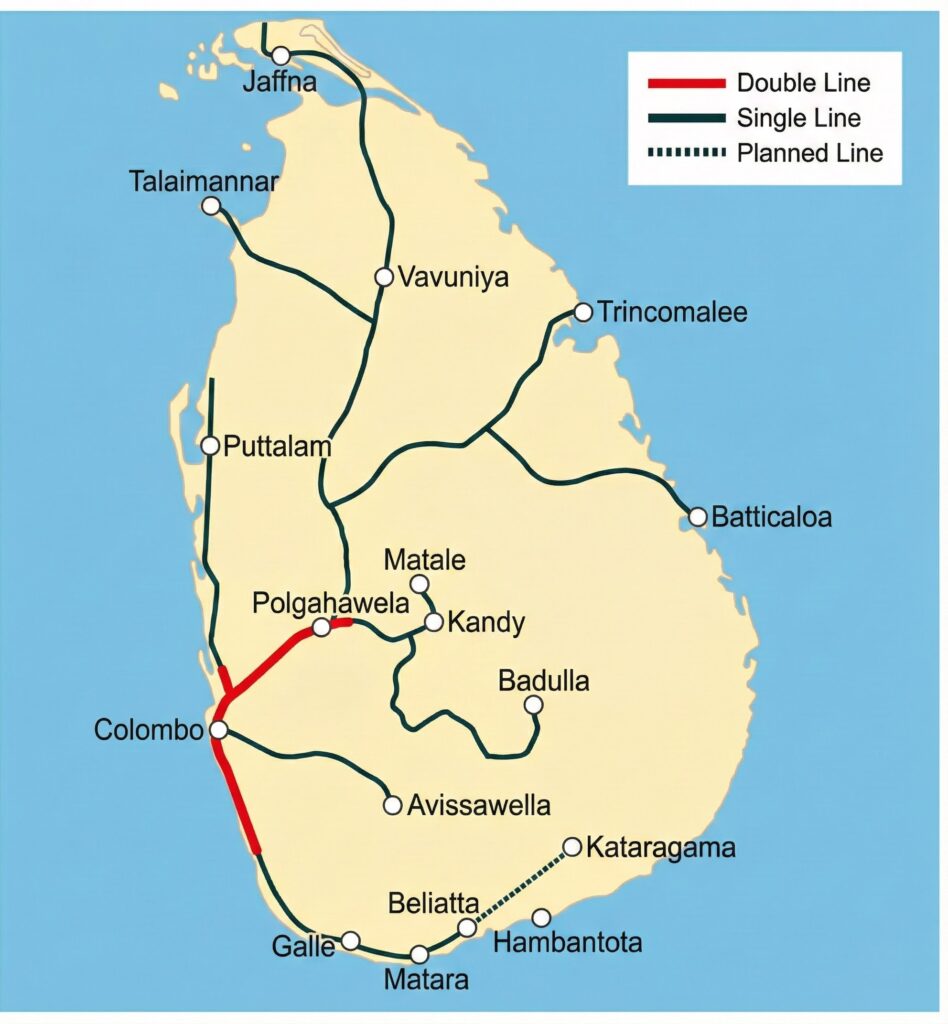
The railway network laid during the 19th-century British colonial era in Sri Lanka extends to a total length of approximately 1,560 kilometres, connecting various parts of the country.
The good old diesel trains, inherited from the age of steam locomotives, still run today, with no electrified sections whatsoever. While they have no connection to the latest high-speed railways, they exude a certain nostalgic and simple charm, evoking the sentiment of Japan’s Shōwa era.
 Dilshan
Above all, the most remarkable thing is the splendid scenery unfolding through the carriage window.
Sri Lanka’s railways are renowned worldwide for offering “scenic railway journeys”, with the Tea Plantation Line traversing the highlands and the Coastal Line running along the Indian Ocean particularly praised in numerous travel guides.
 Raja
RajaThe ever-changing panorama of majestic natural scenery unfolding beyond the carriage windows will captivate your gaze, making the very act of travelling by train the highlight of your journey.
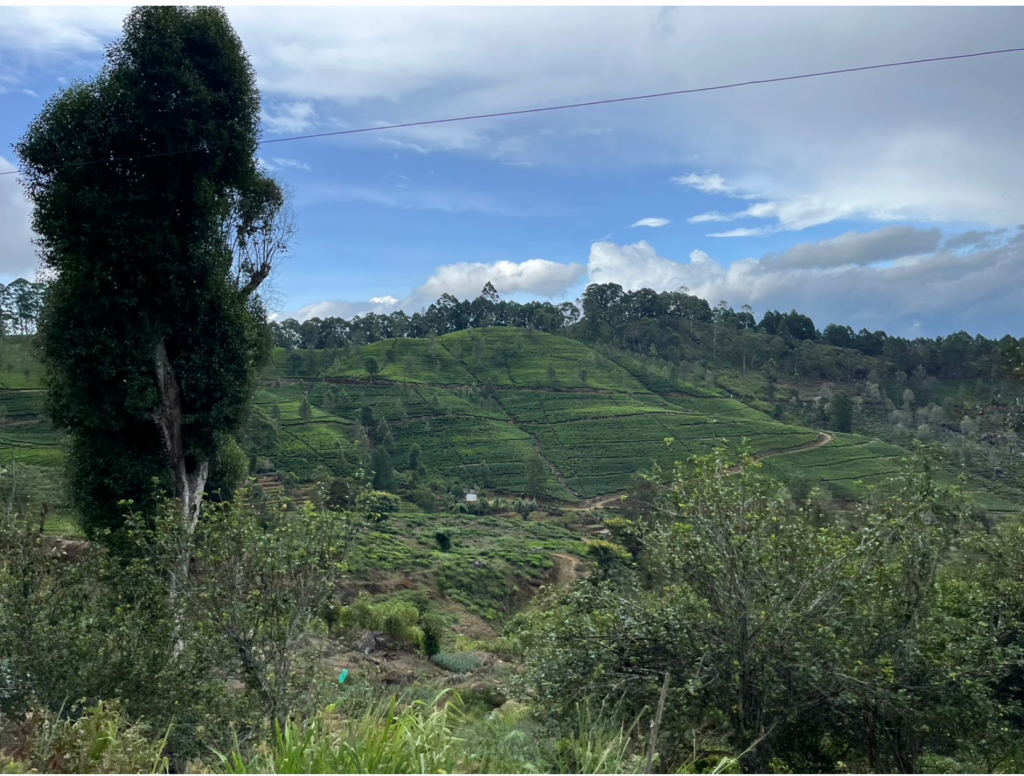
Vibrant green tea fields, mist-shrouded mountain ranges, jungles shaded by palm trees, waterfalls cascading into valley depths, and a sparkling coastline… With such a succession of ever-changing, breathtaking vistas, it is no exaggeration to call it the ultimate tourist attraction rather than merely a means of transport.
Furthermore, travelling by Sri Lankan rail offers an abundance of open and laid-back local experiences. Train windows are generally open, allowing you to feel the breeze on your face whilst enjoying the unique pleasure of being jolted along.
Doors remain open while the train is stationary, so some travellers sit with their legs dangling while taking photographs (※Please note safety precautions! See below).
When the train stops at a station, a vendor might board the carriage, offering freshly fried spicy snacks or sweet tea. The casual conversations and smiles exchanged between passengers offer a glimpse into the lives of local people – a unique pleasure of travelling by rail.
Word of mouth has spread these charms, and now the Sri Lankan railway has become a dream destination for travellers worldwide.
 Lily
LilyBy 2025, tourist numbers aiming to ride the train will surge dramatically, with tickets becoming so popular they’ll be in high demand.
RajaWe’ll cover what to do if you can’t make a reservation and how to enjoy yourself later on!
What is the Scenic Tea Train (Kandy to Ella)?
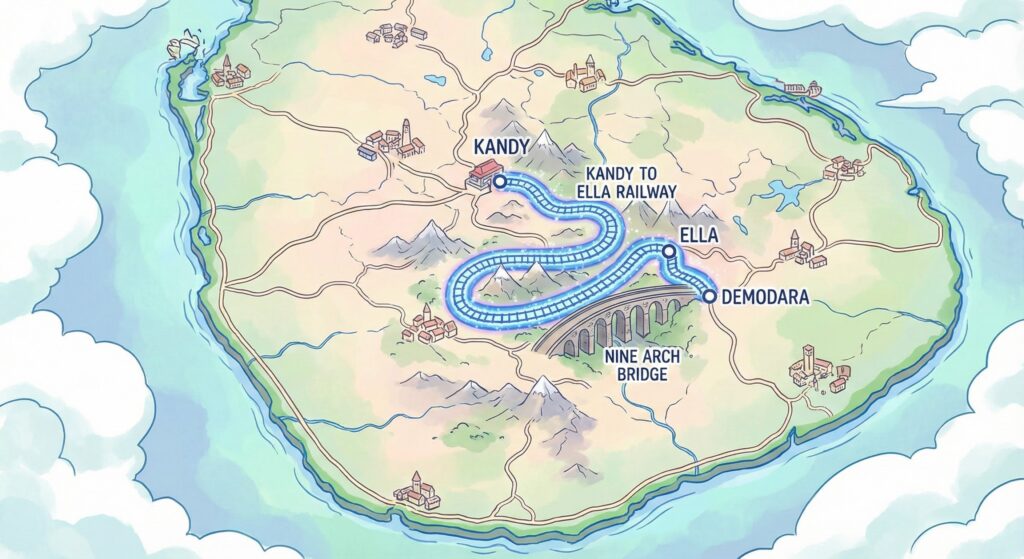
The “Tea Train” is the affectionate name given to a railway line running between Kandy and Ella in Sri Lanka’s Central Highlands, which is immensely popular with tourists.
 Lily
LilyThe journey from the ancient city of Kandy to the highland resort town of Ella, covering approximately 120 kilometres and a vertical drop of around 1,300 metres over 4 to 6 hours, is renowned for its world-class beautiful tea plantation scenery.
DilshanI’ll also share some tips later on what to do if you can’t get a reserved seat!
Originally opened during the British colonial era to transport tea and coffee from the mountainous regions, this railway line now captivates travellers worldwide as the “world’s most photogenic train journey”.
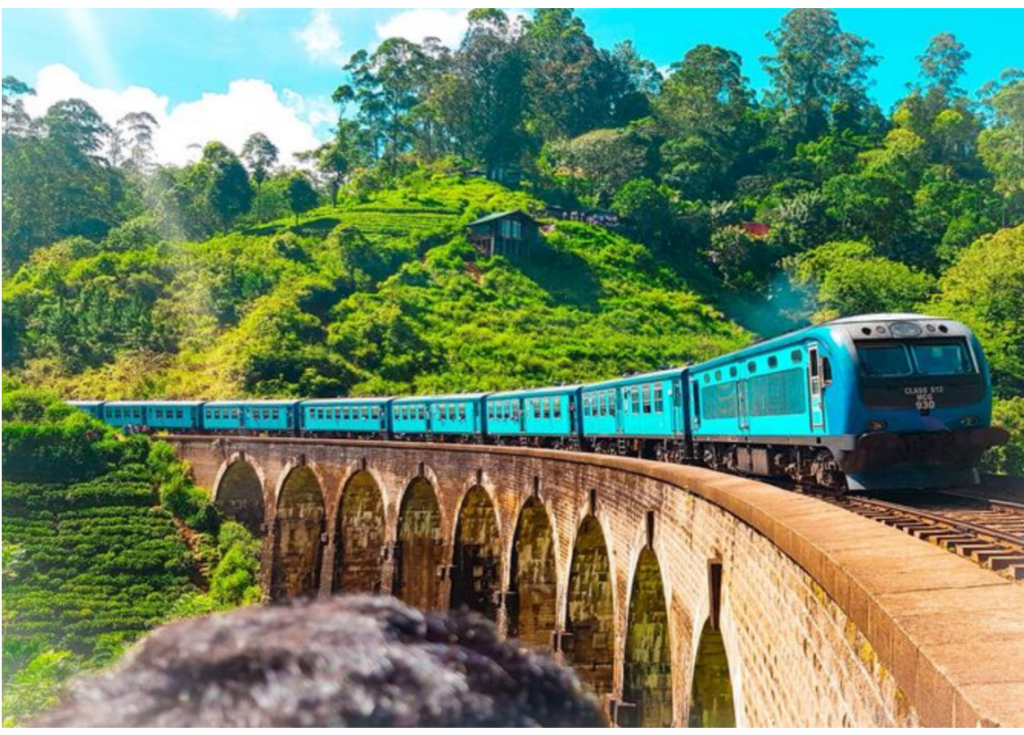
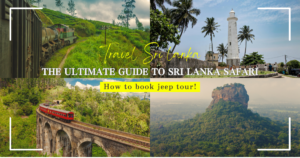
True to its nickname, tea plantations stretch along the railway line, creating a splendid contrast with the blue carriages of the passing trains.
Along the route lie hill stations such as Nuwara Eliya at around 1,800 metres above sea level, with the entire area being a renowned tea-growing region. From the train window, breathtaking vistas unfold without end: tea plantations like a green carpet, mist-shrouded forests, viaducts spanning the mountains (including the famous Nine Arch Bridge near Ella), and waterfalls plunging into valley depths.
 Lily
LilyIncidentally, the Nine Arch Bridge is beyond Ella station, so do buy a ticket to Demodara!
The train climbs leisurely through the mountainous terrain, resulting in gentle rocking, and may stop for several minutes at small stations along the way. During these stops, local children can be seen waving, and passengers disembark to enjoy taking photographs.
The reputation as ‘the world’s most beautiful railway journey’ is no exaggeration, and it’s easy to see why everyone from professional photographers to Instagram travellers flock here for the photogenic views from the open doors.
According to Lonely Planet, the global guide to world travel, this Colombo–Badulla line (including the tea train section from Kandy to Ella) has been ranked seventh in the 2025 edition of the World’s Best Trains.
It is gaining further popularity as a major attraction for tourism in Sri Lanka.
Tea Train: Look Here! Scenic Highlights and Boarding Points
Here are the highlights you’ll want to keep in mind to make the most of your journey on the Tea Train.
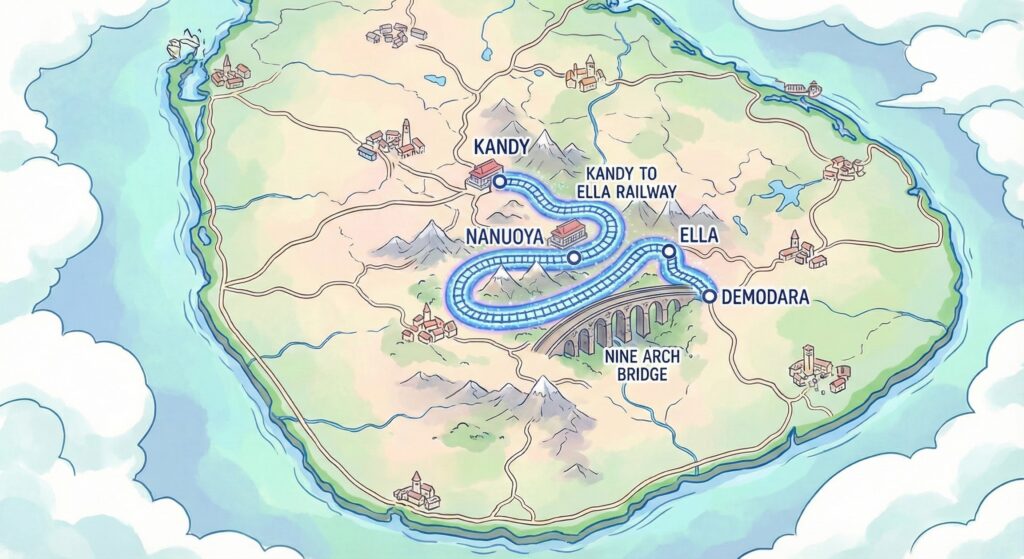
First, regarding the scenic highlights, the journey begins near Kandy, traversing jungle and rural landscapes while gradually ascending in altitude. Tea plantations begin to appear in earnest around the highland resort of Nuwara Eliya (nearest station: Nanu Oya).
 Raja
RajaThe section from Nanuoya to Ella, particularly when departing from Kandy, is renowned for its spectacular scenery. To see the Nine Arch Bridge, travel to Demodara station.
Meanwhile, when travelling in the opposite direction from Ella, beautiful tea plantations stretch out for about an hour before reaching Nanu Oya. On clear days, the panorama of blue skies, fresh green tea fields, and colourful houses dotted throughout is truly exquisite.
As the weather tends to deteriorate in the afternoon, leading to accumulated delays, departing in the morning is preferable for efficiency. The Tea Train operates several times daily, but the 8–9 o’clock departures are particularly popular with tourists.
Whichever side you sit on, you can enjoy views of the tea fields. However, as the side offering the widest vistas changes depending on the section of the journey, it’s a good idea to move to the area near the doors with opening windows or the deck if they’re free, as this makes taking photographs easier (during busy periods, please don’t push yourself; enjoy the scenery safely from your own seat).
Seat Class and Fare: Which to choose – First Class, Second Class or Third Class?
Sri Lanka Railways offers three main classes: First Class, Second Class, and Third Class. Each offers varying levels of comfort and facilities, so choose according to your travel style. Key features are summarised below.
| Class | Features | Notes |
|---|---|---|
| First | Comfortable reclining seats with air conditioning. Some trains also feature observation cars and sleeping compartments. | All seats are reserved. Many carriages have windows that do not open, making it difficult to experience the scenery firsthand. |
| Second | Equipped with a fan and generally allows windows to be opened. Seats with moderate cushioning. | Some reserved seating available. Popular with tourists for enjoying the scenery while feeling the breeze. |
| Third | No electric fans; simple seating such as wooden benches. Frequently crowded with many users. | Primarily non-reserved seating (reserved seating available on some major express services). Fares are extremely low. |
Fares are remarkably inexpensive compared to Japan; for instance, even the long-distance journey between Colombo and Ella costs only a few hundred Sri Lankan rupees (a few hundred yen) for a second-class unreserved seat, while a first-class reserved seat costs around 2,000 to 3,000 rupees (approximately £5〜£10).
DilshanFor shorter distances, fares are even more affordable, with the main section of the Tea Train—Kandy to Nanu Oya to Ella—costing just a few hundred to a thousand yen.
If your budget allows, opting for first class for greater comfort is a good choice. However, for enjoying the scenery, second class offers a more open feel as you can leave the windows wide open.
Third class is aimed at backpackers seeking a local flavour, though ‘prioritising affordability and travelling alongside local passengers’ can also prove an interesting experience.
However, if it is your first time travelling for sightseeing, we recommend choosing second class or above.
On major routes, reserved seats are now sometimes available in third class (e.g., specific carriages on express trains), so third class does not necessarily mean you will be standing. Nevertheless, during peak periods, trains are often packed, and standing is a common occurrence.
LilyHowever, during peak periods, second-class carriages are often unavailable for reservation. For those in this situation, here’s a recommended approach!
紅茶列車の予約方法:オンライン予約と当日券の攻略
Tea Train ticket reservations can be made via the official online booking site of the Sri Lanka State Railways.
If it’s sold out on the official site, do check the private site 12asia.go as well. The price may be slightly higher, but there might still be seats available for booking.
Tickets go on sale 30 days prior to the intended travel date (approximately one month in advance). Although passport details are required, the procedure itself is relatively straightforward.
DilshanPopular sections often sell out immediately upon booking opening, and during peak tourist seasons (the dry season from December to March and long holiday periods), reserved seats on the Kandy–Nanu Oya section are snapped up in seconds.
If your desired train does not appear when searched on the official website, it is highly likely that it is already fully booked with no available reservation slots (※ This does not mean the train itself does not exist).
First, mark one month prior to your travel date on your calendar; ideally, you should attempt to make an online booking as soon as reservations open.
The official website is in English and may be slow at times, but if you wish to secure your seat reliably, do give it a try. Once your booking is complete, an e-ticket will be issued, and on the day of travel, you can board by presenting the QR code on your smartphone screen.
Please note that seat selection (specifying a particular seat number) is not possible at the time of booking; carriage and seat numbers are automatically assigned after ticketing.
LilyEven if you are unable to secure a ticket, there is still a way.
One method is to purchase a same-day ticket (unreserved seating) at the station ticket office and board the train. Long-distance local trains such as the Tea Train often have unreserved second-class and third-class carriages attached alongside reserved-seat carriages. Therefore, even if reserved seats are fully booked, you can still board the train by going to the station.
Of course, there is no seat guarantee and you may have to stand if it’s full, but even then, you still have the chance to enjoy the spectacular views.
DilshanAs mentioned earlier, the most scenic section lasts only about one to two hours, so if you can tolerate standing for a short while, it’s well worth trying for a seat in the unreserved carriages! Here’s how to do it!
Don’t miss the Tea Train—even in peak season: insider tips.
The tea train is so popular that securing a reservation is difficult, but there is a clever approach: “enjoying only the best parts without riding the entire scenic route“. The key is to focus your journey on the most scenic sections mentioned earlier.
DilshanFor instance, the stretch from Kandy to Nanu Oya Station offers the most beautiful views of tea plantations, specifically the approximately two-hour section between Gampola and Nanu Oya.
By travelling by train only on this section and using a car for the journeys before and after, you can save time by avoiding the need for lengthy train journeys. Such a plan becomes feasible when combined with a chartered taxi service.
RajaWith our LankaMe service, you can enjoy just the section you wish to travel, with pick-up at your boarding station and drop-off at your alighting station to continue your journey!
Numerous testimonials have been received from actual users of LankaMe.
「Though I panicked when the reservation was fully booked, thanks to the local driver’s consideration, I managed to board the tea train from Gampola Station—where the tea plantations begin—to Nanu Oya Station」
LilyThis way, you can leave large luggage in the car and travel light with only your valuables, allowing you to relax and enjoy the scenic railway journey even in crowded carriages.
Moreover, the journey between Gampola and Nanuyaya takes two hours. Even if you cannot secure a seat in the unreserved carriages, this is ample time to enjoy the scenery while standing, and it is actually rather convenient for concentrating on taking photographs.
Sample itinerary:
Depart your hotel by private car in the morning, heading for Gampola station in the highlands. Rest assured, your driver will have pre-arranged third-class tickets for the day’s journey (unreserved seats are purchased locally). Board the Tea Train at Gampola Station and enjoy the spectacular views from near the doors or by the windows. After alighting at Nanuoya Station, you’ll rejoin your waiting private car, which will have proceeded ahead, and continue directly to sightseeing in Nuwara Eliya… that’s the flow.
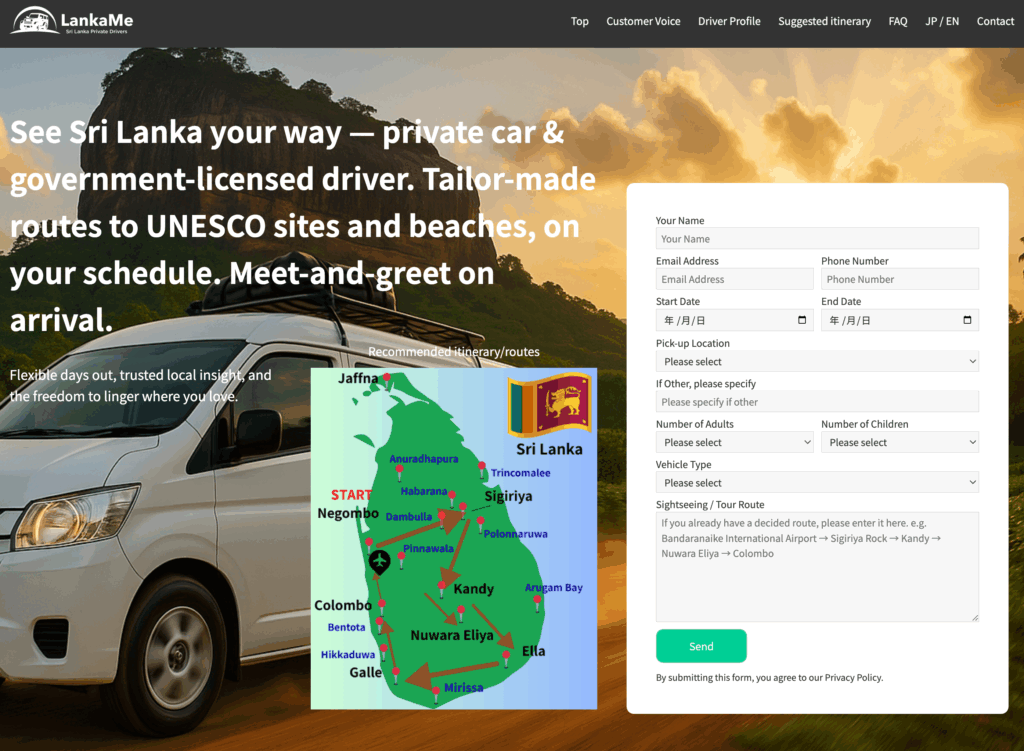
At our company, Rankami, we provide support for this “taxi charter + partial journey on the Tea Train” package. As prior consultation with Japanese-speaking staff is available, those feeling uncertain may wish to consider using our service.
By engaging a taxi charter company, you can entrust everything to them – including station transfers and securing third-class tickets. This makes it a valuable ally should you be unable to secure a reservation.
 Dilshan
By making such arrangements, even if you find yourself thinking, “I can’t get a reservation, so I’ll have to give up on the Tea Train…” there are still opportunities available.
Even a short journey offers a truly memorable experience, so please don’t give up – find the best way to enjoy the Tea Train experience!
Another coastal scenic train journey between Colombo and Galle
Alongside the Tea Train, the Coastal Railway linking the capital Colombo with the ancient southern city of Galle is also popular.
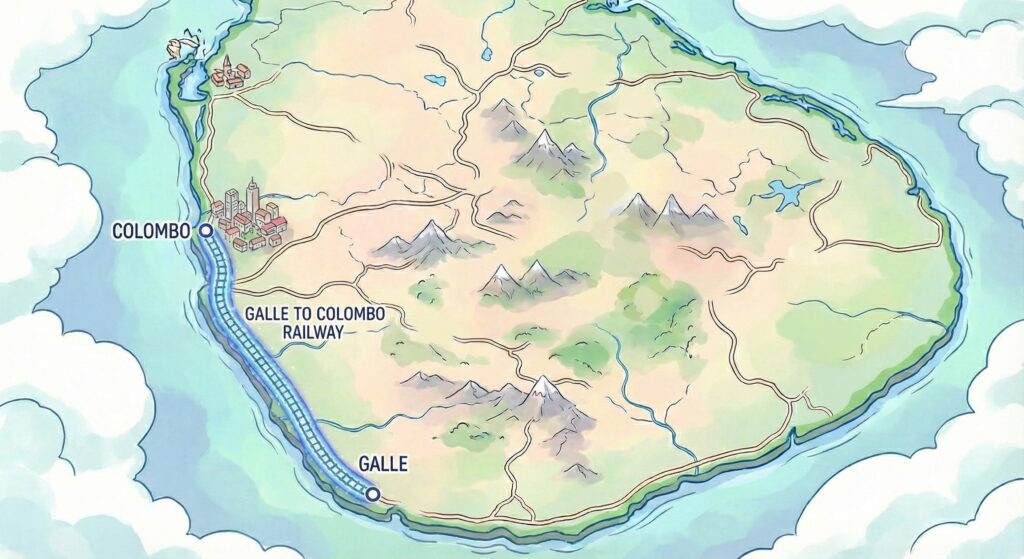
Covering approximately 120 kilometres in two to three hours, the journey literally runs along the Indian Ocean coastline, allowing you to gaze at the emerald-blue sea throughout the entire ride.
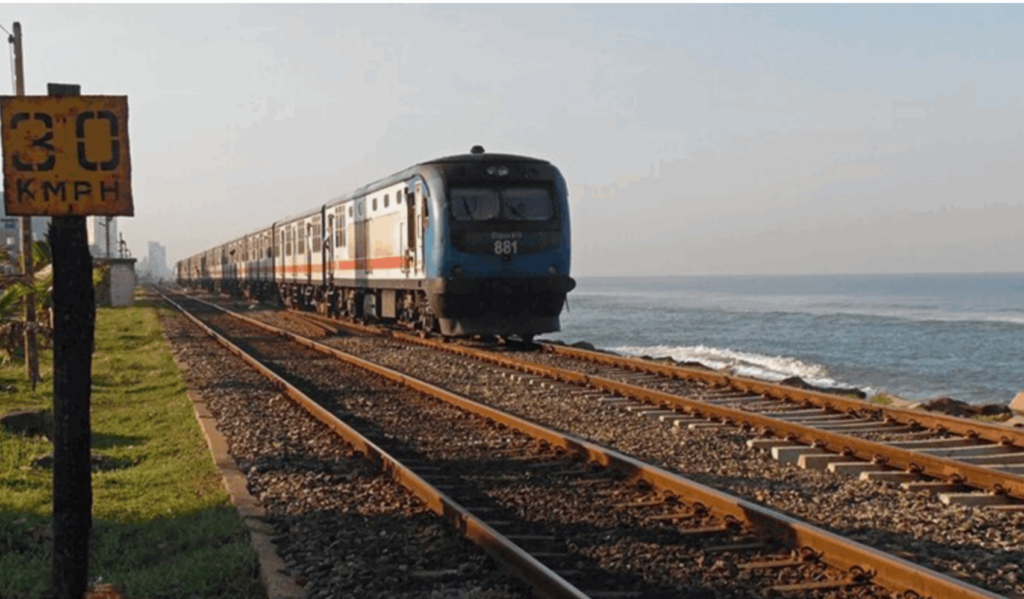
On one section, the track runs just a metre or so from the sea, so close you could almost reach out of the window and feel the spray. It’s a line offering the exhilarating experience of feeling as though you’re travelling right across the sea!
To the right of the carriage window (when travelling from Colombo to Galle), the horizon stretches out, and you can enjoy views of locals playing on the coastal beaches and colourful fishing boats.
DilshanEspecially at dusk, the slanting sunlight illuminates the sea surface, which begins to shimmer golden, creating an atmosphere truly reminiscent of a beautiful sunset cruise.
The sea breeze blows through the cabin, cooling the muggy air to a pleasant temperature, allowing you to fully savour that tropical resort feeling.
This route also features several attractions along the way. Near the intermediate station of Moragala lies a beach renowned for its coral reefs, while Hikkaduwa is known as a surf spot.
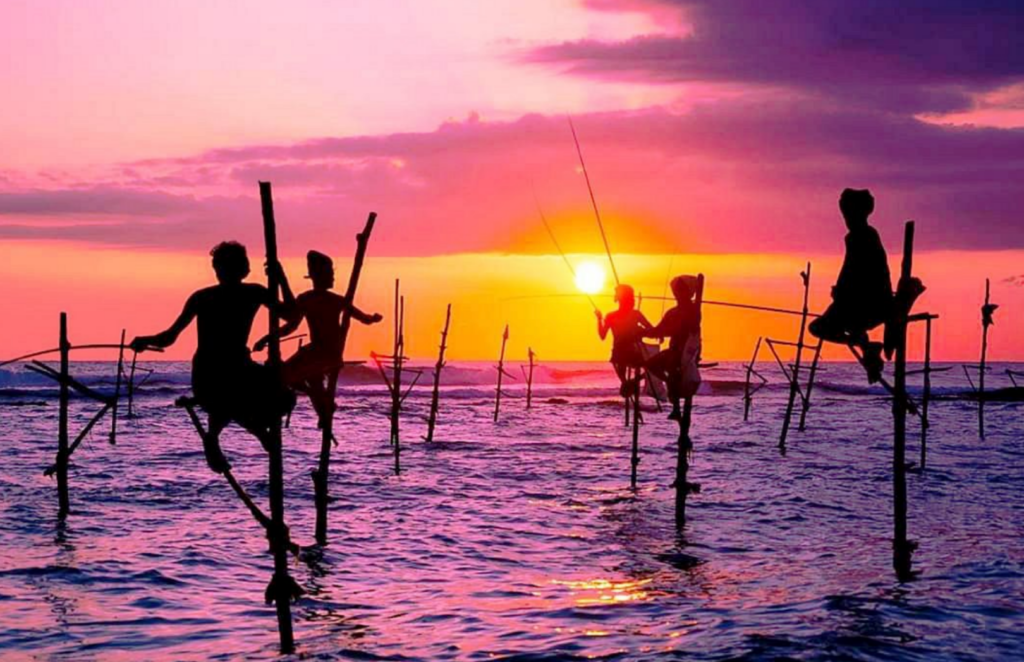
And near the goal, one may occasionally spot traditional stilt fishermen—those who fish from the sea perched on raised poles.
The town itself, the final destination, boasts the World Heritage site of Fort Goer, a 17th-century Dutch fortress just a short walk from the station. It’s a delightful bonus that you can simply step off the train and begin exploring.
The coastal train service runs relatively frequently, with approximately one train per hour, making it a convenient and easy-to-use route. Tickets can be easily purchased on the day at the station, and it is rare to encounter difficulties with reserved seats being fully booked.
The recommended seats are on the left-hand side facing the direction of travel (Colombo→Galle). A window seat on the left offers unobstructed views of the Indian Ocean and is ideal for photography (on the reverse route, Galle→Colombo, the right-hand side faces the sea).
Please note that some trains may also include first-class carriages or reserved seating carriages. However, much like the Tea Train, first-class air-conditioned carriages often have windows that cannot be opened.
Therefore, if you wish to enjoy the scenery in an open-air setting while feeling the sea breeze, it is recommended to travel in second-class carriages or other carriages with windows that open.
RajaThe open-air train running along the coast has been featured in travel media as resembling the model for the sea train appearing in the Ghibli film Spirited Away, and it’s also incredibly photogenic for social media.
Do try a seaside trip with a distinctly southern flavour by rail.
その他の路線もチェック!旅程に合わせた鉄道活用法
Beyond the tea train and coastal train, Sri Lanka boasts an extensive network of railway lines. Let us introduce several routes that are particularly convenient for major tourist destinations.
Colombo to Kandy (first section of the mountainous route): This route runs from Colombo to Kandy, the gateway to the highlands, taking approximately 2.5 to 3 hours. Enjoy the gradual ascent through terraced fields and palm groves. This historic route was built during British colonial times to transport produce from plantations. This constitutes the first section of the Tea Train journey, with many services terminating at Kandy. Travellers short on time often combine the Colombo–Kandy rail section with overland travel by car for the highland areas beyond. It offers a quick taste of the mountainous region’s atmosphere, making it ideal for those wishing to experience the railway while sightseeing in Kandy.
Colombo–Jaffna (Northern Route): This line connects Colombo to Jaffna, a major city in northern Sri Lanka. Disrupted for a long period from 1990 due to the civil war, it was restored in 2014. Currently, the express train ‘Yal Devi’ operates approximately one round trip daily from Colombo via Anuradhapura, reaching Jaffna in about 7 to 8 hours. This train to Jaffna, the centre of the northern Tamil cultural sphere, is a symbolic revival following the end of the civil war and holds special significance for local people. Along the route, travellers interested in culture and history will find the scenery fascinating, featuring views of Anuradhapura and the unique arid landscapes of the north.
Colombo to Batticaloa/Trincomalee (Eastern Route): There is also a route from Colombo via Galle Oya to the coastal town of Batticaloa and the port city of Trincomalee. Although services are somewhat infrequent, the journey offers views of vast arid landscapes and lagoons, and with a bit of luck, you might even spot wild peacocks or elephants. Whilst less familiar to tourists, it is possible to combine rail travel with other modes of transport. For instance, when visiting Sigiriya in the Cultural Triangle or Minneriya National Park, renowned for wildlife, one could take the train to Habarana station and then transfer to a bus or taxi. This combination of rail and other transport adds flexibility and a sense of adventure to your itinerary.
It should be noted that Sri Lanka’s railway network does not comprehensively cover tourist destinations, and it is often the case that there is no station near the place you wish to visit. Furthermore, due to the limited number of trains and journey times, travelling by car is frequently the more efficient option.
Indeed, if you wish to travel extensively around Sri Lanka, relying solely on railways to cover all destinations would prove challenging. Therefore, we recommend incorporating rail travel for key sections while using chartered taxis for the rest of your journey.

Enjoying scenic stretches by train, such as the Tea Train or Coastal Line, while efficiently exploring ruins and travelling between cities by car—combining these approaches allows you to make the most of your time while savouring the charm of rail travel, killing two birds with one stone.
Allow plenty of time in your schedule and do try to mix Sri Lanka’s railways with overland travel effectively.
Summary
Finally, let us recap the key points of this article. We have summarised tips for fully enjoying the charm of Sri Lanka’s railways.
- World-renowned scenic routes: Sri Lanka’s railways offer captivatingly varied landscapes, from highland tea plantations to coastal vistas. Particularly, the Tea Train (between Kandy and Ella) has been ranked among the world’s best by Lonely Planet and has gained such popularity in Japan that it frequently features on social media and in commercials.
- Tea Train: Advance Booking Essential & Tips for Getting Seats: During peak tourist season, reserved seats sell out immediately. Book early via the official website, ideally one month in advance. Even if fully booked, don’t give up: try for unreserved seats on the day, opt for the Gampola–Nanu Oya section only plan, or aim for trains travelling in the opposite direction – these are handy tricks for enjoying the scenic route.
- Boost efficiency with taxi charter services: By arranging a reliable local taxi charter (Japanese-speaking drivers available), you can receive support for station transfers and ticket procurement. Leave your luggage in the vehicle for a worry-free, unencumbered scenic train experience.
- Choosing your seat class: For the best views, opt for second class with opening windows. First class is comfortable, though some windows may not open. Third class is extremely cheap and brimming with local charm, but expect it to be crowded. Reserved third-class seats are appearing on major routes, but for first-time travellers, second class or above is the safer choice.
- The coastal train is also a must-see: The train between Colombo and Galle follows a refreshing route along the coast. The sunset views are beautiful, and with frequent departures, you can easily board with a same-day ticket. Take a seat on the left-hand side facing the sea to enjoy the grand panorama of the Indian Ocean and the sea breeze.
- Allow ample time and prioritise safety: Trains frequently run late, so build in extra time to your schedule; travelling in the morning is the golden rule. Avoid planning trips on important dates. While open-door photography is popular, safety comes first. When travelling by rail in a foreign country, maintaining a relaxed mindset and avoiding haste is paramount.
A journey on Sri Lanka’s railways promises to be an unforgettable experience. Board a local train brimming with breathtaking scenery and warm hospitality, and savour the charm of Sri Lanka’s railways – a journey you simply must take at least once in your lifetime.
May you create wonderful travel memories alongside the magnificent scenery. Now it’s your turn to ride Sri Lanka’s Blue Train! 🚃🌴


コメント