
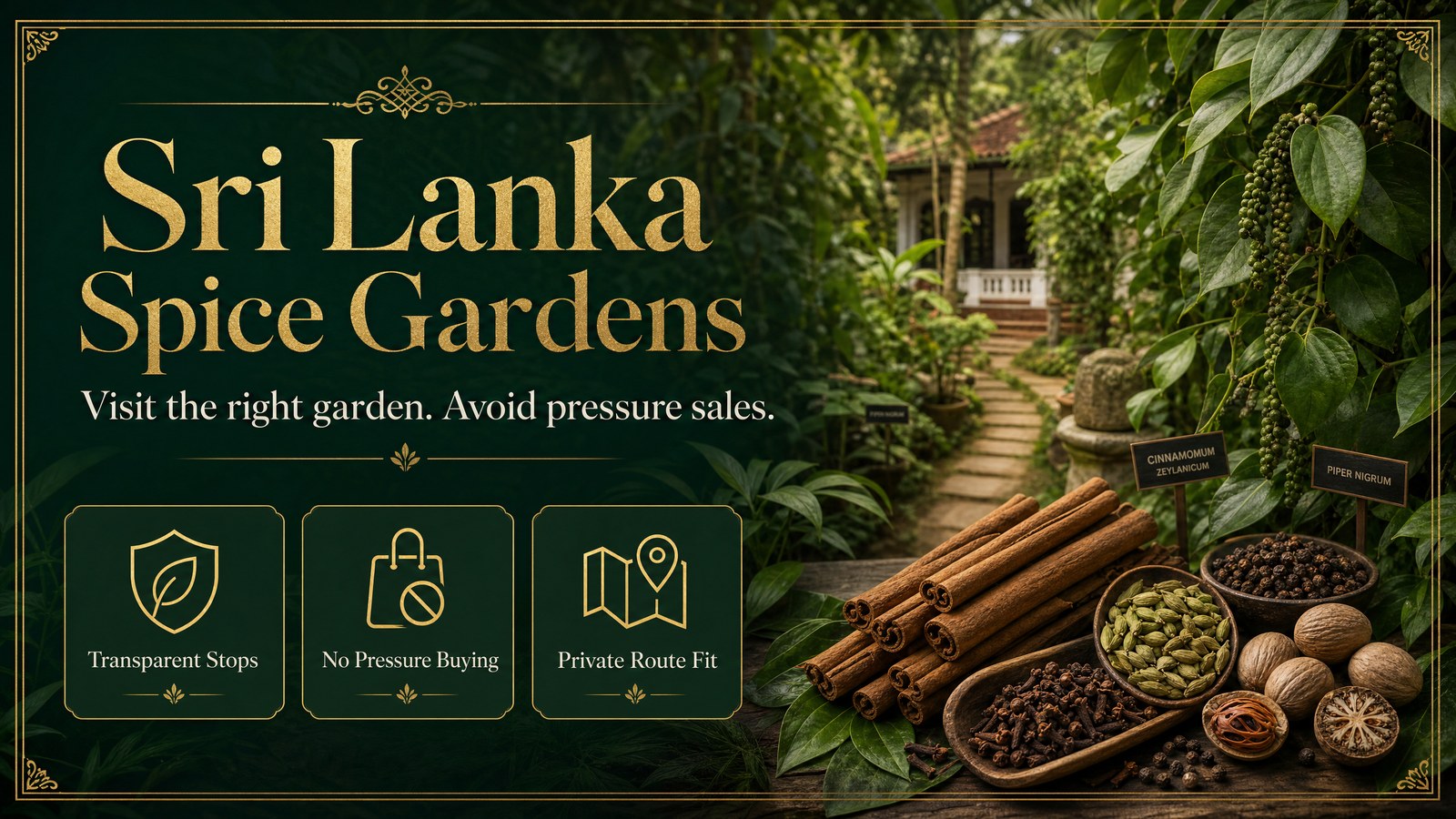
Sri Lanka is one of the world’s most evocative spice islands. Cinnamon, cardamom, pepper, cloves, nutmeg, vanilla and herbal remedies are woven into the country’s cooking, Ayurveda traditions and colonial history. For many travellers, a spice garden near Matale looks like a natural stop between Sigiriya, Dambulla and Kandy.
However, not every spice garden visit is equally worthwhile. Some gardens are educational and pleasant; others operate mainly as commission-based shopping stops where visitors are encouraged to buy oils, balms, creams or herbal products at inflated prices.
This guide rewrites the original Japanese article for English-speaking and European travellers, focusing on how to enjoy the spice-garden idea without being pressured into an expensive tourist trap.
The short answer: a spice garden can be interesting, but choose it carefully
A good spice garden can be a relaxed cultural stop. You see plants that are difficult to imagine in a European supermarket, learn why Ceylon cinnamon is valued differently from common cassia cinnamon, and understand how spices connect food, wellness and trade in Sri Lanka. Sri Lanka Tourism also presents spice gardens as a visitor experience where travellers can see aromatic plants and learn about local uses of spices and herbs.[1]
The problem is that the term “spice garden” covers very different experiences. One place may be a polished visitor attraction with clear explanations, while another may feel like a sales room attached to a garden. If you are travelling with a private driver, the stop can also be affected by commission arrangements. A driver may be encouraged to bring tourists to a particular shop because the shop rewards introductions.
Our position is simple: if a spice garden is included in your Sri Lanka route, it should be optional, transparent and suitable for your travel style. You should never feel trapped, pressured, or expected to purchase products you did not plan to buy.
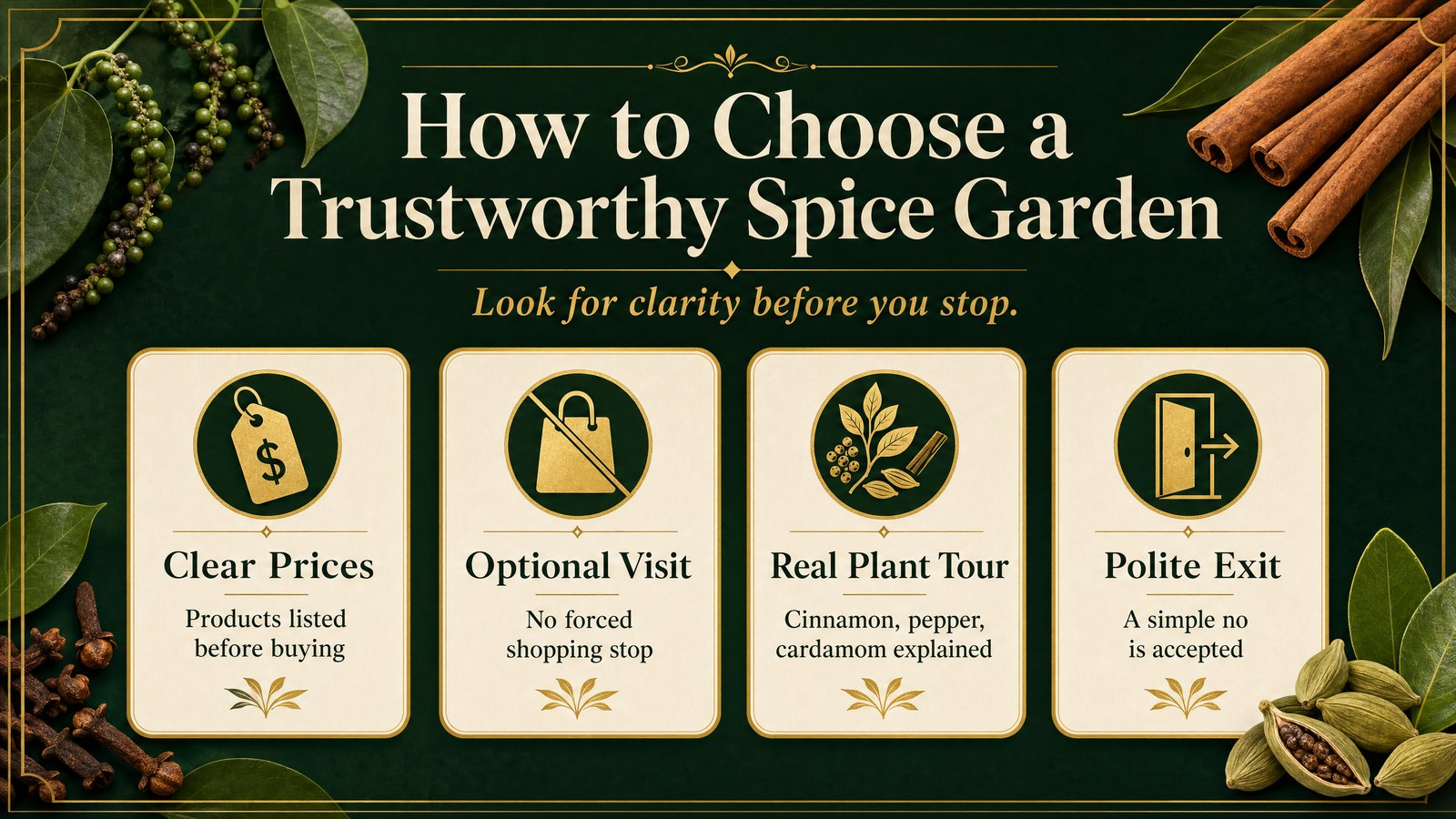
Why Matale appears in many Sri Lanka itineraries
Matale sits on a common overland route between the Cultural Triangle and Kandy. Travellers who visit Sigiriya Rock, Dambulla Cave Temple, Polonnaruwa or Anuradhapura often continue toward Kandy, and Matale is positioned naturally on that transfer. That is why many spice gardens, herbal shops and roadside stops have developed in this area.
The location itself is convenient. If you already need to travel from Sigiriya or Dambulla to Kandy, a short, well-chosen stop can break the journey. What matters is whether the stop genuinely improves the day or simply adds a sales detour.
| Route situation | Why a spice garden may be suggested | When it is worth stopping | When to skip it |
|---|---|---|---|
| Sigiriya or Dambulla to Kandy | Matale lies on or near the natural transfer route, so drivers often propose a short stop. | You are interested in plants, cooking, Ayurveda or a clean lunch break. | You are tired, short on time, or already worried about shopping pressure. |
| Kandy to the Cultural Triangle | The stop can be positioned as a cultural introduction before the ancient cities. | You have enough daylight and the garden has clear reviews and no pressure-sales reputation. | Your day already includes long sightseeing, temple visits and check-in deadlines. |
| Family or senior travel | A garden can be an easier stop than another temple or climb. | There are toilets, shade, a short guided walk and no obligation to buy. | The stop is presented vaguely or seems designed mainly for purchases. |
| Food and wellness interest | Spices connect naturally to Sri Lankan cuisine and Ayurveda traditions. | The explanation focuses on plants, cooking uses and product transparency. | The guide makes unrealistic medical claims or pushes expensive oils and balms. |
Scroll horizontally to see the full table →
The commission problem: why some spice-garden stops feel uncomfortable
The most important issue is not the garden itself. It is the incentive structure around it. In some tourist areas, shops reward drivers, guides or intermediaries for bringing visitors. The traveller may not see the commission directly, but it can influence where the driver suggests stopping and why the shop is so eager to sell.
This does not mean every driver is dishonest. Many excellent Sri Lankan drivers are proud of their country and want guests to have a good experience. But when a transport company does not set clear standards, commission-based stops can quietly shape the itinerary. The result is familiar: a friendly explanation at first, then a long product demonstration, then a feeling that buying something is expected.
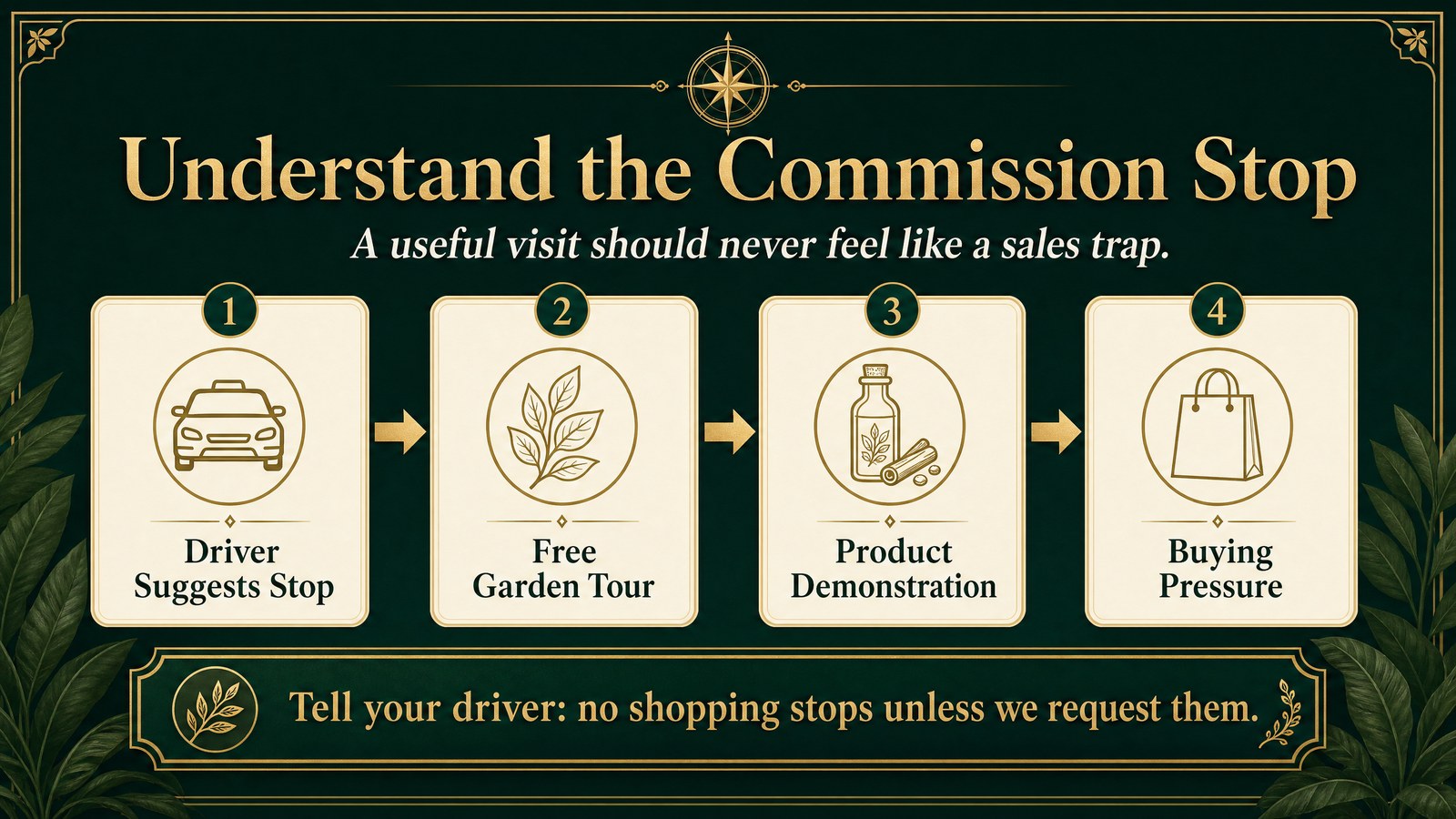
Practical rule: if a driver insists on a particular spice garden, cannot explain why it is suitable, or discourages you from comparing options, treat the stop with caution. A reputable private driver should be comfortable when you say, “No shopping stops today, please.”
Red flags before buying oils, balms or herbal products
Many travellers do not mind buying a small souvenir. The problem is when product claims become exaggerated, prices are unclear, or the visitor feels socially pressured. Herbal oils, balms, hair products and creams may be presented as natural and traditional, but that does not automatically make them fairly priced or medically reliable.
Before purchasing, ask yourself whether you would buy the same item at the same price if it were displayed in a normal shop without a guided presentation. If the answer is no, it is better to thank the staff politely and leave.
| Red flag | What it may indicate | Safer response | What a trustworthy stop should do |
|---|---|---|---|
| No clear price list | Prices may change depending on the visitor or the sales conversation. | Ask for a written price before touching products or agreeing to a demonstration. | Display prices clearly and accept a polite “no”. |
| Strong medical claims | Products may be marketed beyond what travellers can reasonably verify. | Avoid relying on tourist-shop products for health conditions; consult a medical professional. | Explain traditional uses without promising cures. |
| Pressure to buy after a free tour | The tour may be designed primarily to create obligation. | Say, “Thank you, we are not buying today,” and leave calmly. | Allow visitors to enjoy the garden without emotional pressure. |
| Driver waits inside the shop area | The stop may be tied to a commission arrangement. | Tell your driver in advance that shopping stops must be optional. | Respect the guest’s route and timing first. |
| Very high prices for small bottles | Tourist pricing may be much higher than local retail alternatives. | Compare prices online or in supermarkets before spending heavily. | Offer transparent product information and receipts. |
Scroll horizontally to see the full table →
A more reliable option: consider Spice Ceylon – Matale
If you still want a spice-garden experience around Matale, the original Japanese article recommended considering Spice Ceylon – Matale, associated with the well-known Sri Lankan hospitality group Thema Collection. The reason for recommending a more established operator is not that every other garden is automatically bad. It is that a structured attraction connected with a recognized hospitality brand is generally easier to evaluate than an anonymous roadside sales stop.
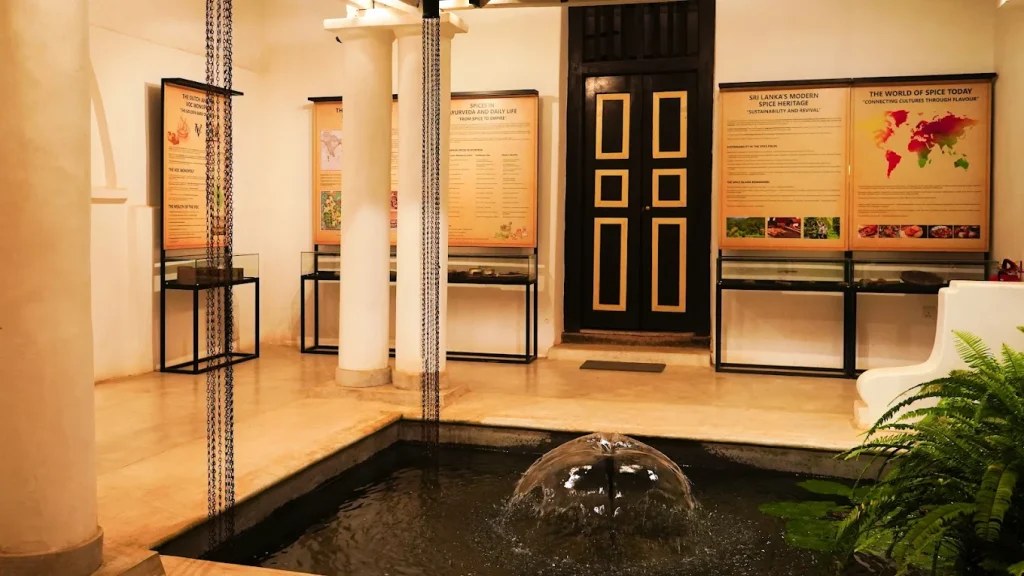
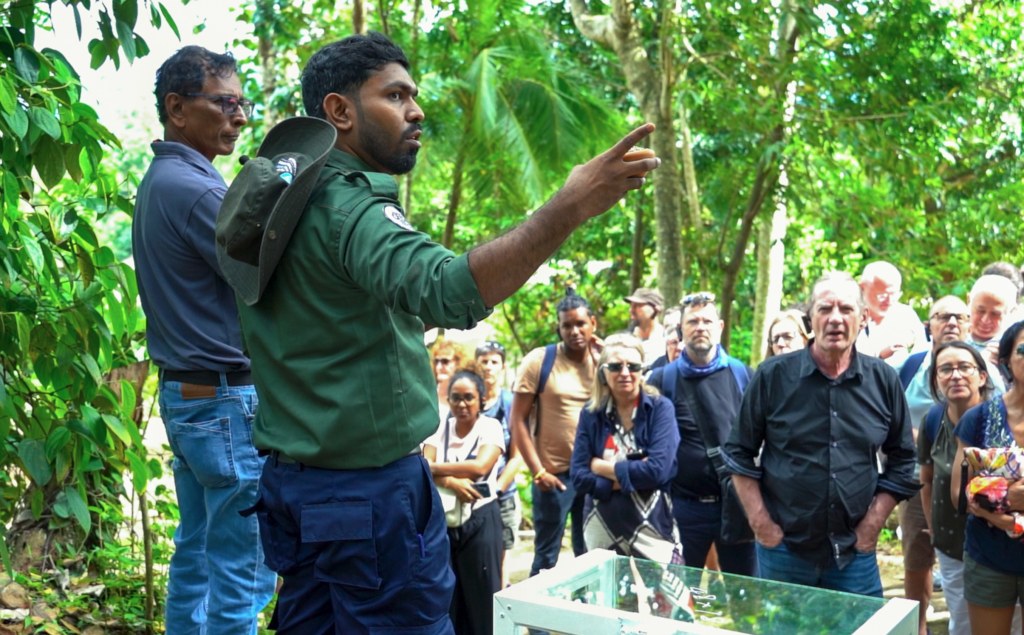
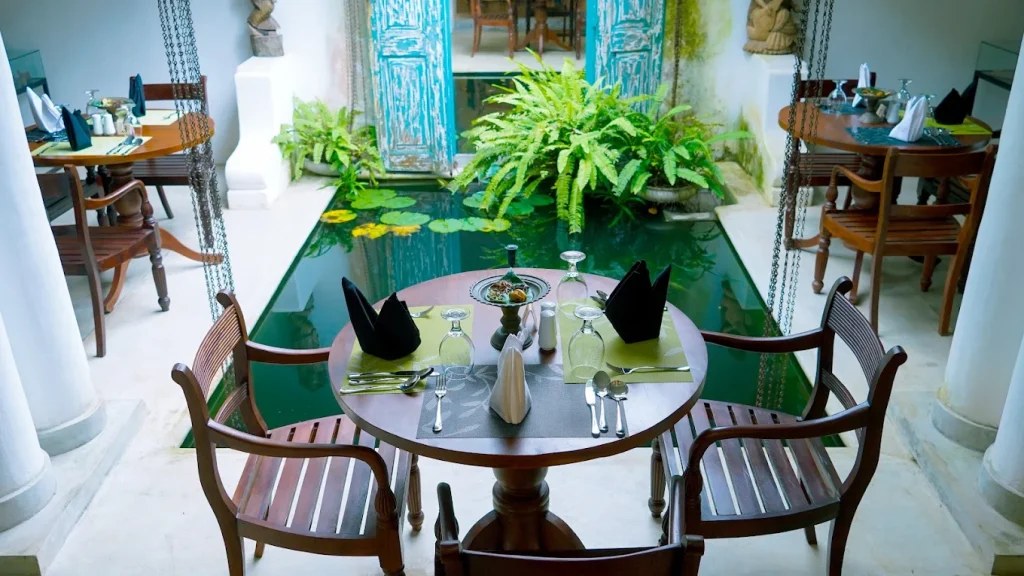
Spice Ceylon – Matale is often discussed as a more polished way to experience Sri Lanka’s spice culture, with a spice heritage museum, guided explanations and dining facilities. Visitors should still check current reviews, opening times and conditions before arrival, because attraction quality and operations can change over time.
The point is not to make a blind recommendation. The point is to apply the same standard you would use for a hotel, restaurant or safari operator: choose places with a visible management structure, clear visitor experience, transparent pricing and enough public information to make an informed decision.
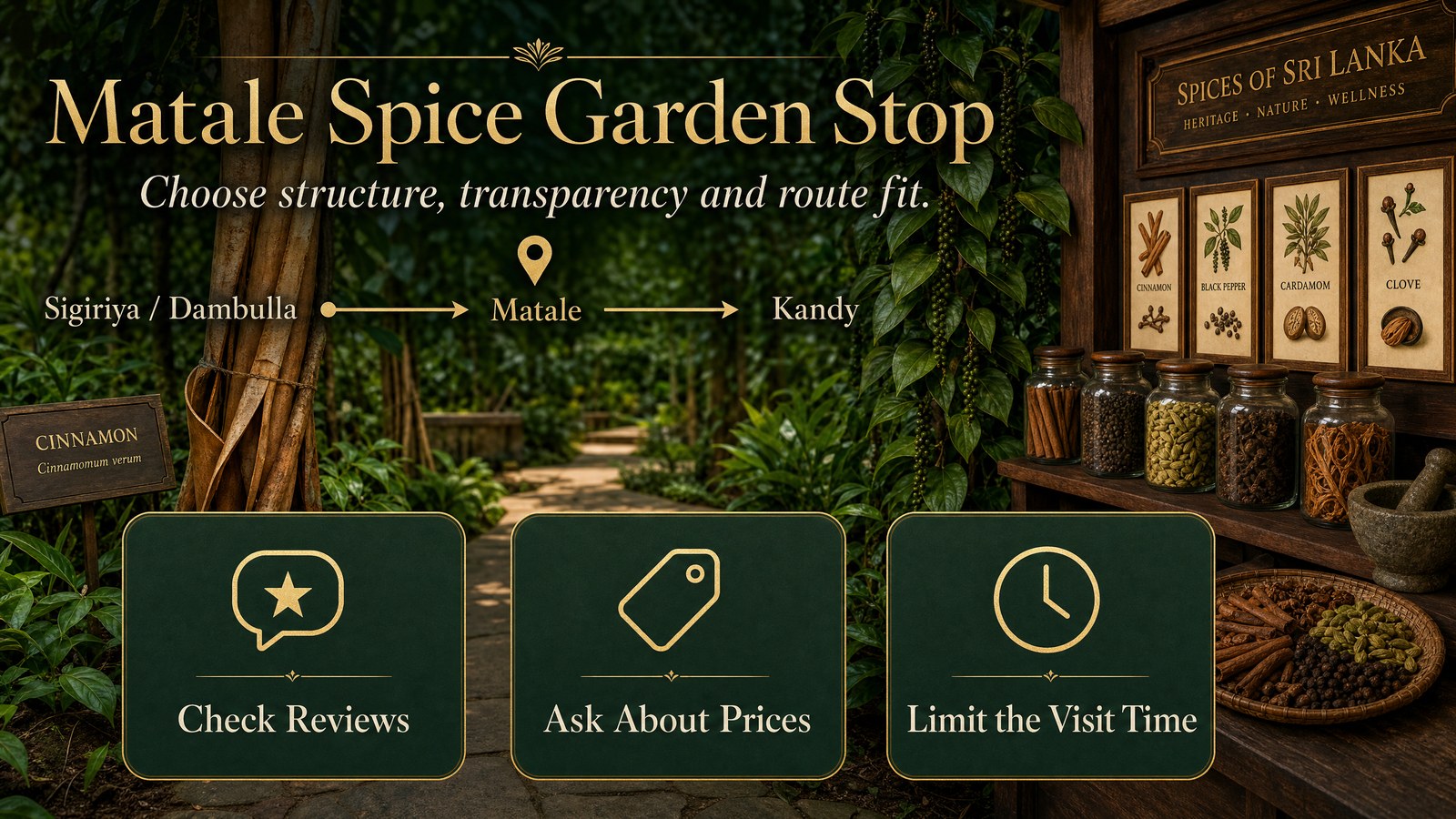
The following images preserve the original article’s practical Spice Ceylon context while using English alt text and WordPress media IDs for Gutenberg editing.
How LankaMe handles spice-garden stops
At LankaMe, we do not want guests to feel that a private route is being used to push shopping stops. A Sri Lanka private tour with a driver should make the trip smoother, safer and more personal; it should not become a sequence of commission-based detours.
That is why spice gardens are treated as optional. If you are genuinely interested, we can discuss whether a short stop fits your route. If you prefer to avoid tourist shopping altogether, we can design the day without it. This matters especially on routes between Sigiriya, Dambulla and Kandy, where timing also affects temple visits, hotel check-in, meals and scenic stops.
For travellers who want a fully coordinated trip, we also recommend checking major Sri Lanka travel distances and driving times before adding optional stops. A spice garden may look small on paper, but a sales-heavy visit can quietly consume an hour or more.
When a spice garden is worth adding to your route
A spice garden is most worthwhile when it supports the theme of your day. If your route already includes Kandy, Dambulla, Sigiriya, village cooking, Ayurveda or local food, a short spice stop can make the cultural story richer. It is less worthwhile when you are rushing between major attractions or simply need a clean, efficient transfer.
| Traveller type | Best way to include a spice garden | Recommended time limit | Private-driver planning tip |
|---|---|---|---|
| Food-focused travellers | Use the stop to connect cinnamon, pepper, cardamom and curry leaves to Sri Lankan cuisine. | 30–45 minutes, unless lunch is included. | Combine with a good restaurant stop; see our Sri Lanka restaurant guide. |
| Families | Make it a short, visual break with plants and scents rather than a long sales session. | 20–35 minutes. | Tell the driver in advance that children should not be kept waiting during shopping. |
| Senior travellers | Choose a place with shade, seating, toilets and a calm pace. | 30–45 minutes. | Place it between longer drives, not after a tiring climb or temple visit. |
| Ayurveda or wellness travellers | Focus on traditional context, not medical promises from tourist products. | 45–60 minutes if the guide is genuinely informative. | Use it as a soft cultural stop, not as a replacement for professional wellness advice. |
| First-time Sri Lanka visitors | Only add it if the itinerary still has enough time for the main attractions. | 30 minutes unless pre-selected. | Compare with entrance times using our Sri Lanka attraction fees and opening-hours guide. |
Scroll horizontally to see the full table →
A simple script to avoid pressure at a spice garden
If you are visiting independently, it helps to decide your position before you arrive. You can say: “We are happy to see the garden, but we are not planning to buy products today.” If staff continue to push, repeat the same sentence and leave. Politeness is enough; you do not need to justify your budget, health needs or suitcase space.
If you are travelling with a driver, set expectations before the day begins: “Please do not take us to commission shopping stops. If we stop at a spice garden, it must be our choice and limited to 30 minutes.” A professional driver should accept that clearly.
LankaMe tip: The best private tours are built around your interests, not the driver’s commissions. If you care about food, nature and culture, we can include a suitable spice-related stop. If you dislike shopping pressure, we can skip it completely.
Suggested route combinations around Matale
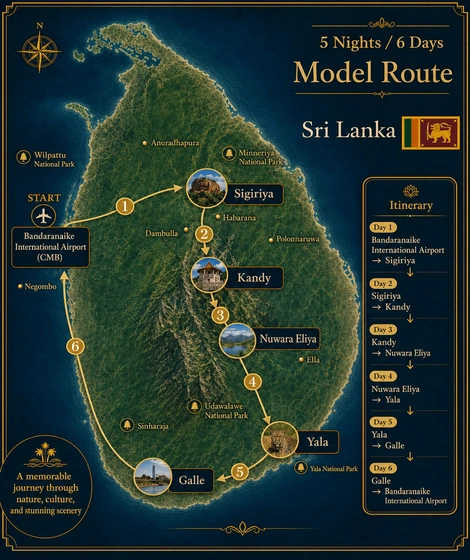
For many travellers, the decision is not simply whether to visit a spice garden. It is whether the stop fits the route. A short stop near Matale can work well on a 5 to 7 day Sri Lanka itinerary if it sits naturally between the Cultural Triangle and Kandy. On a longer 10 day to 2 week Sri Lanka itinerary, there may be more room for slower cultural stops, food experiences and wellness themes.
If your priority is major heritage sites, compare the stop with your core route. A traveller focused on Sri Lanka’s UNESCO World Heritage sites may prefer to protect time for Sigiriya, Dambulla and Kandy. A traveller focused on local food, spices and Ayurveda may enjoy a carefully selected spice stop more than another viewpoint.
Final advice: enjoy Sri Lanka’s spices, but keep control of your itinerary
Sri Lanka’s spice culture is real, fascinating and worth understanding. The caution is not about spices themselves. It is about unclear incentives, sales pressure and unplanned shopping stops that reduce the quality of a private trip.
If a spice garden sounds interesting, choose it intentionally. Check reviews, ask how long the visit takes, confirm whether purchases are optional, and tell your driver exactly what you want. If it does not interest you, skip it without guilt. Sri Lanka has more than enough temples, landscapes, food, wildlife and coastal towns to fill a beautiful journey.
Plan a Sri Lanka route without unwanted shopping pressure
If you want a private Sri Lanka itinerary with clear transport and suitable vehicle options, carefully chosen stops and no commission-based detours, LankaMe can help you design the route around your interests. Tell us whether you want to include a spice garden, skip it, or replace it with a better cultural or food experience.
References
[1] Sri Lanka Tourism, “Spice Gardens,” visitor information on spice-garden experiences in Sri Lanka. Additional route and attraction details should be checked before travel because opening conditions can change.
[2] Public visitor-review platforms such as Tripadvisor can help identify patterns in recent traveller experiences, but reviews should be compared carefully rather than treated as absolute proof.





コメント