
Sri Lanka is a compact island in the Indian Ocean, yet it contains an extraordinary concentration of history, Buddhist culture, colonial architecture, rainforest biodiversity and mountain landscapes. For travellers planning a first visit, the country’s eight UNESCO World Heritage Sites offer one of the clearest ways to understand how varied Sri Lanka really is.
This guide introduces all eight sites with a map-style overview, practical visiting tips and sample route ideas. Because many of the sites are spread across the Cultural Triangle, the Hill Country and the south coast, most visitors find that a private car-and-driver arrangement is far more efficient than trying to connect everything by public transport. If you are still deciding how to move between regions, our guide to Sri Lanka private tours with a driver explains why flexible ground transport matters on an independent itinerary.
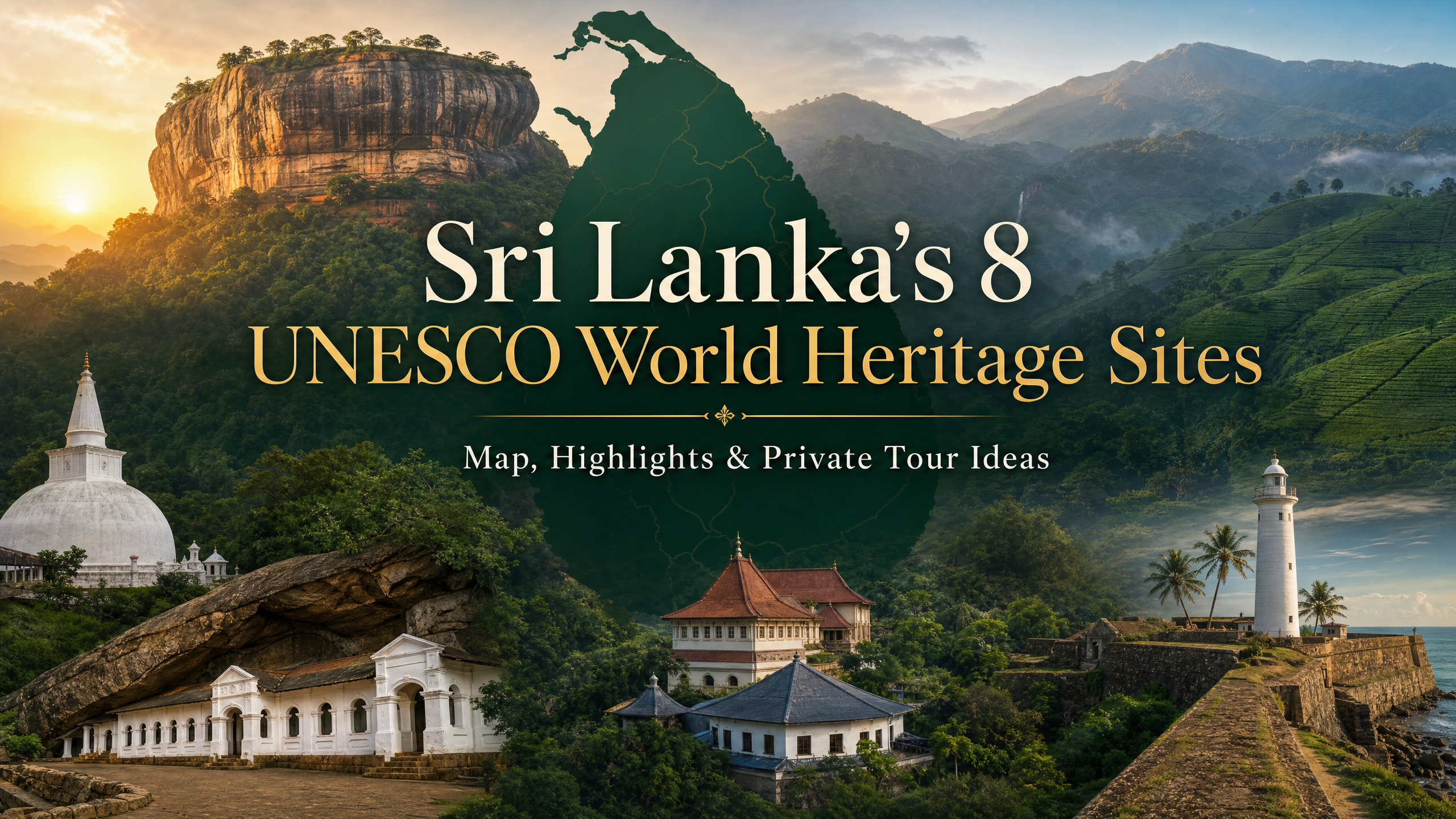
In this article, cultural sites such as Anuradhapura, Polonnaruwa, Sigiriya, Dambulla, Kandy and Galle are explained together with Sri Lanka’s two natural World Heritage Sites: Sinharaja Forest Reserve and the Central Highlands. The aim is not only to list them, but also to help you decide which places to combine on a realistic private itinerary.
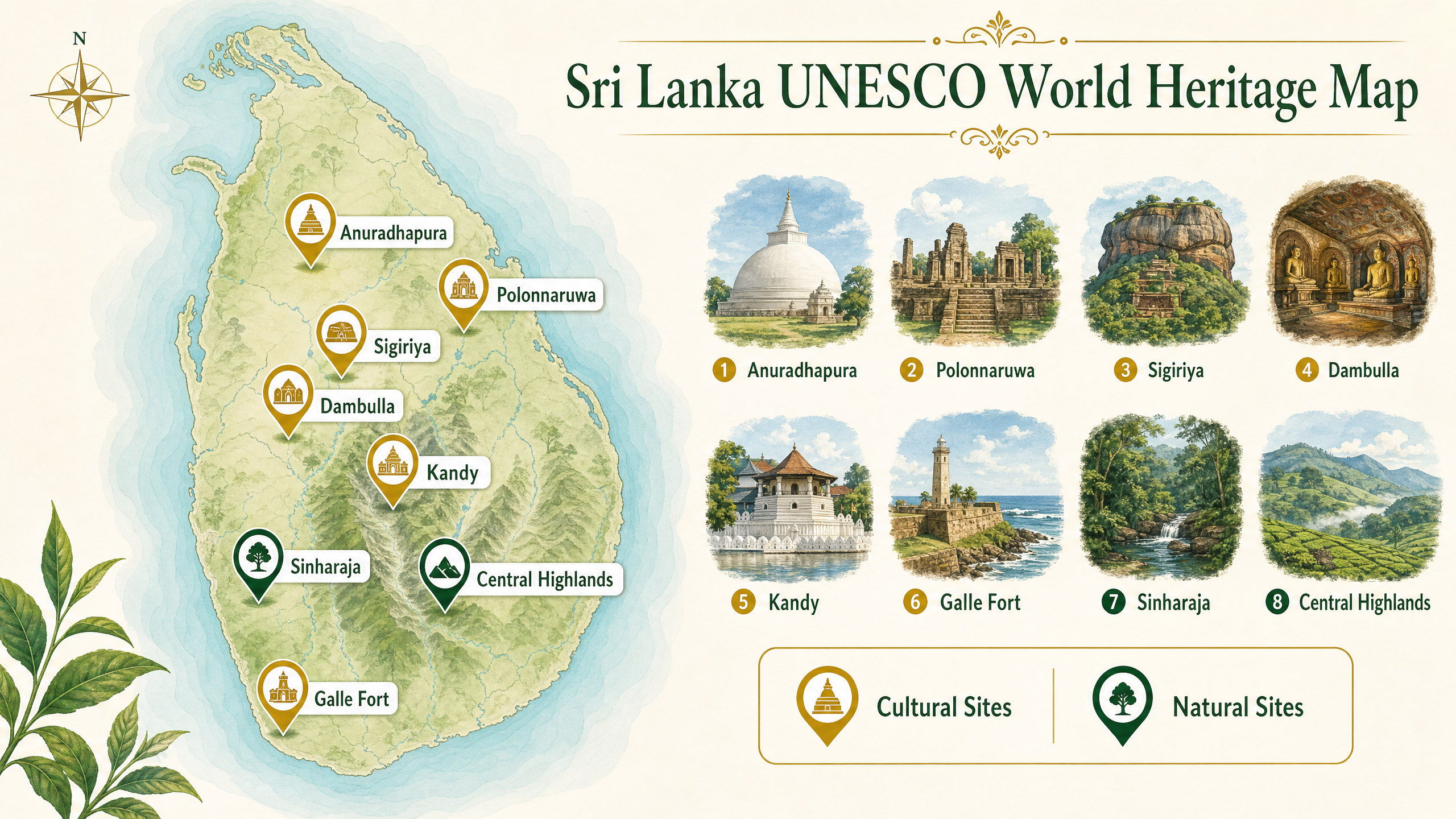
Sri Lanka’s World Heritage Sites at a Glance
Sri Lanka has six cultural World Heritage Sites and two natural World Heritage Sites. The first group, registered in 1982, includes Anuradhapura, Polonnaruwa and Sigiriya, which form the historical core of the Cultural Triangle. Later registrations added sacred Kandy, Galle Fort, Dambulla, Sinharaja and the Central Highlands, giving travellers a balanced route through ancient kingdoms, Buddhist pilgrimage places, colonial streets and biodiverse landscapes.
| No. | UNESCO World Heritage Site | Type | Year Inscribed | Where It Is | Best For |
|---|---|---|---|---|---|
| 1 | Sacred City of Anuradhapura | Cultural | 1982 | North Central Province | Ancient stupas, sacred Bodhi tree, Buddhist pilgrimage atmosphere |
| 2 | Ancient City of Polonnaruwa | Cultural | 1982 | North Central Province | Royal ruins, stone Buddha statues, bicycle-friendly archaeological park |
| 3 | Ancient City of Sigiriya | Cultural | 1982 | Central Province | Rock fortress views, frescoes, gardens and a memorable climb |
| 4 | Golden Temple of Dambulla | Cultural | 1991 | Central Province | Cave temples, Buddha statues, murals and easy pairing with Sigiriya |
| 5 | Sacred City of Kandy | Cultural | 1988 | Central Province | Temple of the Tooth, cultural performances and Hill Country gateway |
| 6 | Old Town of Galle and its Fortifications | Cultural | 1988 | Southern Province | Colonial streets, ramparts, lighthouse, cafes and sunset walks |
| 7 | Sinharaja Forest Reserve | Natural | 1988 | South-west Sri Lanka | Rainforest walks, birds, endemic species and nature-focused travel |
| 8 | Central Highlands of Sri Lanka | Natural | 2010 | Central highlands | Horton Plains, Adam’s Peak area, Knuckles range and montane biodiversity |
Scroll horizontally to see the full table →
1. Sacred City of Anuradhapura
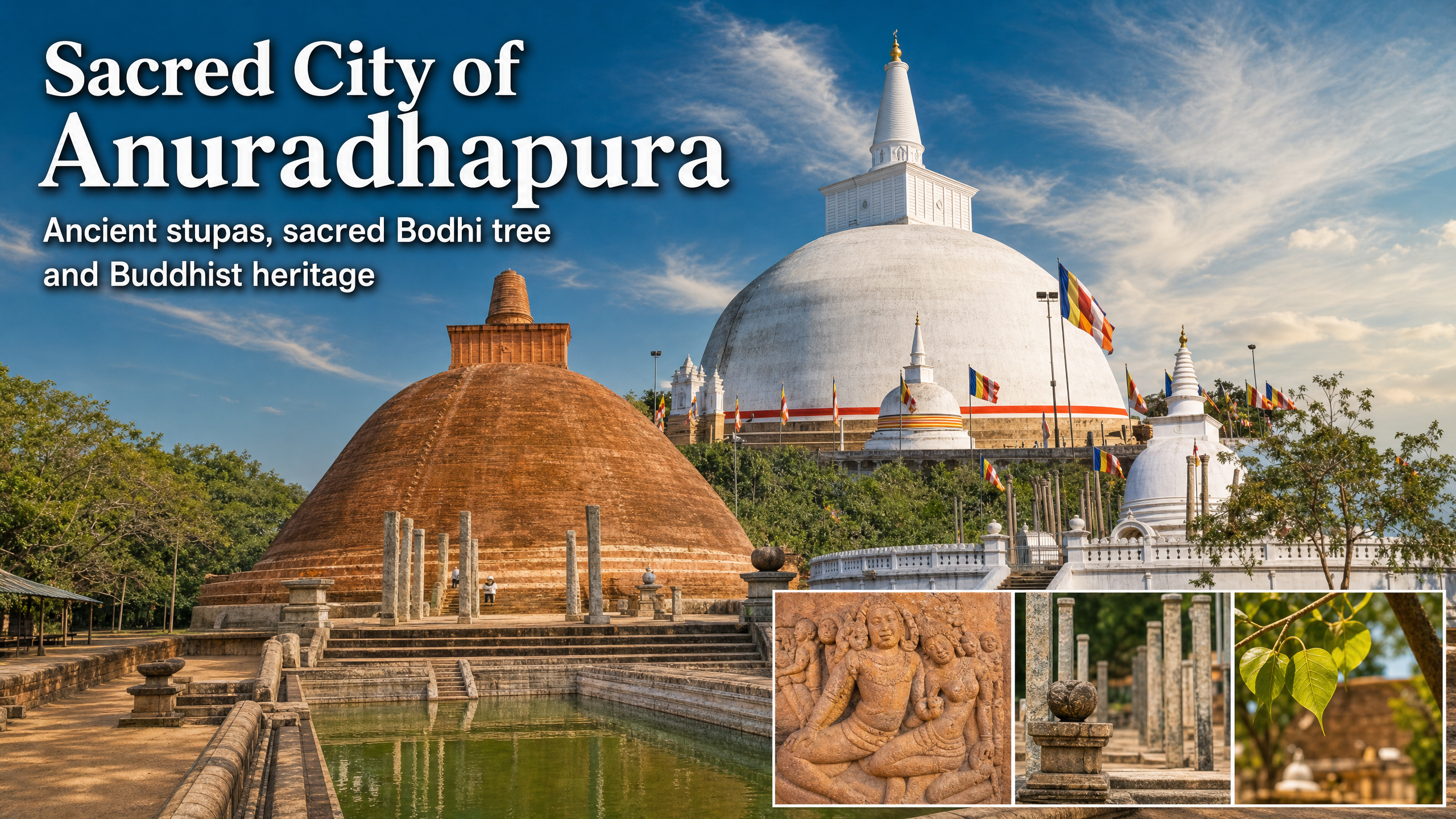
Anuradhapura is one of the oldest and most sacred Buddhist cities in Sri Lanka. It served as a royal capital for more than a millennium and remains an active pilgrimage destination, not only an archaeological site. The city is especially meaningful because of the Sri Maha Bodhi, a sacred Bodhi tree traditionally connected with the tree under which the Buddha attained enlightenment.
The scale of Anuradhapura can surprise first-time visitors. Large stupas such as Ruwanwelisaya, Jetavanaramaya and Abhayagiri are spread across a wide area, and the atmosphere changes from open archaeological zones to busy devotional spaces where local pilgrims offer flowers and prayers.
How to Visit Anuradhapura
Give Anuradhapura at least half a day, and ideally a full day if you are deeply interested in Buddhist history. The site works well as the first major stop on a Cultural Triangle route before continuing to Dambulla, Sigiriya or Polonnaruwa. Dress modestly, remove shoes where required and keep enough water with you because the area can be hot and exposed.
2. Ancient City of Polonnaruwa
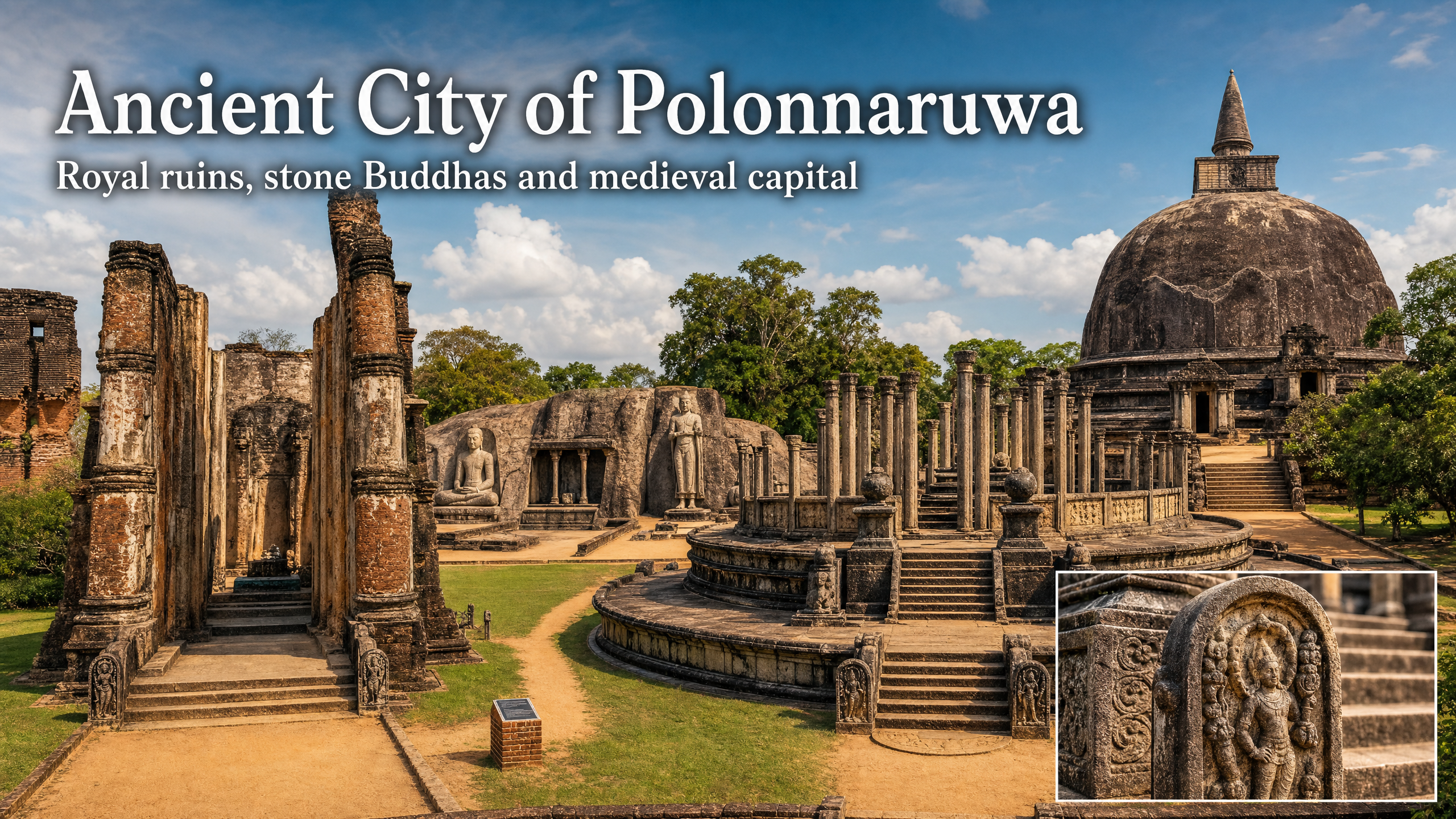
Polonnaruwa became an important royal capital after Anuradhapura declined, and today it is one of the easiest ancient cities in Sri Lanka to explore in a structured way. The ruins are more compact than Anuradhapura, so travellers can move between palaces, temples, ponds and stone carvings without feeling as overwhelmed by distance.
The most famous highlight is Gal Vihara, where serene Buddha figures are carved from a single granite rock face. Other memorable stops include the Royal Palace area, Vatadage, Lankatilaka, Kiri Vehera and Parakrama Samudra, the vast ancient reservoir associated with King Parakramabahu.
How to Visit Polonnaruwa
Polonnaruwa is often paired with Sigiriya or Dambulla on a private driver itinerary. Some visitors enjoy cycling within the archaeological zone, while others prefer a car-and-driver route because it is easier in hot weather. If you also plan to add a wildlife experience, Polonnaruwa can connect naturally with Minneriya, Kaudulla or other elephant-viewing areas; our Sri Lanka safari jeep guide explains the main park options.
3. Ancient City of Sigiriya
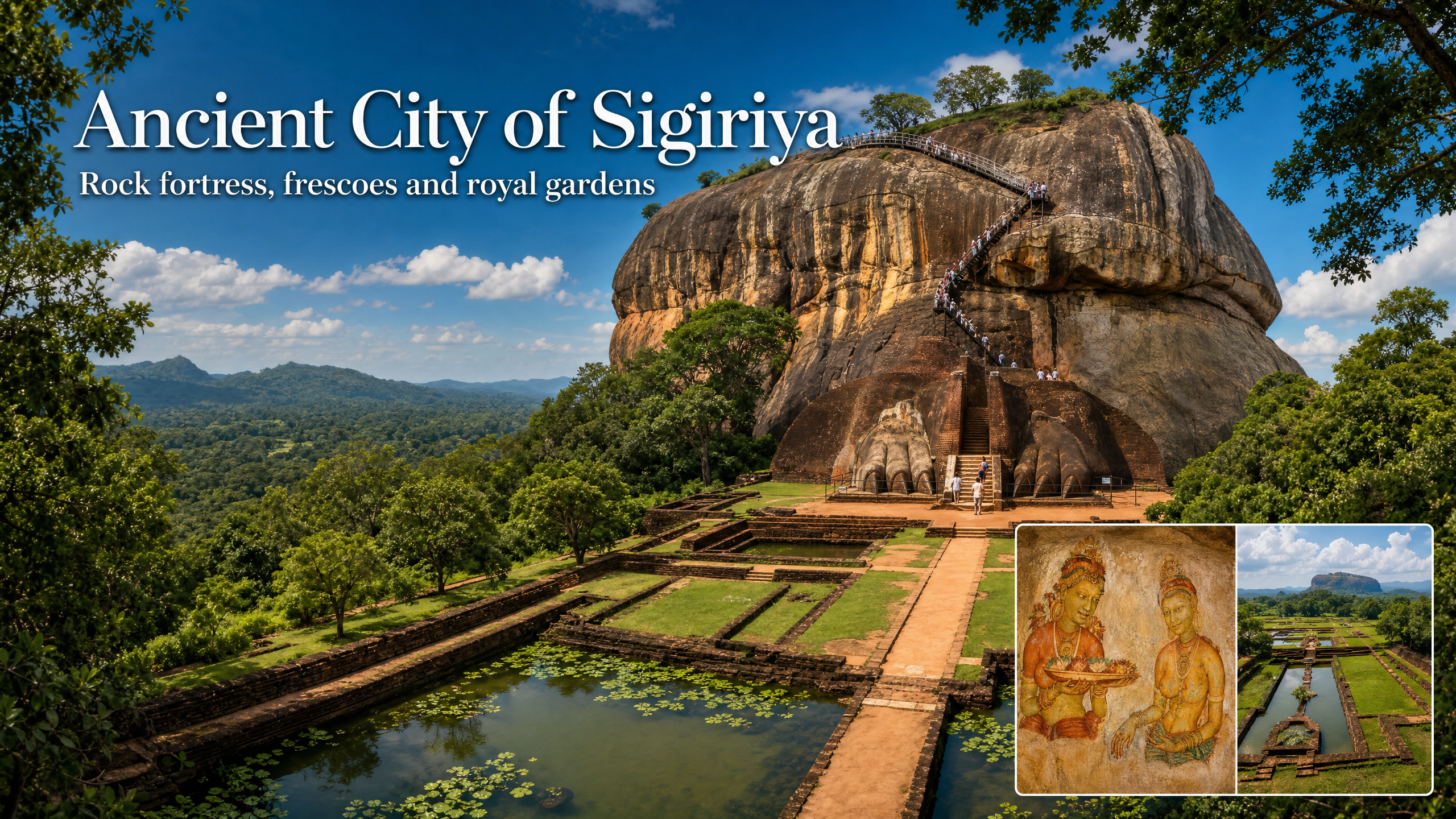
Sigiriya is one of Sri Lanka’s most recognisable landmarks. The fortress rises dramatically from the surrounding plains, and the climb combines landscaped water gardens, boulder gardens, frescoes, the Mirror Wall, the Lion Gate and wide views from the summit.
The site is not only beautiful; it also gives travellers a vivid sense of ancient engineering and royal ambition. For many first-time visitors, Sigiriya is the single must-see stop in the Cultural Triangle, especially when combined with Dambulla Cave Temple on the same travel day.
How to Visit Sigiriya
Start early in the morning if possible, both for cooler temperatures and softer light. Wear comfortable shoes, carry water and avoid rushing the climb. If your itinerary is short, Sigiriya and Dambulla are among the most efficient UNESCO pairings in Sri Lanka because they sit close to each other geographically.
4. Golden Temple of Dambulla
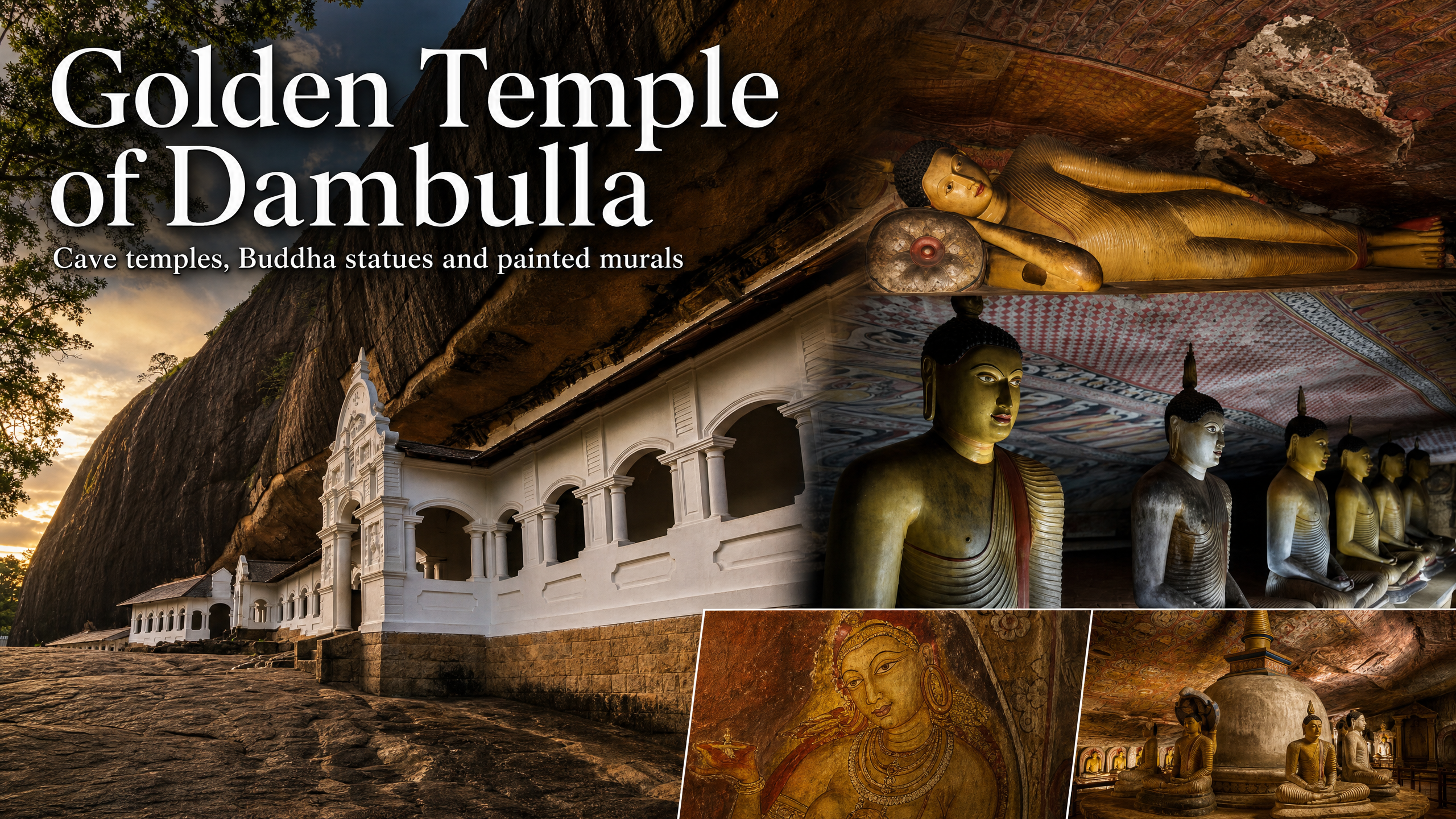
Dambulla Cave Temple is one of the most accessible and rewarding cultural sites in Sri Lanka. The temple complex is set into a rock outcrop and contains richly decorated cave shrines filled with Buddha images, murals and devotional details. It is especially useful for travellers because it can be visited on the way between Kandy and Sigiriya, or as part of a Cultural Triangle base stay.
The cave interiors are atmospheric, but visitors should remember that this is still a religious site. Shoulders and knees should be covered, shoes must be removed before entering the temple area, and photography should be respectful.
How to Visit Dambulla
Dambulla pairs naturally with Sigiriya, and it is also a practical stop when travelling between Kandy and the Cultural Triangle. Because entrance fees and opening conditions can change, check our updated Sri Lanka tourist attraction entrance fees and opening hours guide before finalising your route.
5. Sacred City of Kandy
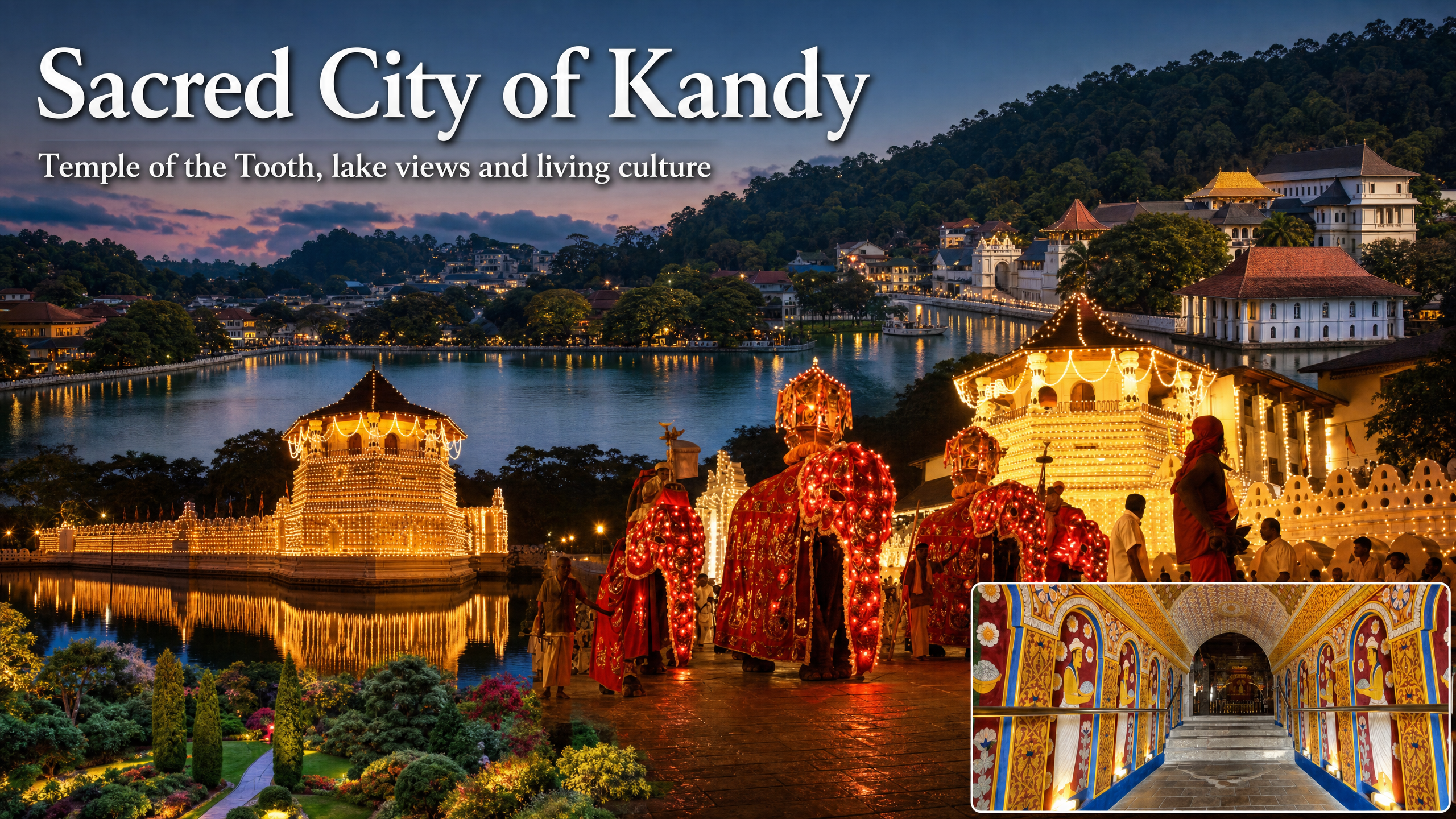
Kandy is the cultural heart of Sri Lanka’s central region and the gateway to the Hill Country. Its most important site is the Temple of the Sacred Tooth Relic, one of the most revered Buddhist places in the country. The city also has a distinctive lakeside setting, traditional performance venues and easy access to botanical gardens and mountain routes.
For travellers building a route from the Cultural Triangle toward Nuwara Eliya, Ella or the tea country, Kandy is often the natural transition point. It is also a convenient place to connect cultural sightseeing with scenic travel, including the famous tea-country railway described in our Sri Lanka Tea Train guide.
How to Visit Kandy
Plan your visit around the temple’s prayer times if you want to experience the devotional atmosphere. Modest clothing is required, and the temple can be crowded during local holidays or festival periods. Kandy also works well as a base for side trips, including Ambuluwawa Tower; if that interests you, see our Ambuluwawa Tower visitor guide.
6. Old Town of Galle and its Fortifications
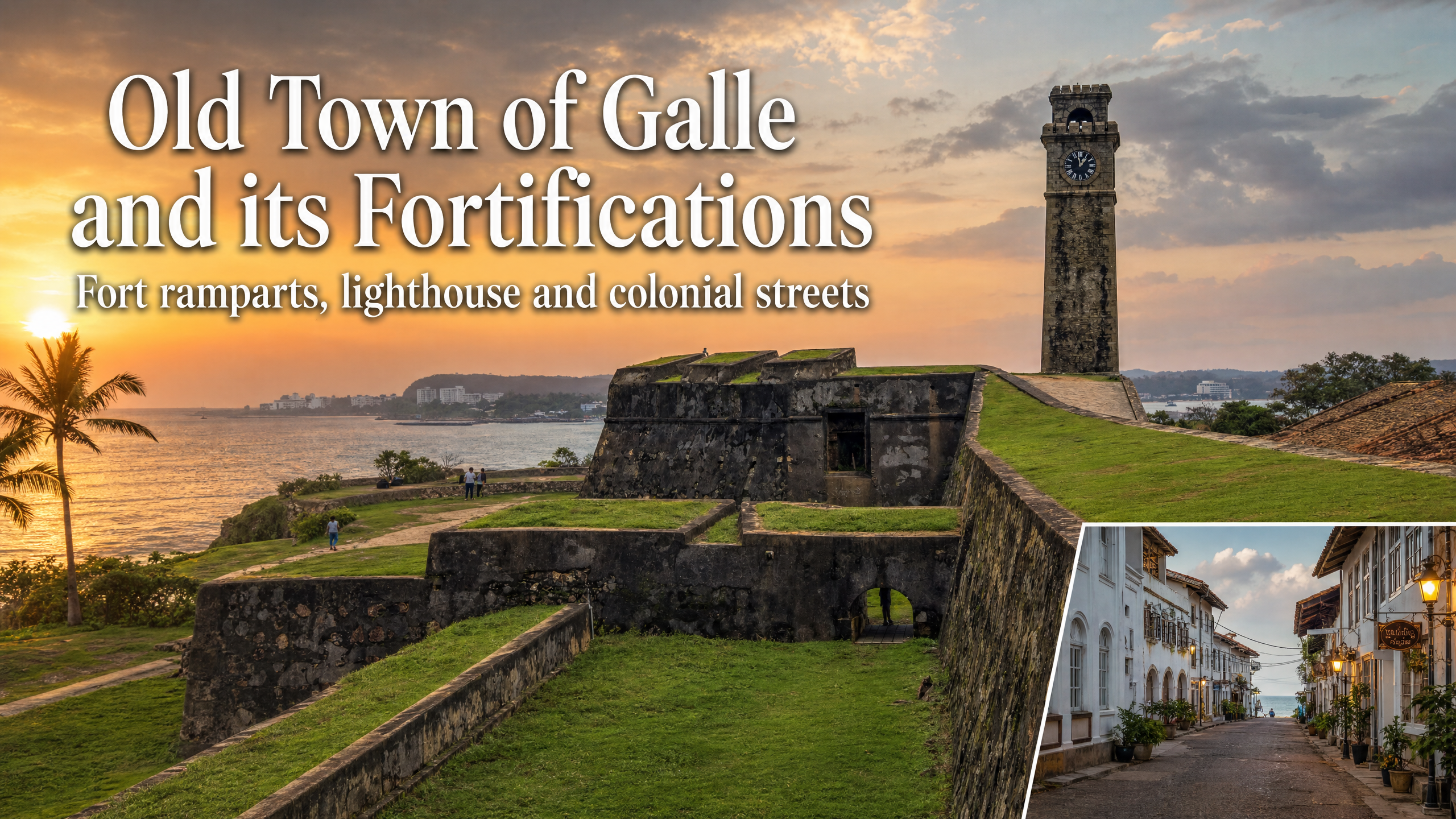
Galle Fort offers a completely different World Heritage experience from the ancient cities of the north-central region. Here, the atmosphere is shaped by colonial-era ramparts, narrow lanes, churches, cafes, boutique hotels and sea views. The old town is highly walkable, making it a pleasant contrast after long drives or archaeology-heavy sightseeing days.
Highlights include the lighthouse, ramparts, old gates, Dutch Reformed Church, former Dutch Hospital and sunset walks along the fort walls. Galle is also easy to include near the end of a trip if you are staying on the south coast or travelling onward toward beach areas.
How to Visit Galle
Galle Fort is best explored on foot, preferably in the morning or late afternoon. It can be visited as a day trip from the south-west coast or built into a longer clockwise route from Colombo, the Cultural Triangle, the Hill Country and the southern coast.
7. Sinharaja Forest Reserve
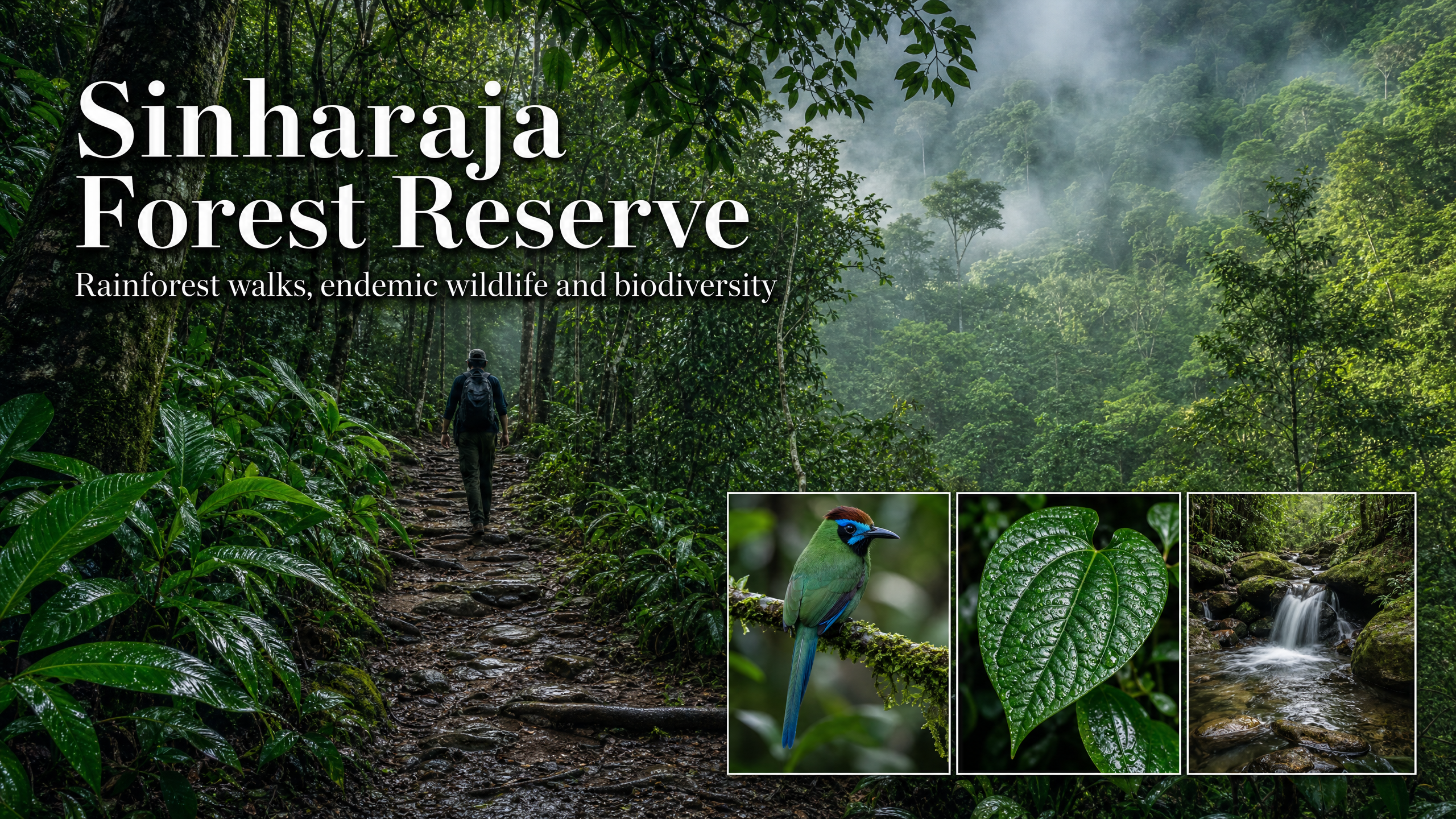
Sinharaja Forest Reserve is Sri Lanka’s best-known rainforest World Heritage Site and a major destination for travellers interested in birds, endemic species and tropical forest ecology. Unlike the archaeological sites, Sinharaja is less about monuments and more about immersion in a living ecosystem.
A guided forest walk can reveal birds, insects, reptiles, plants and the layered soundscape of the rainforest. Conditions are humid, trails can be wet, and leech socks or suitable footwear may be useful depending on the season.
How to Visit Sinharaja
Sinharaja is best for travellers who enjoy nature walks and do not mind slower, more weather-dependent sightseeing. It can be combined with the south-west coast, Galle or a custom nature-focused itinerary. If your priority is large mammals rather than rainforest ecology, consider adding a national park safari as explained in our Sri Lanka safari jeep guide.
8. Central Highlands of Sri Lanka
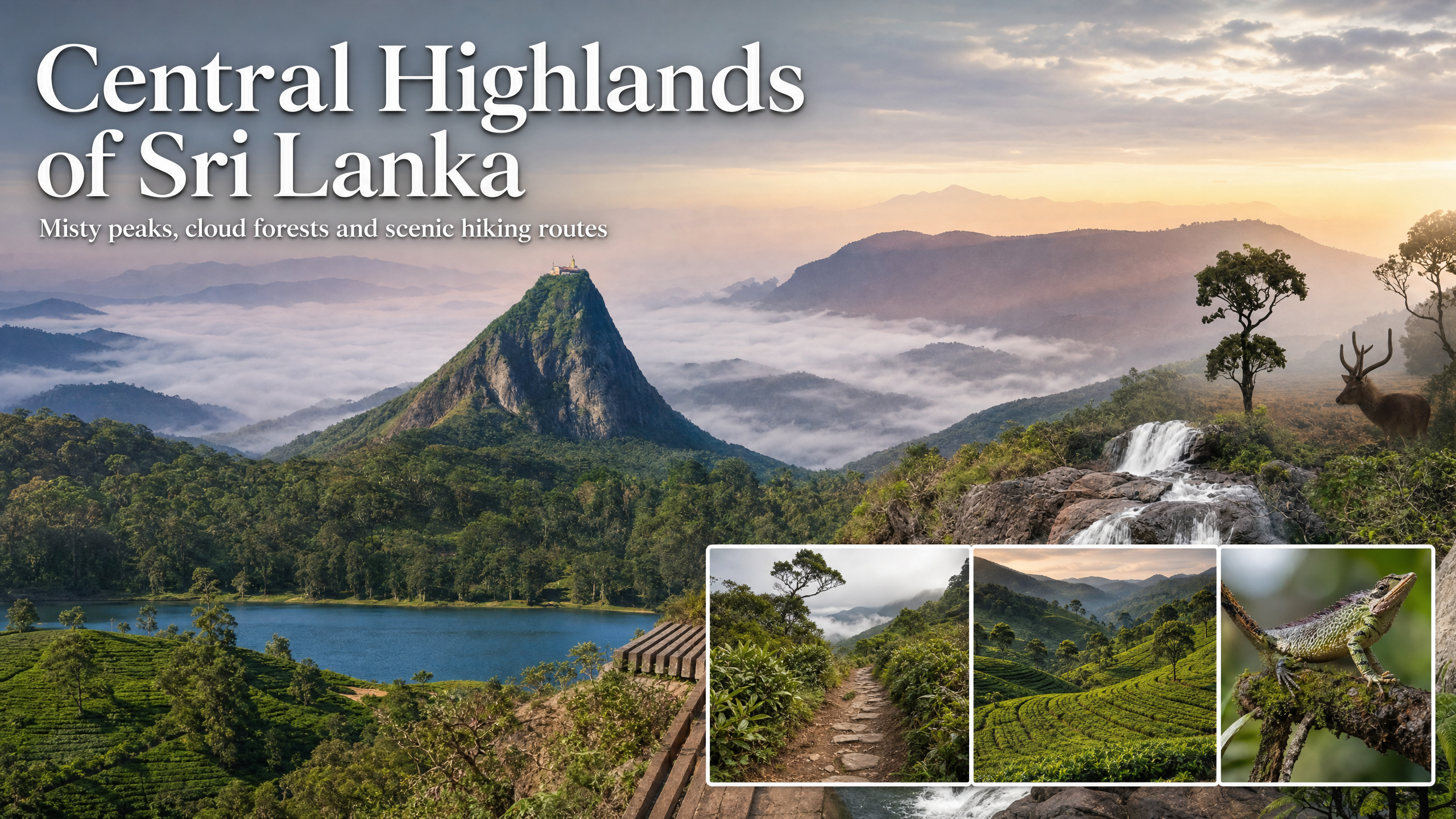
The Central Highlands World Heritage listing covers several mountain and forest areas, including Horton Plains National Park, the Peak Wilderness Protected Area and the Knuckles Conservation Forest. This is the Sri Lanka of misty highland trails, cloud forest, tea-country scenery and cooler temperatures.
For many travellers, Horton Plains and World’s End are the most practical way to experience this World Heritage landscape. Others may build the region into a longer route through Nuwara Eliya, Ella, Kandy and the tea plantations.
How to Visit the Central Highlands
Start early for highland hikes because weather and visibility often change by late morning. Warm layers are useful, especially around Horton Plains and Nuwara Eliya. If you are combining the Central Highlands with Ayurveda, beach time or a slower wellness stop, our Sri Lanka Ayurveda stop-by guide may help you design a more balanced route.
Practical Tips for Visiting Sri Lanka’s World Heritage Sites
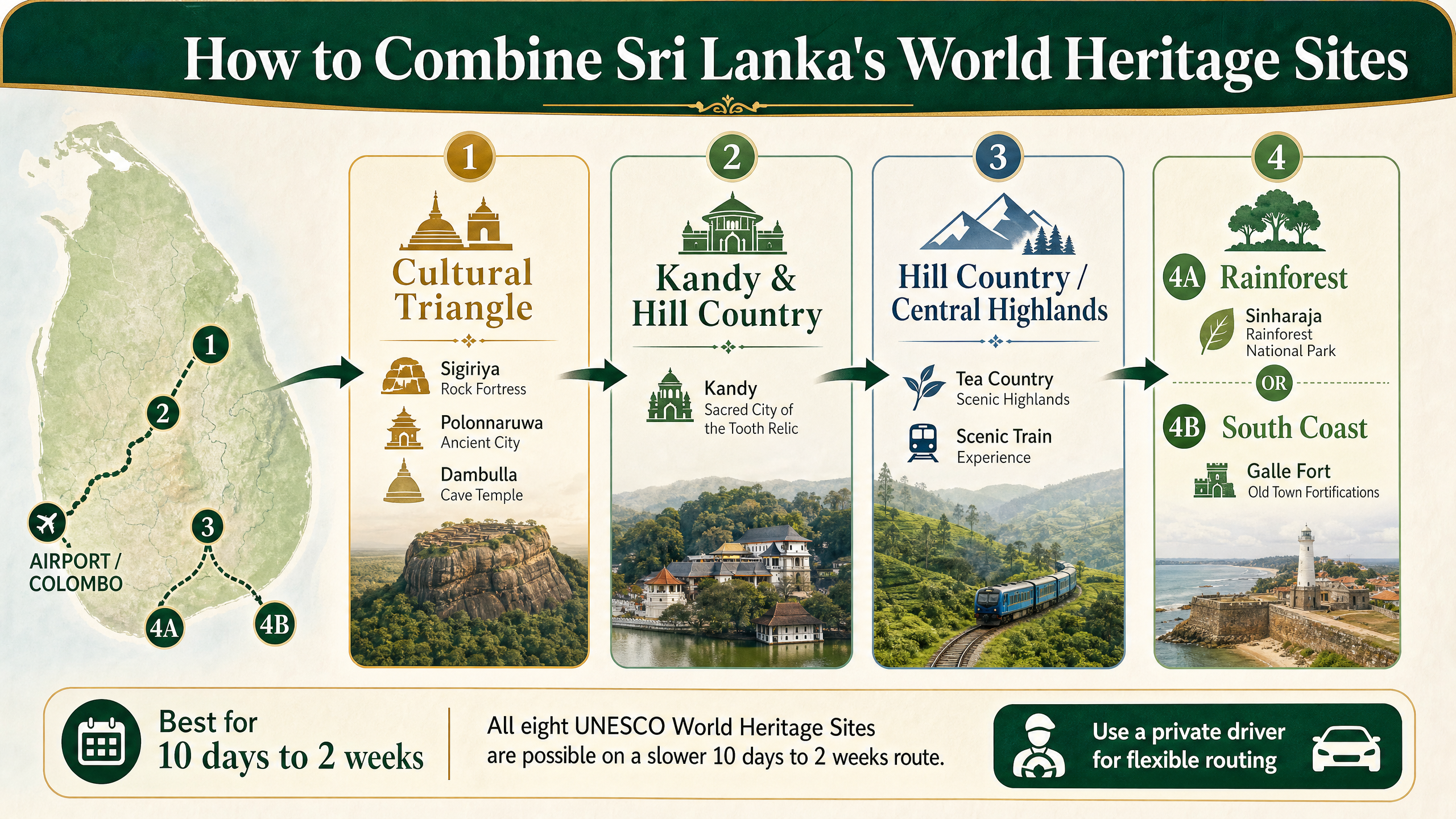
The easiest route depends on your available days, travel pace and interests. Cultural Triangle sites are comparatively efficient to combine, while Galle, Sinharaja and the Central Highlands require more route planning because they sit in different parts of the island.
| Topic | What to Know | Best Practical Approach | Common Mistake to Avoid | Helpful Internal Guide |
|---|---|---|---|---|
| Best season | Sri Lanka has regional monsoon patterns, so the best route depends on whether you focus on the Cultural Triangle, Hill Country, south coast or rainforest. | Keep your plan flexible and confirm local conditions before finalising long drives or hikes. | Assuming the whole island has one simple weather season. | Ask LankaMe to adjust the route by month and region. |
| Entrance fees and hours | Major attractions may have separate foreign visitor prices, ticket counters and opening-hour changes. | Check current information before departure and keep enough cash for some sites. | Arriving too late for a large site such as Sigiriya or Polonnaruwa. | Entrance fees and opening hours |
| Clothing and manners | Temple sites require covered shoulders and knees, and shoes are removed before entering sacred areas. | Carry a light scarf or sarong and wear footwear that is easy to remove. | Planning temple visits in beachwear or clothing unsuitable for religious sites. | Use a driver who can explain local etiquette before each stop. |
| Transport | Distances can feel longer than they look on a map because travel speeds vary by road type, weather and traffic. | Use a private car-and-driver route if you want to combine several regions efficiently. | Trying to connect multiple World Heritage Sites by public transport in too few days. | Private tours with driver |
| Travel pace | Ancient cities, temples, rainforest and mountain hikes all require different energy levels. | Mix heavy sightseeing days with lighter transfer days, cafe time, wellness stops or scenic drives. | Putting Sigiriya, Polonnaruwa and long transfers into the same rushed day. | Classic first-timer itinerary |
Scroll horizontally to see the full table →
Sample Private Tour Routes for World Heritage Travel
A short trip can focus on Sigiriya, Dambulla and Kandy, while a longer trip can add Anuradhapura, Polonnaruwa, the tea country and Galle. If you want to see all eight UNESCO sites, plan carefully and allow enough time for natural sites such as Sinharaja and the Central Highlands, which should not be treated as quick photo stops.
| Available Time | World Heritage Focus | Suggested Flow | Who It Suits | Notes |
|---|---|---|---|---|
| 2 nights / 3 days | Dambulla, Sigiriya, Kandy | Colombo or airport → Dambulla → Sigiriya → Kandy | Travellers with limited time who want iconic cultural highlights. | Keep the schedule realistic and start early on the Sigiriya day. |
| 3 nights / 4 days | Anuradhapura, Dambulla, Sigiriya, Kandy | Airport → Anuradhapura → Sigiriya or Dambulla base → Kandy | Travellers who want deeper Buddhist history without extending too long. | Anuradhapura adds historical depth but requires more driving. |
| 4 nights / 5 days | Anuradhapura, Polonnaruwa, Dambulla, Sigiriya, Kandy | Cultural Triangle base → Polonnaruwa day → Sigiriya and Dambulla → Kandy | Travellers whose priority is ancient cities and archaeology. | See our 5 to 7 day Cultural Triangle itinerary for route inspiration. |
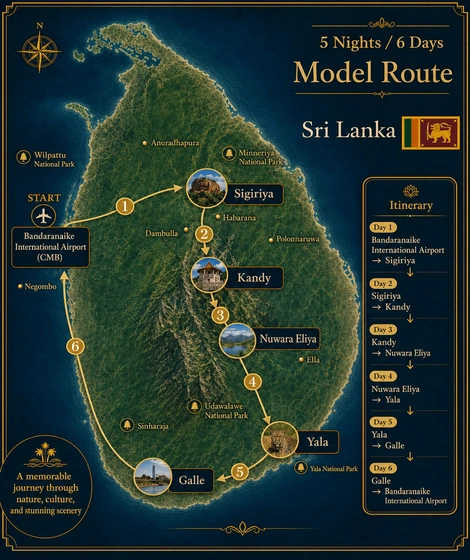
| 5 nights / 6 days | Cultural Triangle, Kandy, Tea Country, Galle | Airport → Cultural Triangle → Kandy → Hill Country → Galle or south coast | First-time visitors who want culture, scenery and a coastal finish. | Add the Tea Train if the schedule and ticket availability allow. |
| 10 days to 2 weeks | All eight sites if paced carefully | Cultural Triangle → Kandy → Central Highlands → Sinharaja → Galle → coast | Travellers who want a comprehensive Sri Lanka World Heritage journey. | Use a custom route and avoid changing hotels every single night. |
Scroll horizontally to see the full table →
Want a World Heritage Route Built Around Your Travel Dates?
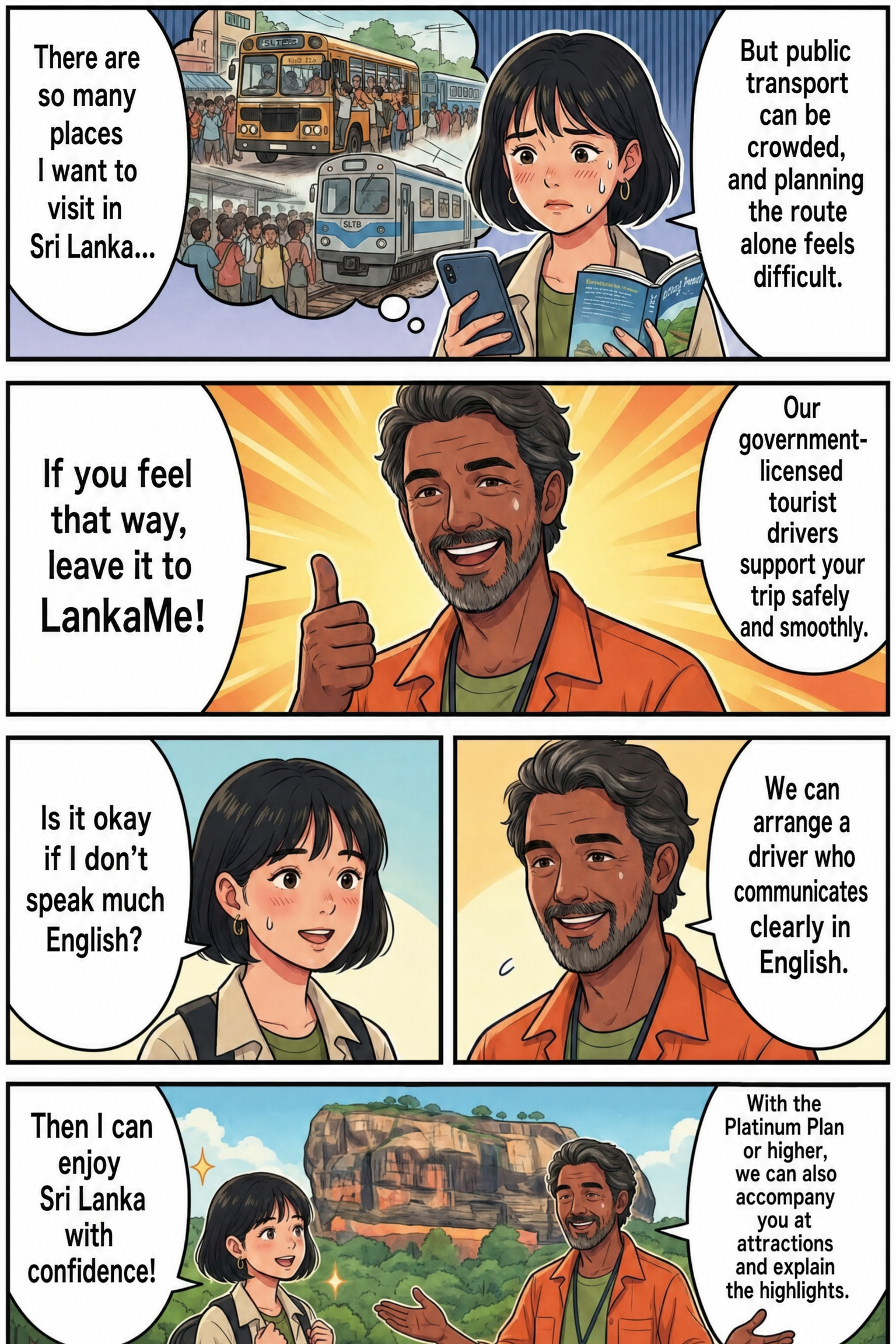
LankaMe can help you combine Sri Lanka’s UNESCO World Heritage Sites with safaris, Ayurveda, tea-country scenery, beach stays and local food stops. Tell us your arrival date, departure date, must-see places and travel style, and we will suggest a practical private-driver route.
Conclusion: Which Sri Lanka World Heritage Sites Should You Choose?
If this is your first visit, Sigiriya and Dambulla are the easiest UNESCO pair to include, while Kandy is a natural gateway to the Hill Country. Add Anuradhapura and Polonnaruwa if ancient kingdoms and Buddhist history are a priority. Choose Galle if you want a relaxed coastal town atmosphere, Sinharaja if you love rainforest nature, and the Central Highlands if mountain scenery and hiking appeal to you.
The best itinerary is not simply the one with the most places. It is the route that matches your pace, interests and season. With thoughtful planning and a private driver, Sri Lanka’s eight UNESCO World Heritage Sites can become the backbone of a rich, varied and memorable journey.


コメント