
Practical information checked on 31 October 2026. Rules, prices and interfaces can change; use the official links when making your final arrangements.
Sri Lanka’s currency is the Sri Lankan rupee (LKR), often shown locally as Rs. For travellers from Britain, the practical task is to obtain enough LKR for the parts of the trip that require cash while keeping cards and a backup payment method available. Pounds sterling can be exchanged through authorised providers, but a displayed rate is not a promise of the net amount you will receive.
Changing money at Colombo airport
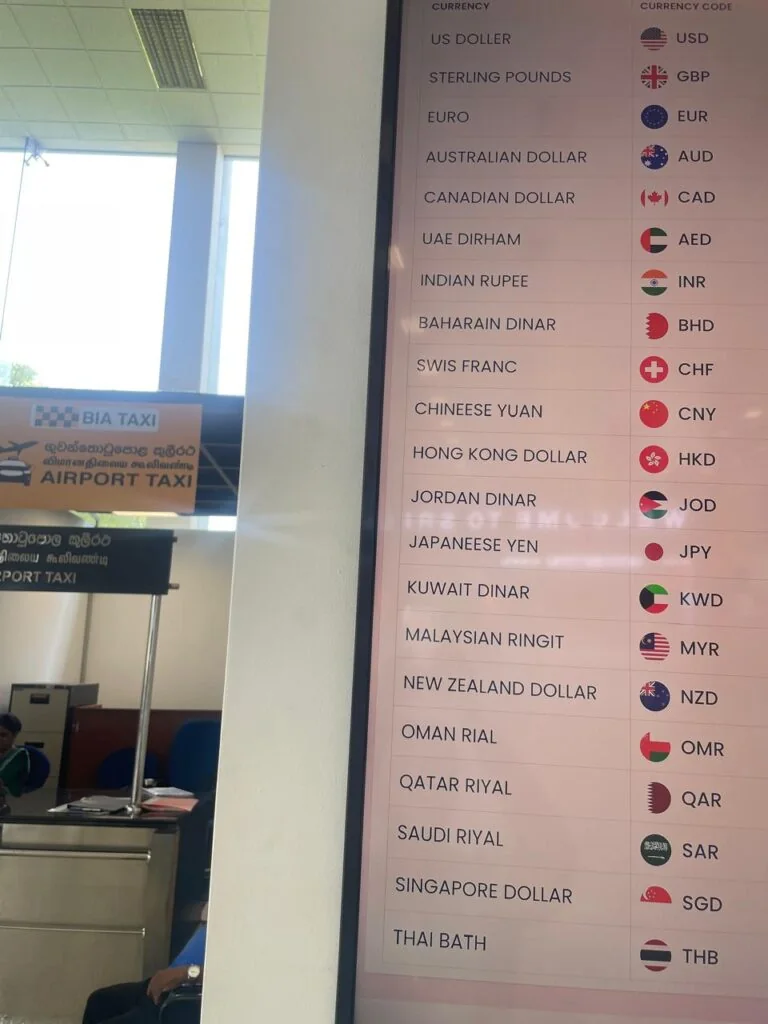
The arrivals services at Bandaranaike International Airport include banks and foreign-exchange facilities. Changing an initial amount can cover immediate expenses before you travel onwards. Check which currencies and banknotes the counter accepts, its rate, any fees and the final number of rupees before handing over cash. Count the money and retain the receipt. Official airport arrivals services.
Do not assume the airport is always the best or worst place to change money. The useful comparison is the final LKR amount after all charges, along with the convenience and security of the provider. Avoid carrying your entire holiday budget in one wallet or exchanging more cash than you can keep securely.
GBP to LKR: compare the amount you actually receive
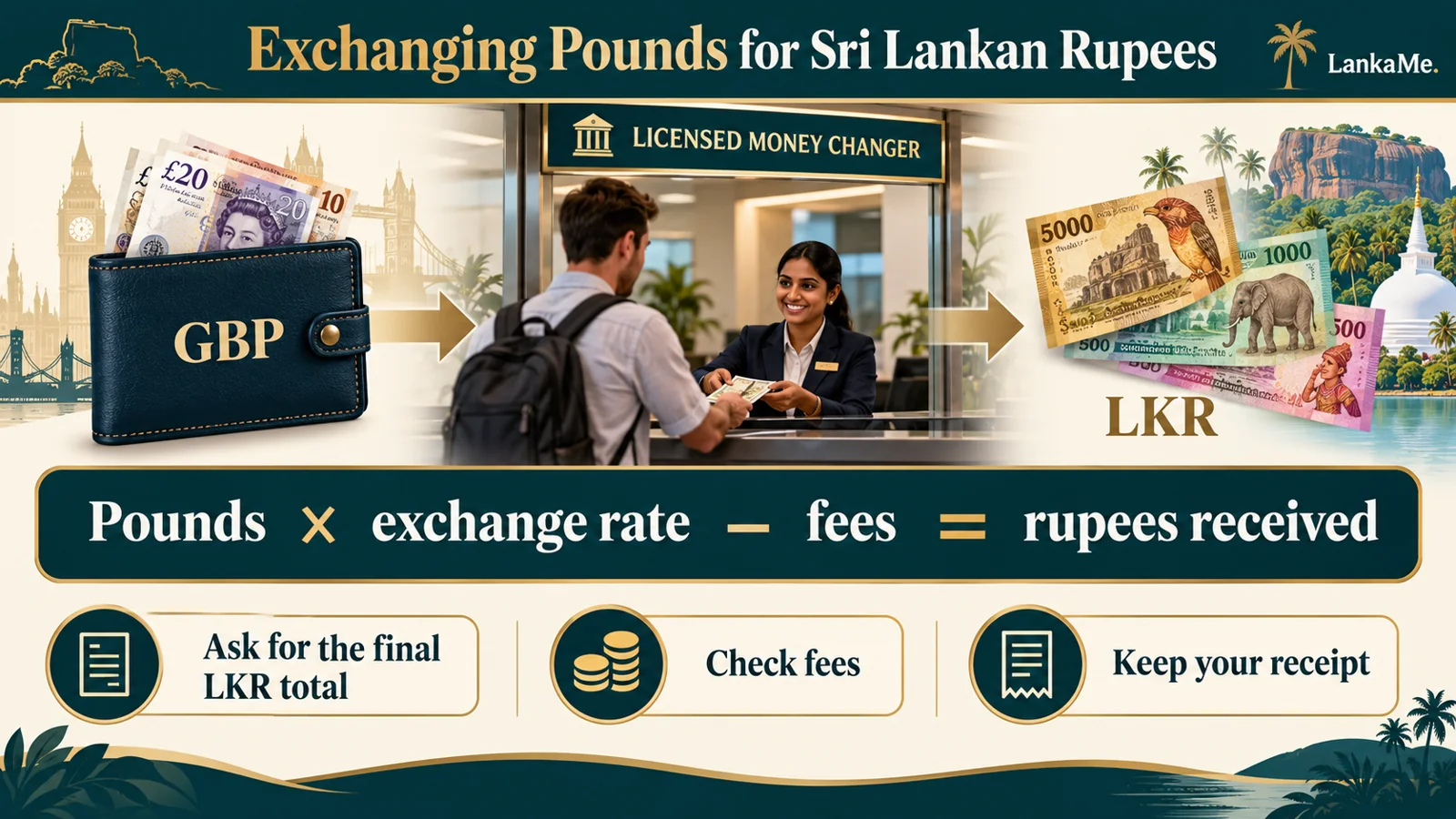
A GBP/LKR rate tells you how many Sri Lankan rupees are quoted for one pound, but a bank or money changer may use a different buying rate and charge fees. For a fair comparison, ask: “If I give you this amount of GBP, how many LKR will I receive in total?” Keep the comparison to the same currency and amount. This guide deliberately does not use a fixed rate or a yen-based conversion example.
Use licensed banks or authorised money changers. The Central Bank of Sri Lanka advises the public to avoid unauthorised foreign-currency dealings. Street approaches and a better-looking rate are not a substitute for an authorised provider and a receipt. Central Bank guidance on authorised exchange.
Using ATMs and bank cards
ATMs are available in major towns and cities, but not every machine accepts international cards. Check your own bank’s withdrawal limits, overseas fees and security settings before leaving Britain. Carry a backup card kept separately and know how to contact the issuer. Where possible, use a machine at a bank or another well-managed location, inspect it and shield your PIN. FCDO money information.
At an ATM or card terminal, read the currency choice and any conversion offer before accepting. Paying or withdrawing in LKR lets your card provider handle the conversion rather than accepting a merchant’s or ATM operator’s conversion to GBP; check your issuer’s charges and compare the terms shown. Cancel if the fee or exchange option is unclear. A credit-card cash withdrawal can have different charges and interest from an ordinary card purchase.
How much cash should you prepare?
There is no single daily cash figure that suits every itinerary. A day at a hotel, a temple-and-safari day and a long transfer can have very different costs. Build a cash plan from the confirmed expenses rather than multiplying an old pound or yen example.
| Expense | What to check | Practical preparation |
|---|---|---|
| Driver Fare | Amount, currency and payment dates in your confirmed quotation. | Set aside the agreed local cash separately from spending money. |
| Attractions and activities | Current entry fees, what your booking includes and which payments are cash-only. | Check each operator or attraction before the visit. |
| Meals and small purchases | Whether your hotel or restaurant accepts cards and whether any service charge is included. | Carry manageable notes and ask for a receipt. |
| Optional tips | Tips are voluntary, not an automatic part of the fare. | Use LKR if you choose to tip; agree first if offering another currency. |
| Contingency | Unexpected transport, fees or a temporary card problem. | Keep a sensible reserve and a separate backup payment method. |
Ask for smaller notes where available, since drivers and small businesses may not have enough change for a large note. Keep enough cash for the next stage of your route without relying on finding a working ATM at a remote stop. Do not assume foreign banknotes will be accepted for everyday purchases.
Paying your LankaMe driver locally
LankaMe’s Agency Service Fee, paid online, and the Driver Fare, paid directly to the driver or local transport operator, are separate payments. The online amount is not necessarily the entire charter price. The confirmed quotation states the amounts, currencies and schedule.
The Driver Fare is normally paid locally in LKR cash, usually split between the first and last days. Paying it all on the first day may be possible by agreement. GBP, USD, EUR or another currency is an option only if the driver agrees in advance, including the exchange rate and amount. Your confirmed arrangements take precedence. See the payment FAQ for the details.
Hotel bills and final-day arrangements
Confirm your hotel’s payment methods before arrival. A card used to guarantee a room does not always mean the bill has been paid, and a quoted room price may have conditions or exclusions. Check the currency of the final bill and keep a receipt. Before your last transfer, confirm any remaining Driver Fare and leave time to obtain the right cash rather than relying on a last-minute airport transaction.
Continue planning your trip
Return to the Sri Lanka travel preparation checklist for clothing, power, phone, money, entry and insurance advice. For a route that fits your dates, see our private tour planning guide.


Comments