
Practical information checked on 31 October 2026. Rules, prices and interfaces can change; use the official links when making your final arrangements.
Travel insurance is part of preparing for a Sri Lanka holiday, whether you are travelling as a couple, with children or on a longer independent route. A policy should fit the people travelling, the trip dates and the activities you actually plan to do. A headline price or a card’s “travel benefits” label is not enough to show that medical treatment, disruption and getting home are covered.
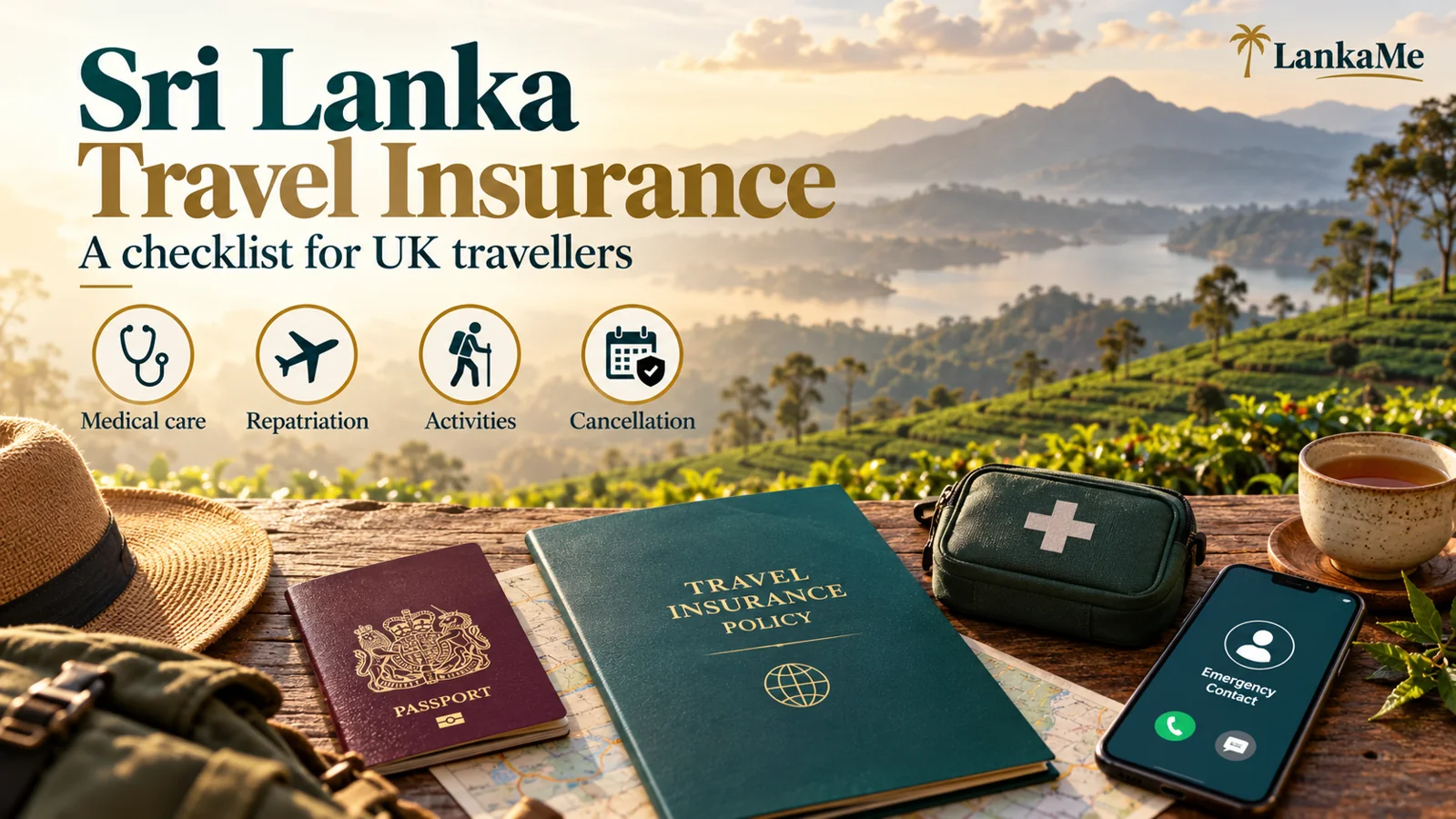
Why arrange insurance for Sri Lanka?
Medical treatment and emergency travel home can create significant unexpected costs. The FCDO notes that emergency treatment outside major cities may be difficult to access and that private care and repatriation can be expensive. Arrange cover appropriate to your health and itinerary before departure, and keep the insurer’s assistance details available. FCDO health advice for Sri Lanka.
Vehicle insurance and compensation arrangements in Sri Lanka may differ from those in Britain. The cover available after an incident depends on the actual policy, circumstances and applicable law. Do not assume that a driver’s vehicle insurance replaces your own medical, personal accident or travel-disruption cover. This is not a statement that any party’s legal responsibilities disappear.
Check existing cover before buying another policy
You may already have insurance through an annual policy, a packaged bank account, an employer or a card benefit. Obtain the policy wording and certificate, then check who is insured and whether the cover is active. Some benefits have registration, residency, age, trip-length or payment requirements. Do not assume that holding a card automatically covers every family member or every journey.
| Existing cover | Questions to ask | What to keep |
|---|---|---|
| Annual travel policy | Does it include Sri Lanka, all transit stops and the full length of this trip? | Certificate, schedule and current policy wording. |
| Packaged bank account | Have all travellers met eligibility and activation requirements? Are medical conditions accepted? | Bank’s insurer details and any written medical-screening confirmation. |
| Credit or charge card benefit | What purchases or other conditions activate the benefit? What is excluded? | Benefit terms and evidence required under the policy. |
| Employer or group cover | Does it cover this personal holiday and your planned activities? | Written confirmation of the scope and emergency contact. |
If the existing cover is unclear, ask the insurer to confirm the point in writing. A second policy does not necessarily double a claim payment; insurers may have rules for sharing a loss. Compare the actual protection you need rather than trying to add together headline benefit limits.
Choosing a standalone travel policy
Compare single-trip cover with an annual policy based on your travel plans. Check the geographical area, maximum duration of each trip, who can be included and whether the policy must begin before leaving the UK. Buy at the point that suits your cancellation-cover needs, rather than waiting until the flight date without checking what would happen if you had to cancel beforehand.
Read the excesses, sub-limits and exclusions, not only the overall medical limit. A large headline limit can coexist with a smaller allowance for valuables or missed departures. A comparison table is a starting point; the policy documents determine what is covered. This guide does not recommend a particular insurer or guarantee that a claim will be accepted.
What your policy should address
| Area | Check against your Sri Lanka itinerary |
|---|---|
| Medical treatment and repatriation | Emergency care, transport to an appropriate hospital and medically necessary travel home. Ask how authorisation and payment work. |
| Medical history | Declare conditions, medication, pending tests or treatment as required. Check any exclusions or additional premium. |
| Activities | Tell the insurer about trekking, safari trips, boat excursions, diving, surfing or other planned activities. Check altitude and equipment restrictions where relevant. |
| Cancellation and curtailment | Covered reasons, total prepaid costs, excess and what happens if you must end the trip early. |
| Travel disruption | Missed connections, delays and any limits applying to separately booked services. |
| Baggage and valuables | Limits per item, unattended-property rules and evidence needed for a claim. |
| Personal liability and accident | Scope, exclusions and whether optional cover is needed for your plans. |
Check current FCDO advice for Sri Lanka and your transit stops. Travelling contrary to advice can affect insurance, depending on the policy. Keep the documents and emergency-assistance number with you. The FCDO travel insurance guide explains the main areas to review. A GHIC or EHIC should not be treated as a substitute for travel insurance.
Before a safari, trek or boat tour
Give the insurer the actual activity and relevant details, such as the trekking route and maximum elevation, whether a guide is involved and the type of water activity. “Adventure cover” can mean different things between policies. If you change the itinerary during the holiday, check the new activity before taking part. LankaMe arranging an excursion does not establish that your personal policy covers it.
For inspiration, see our activity guide and trekking guide, then confirm the insurance position with your provider. Tell us about practical assistance needs before a trip so that any transport arrangements can be discussed; do not use the contact form to request an insurance coverage decision.
If you need medical help or have to make a claim
For an ambulance in Sri Lanka, call 1990. Seek urgent medical help first when necessary and contact the insurer’s emergency team as soon as you can. Ask the insurer about approval for treatment, hospital payment or changes to flights rather than assuming every expense will be reimbursed. Keep receipts, medical reports and any incident reference requested under the policy.
Save your policy number and assistance contact offline, and let a travelling companion or someone at home know where to find them. Keep a payment method available for expenses you may need to pay initially, subject to the insurer’s process. For lost property or a cancelled service, retain the documents that show what happened and what refunds or alternatives were offered.
Insurance checklist before departure
- Sri Lanka, transit countries, every traveller and the full trip dates are included.
- Medical history has been declared and accepted as required.
- Emergency treatment, repatriation and planned activities have been checked.
- Cancellation costs, excesses and exclusions are understood.
- Policy documents, assistance number and a backup payment method are accessible.
- Current travel and health advice has been reviewed.
The aim is to know what to do if something goes wrong, not simply to have a policy number. Your insurer is the right source for a binding answer about your own cover.
Continue planning your trip
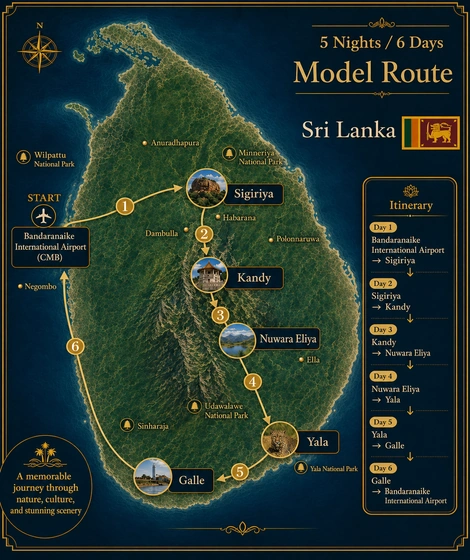
Return to the Sri Lanka travel preparation checklist for clothing, power, phone, money, entry and insurance advice. For a route that fits your dates, see our private tour planning guide.




Comments