
Practical information checked on 31 October 2026. Rules, prices and interfaces can change; use the official links when making your final arrangements.
A Sri Lanka packing list needs to work for humid coastal afternoons, cooler hill-country mornings and visits to sacred sites. For travellers leaving Britain, the useful combination is light clothing, a warm layer and a modest outfit that can be worn without a last-minute change. Heavy winter clothing is usually unnecessary for a typical sightseeing holiday, but a bag packed only for the beach can leave you uncomfortable inland.
Sri Lanka’s climate and seasonal clothing
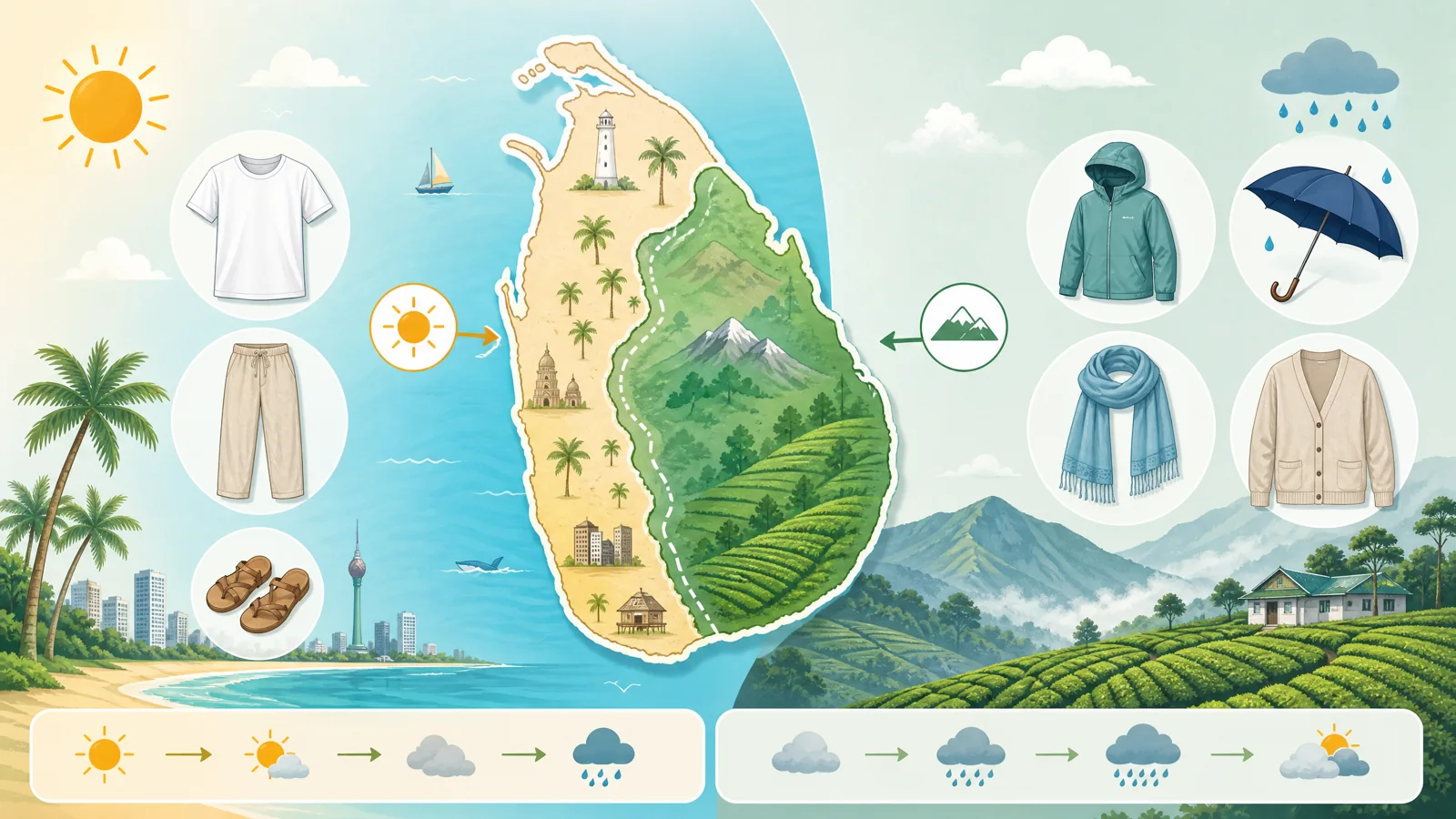
Use breathable shirts, T-shirts and loose trousers as your base. Cotton and linen can feel comfortable in the heat; quick-drying fabrics are useful when you need to wash clothes between stops. A light waterproof jacket is easier to carry than a heavy coat. Keep a change of clothing accessible on long transfer days.
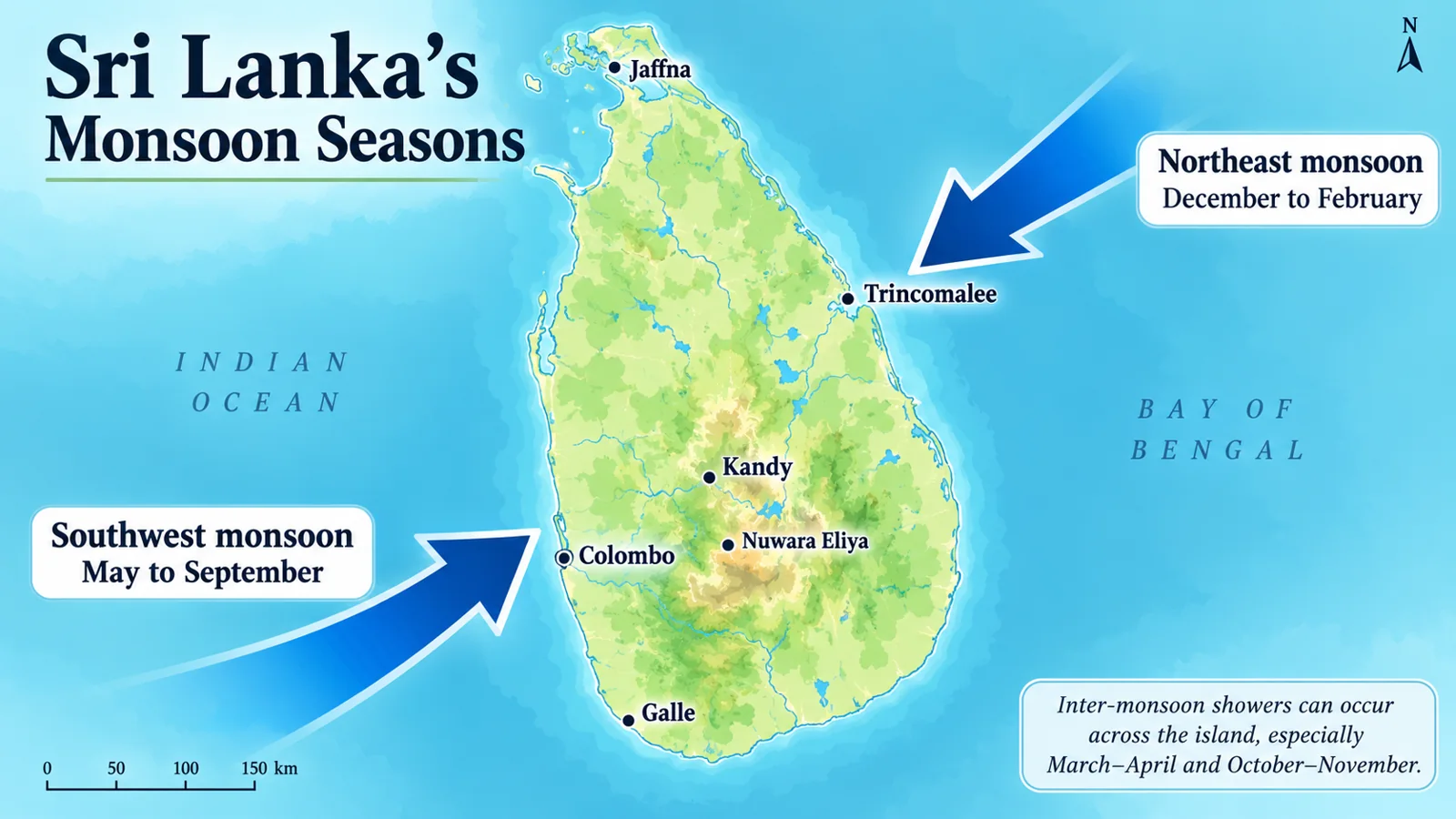
The southwest monsoon generally runs from May to September, and the northeast monsoon from December to February. March–April and October–November are inter-monsoon periods, so showers are not limited to one coast. These are broad seasonal patterns, not a dry-weather promise for any date. Check the forecast for each overnight stop. Sri Lanka Tourism weather guide.
What to wear in different regions
Coast and lowlands: Colombo, Galle and beach areas
Choose loose, lightweight clothing and comfortable walking shoes or secure sandals. A hat, sunglasses and sun protection help on exposed walks. Long, light trousers and sleeves can be useful for sun and insect protection without adding the weight of denim. Air-conditioned vehicles and restaurants may feel cooler than the street, so keep a thin layer in your day bag.
Hill country: Kandy, Nuwara Eliya and Ella
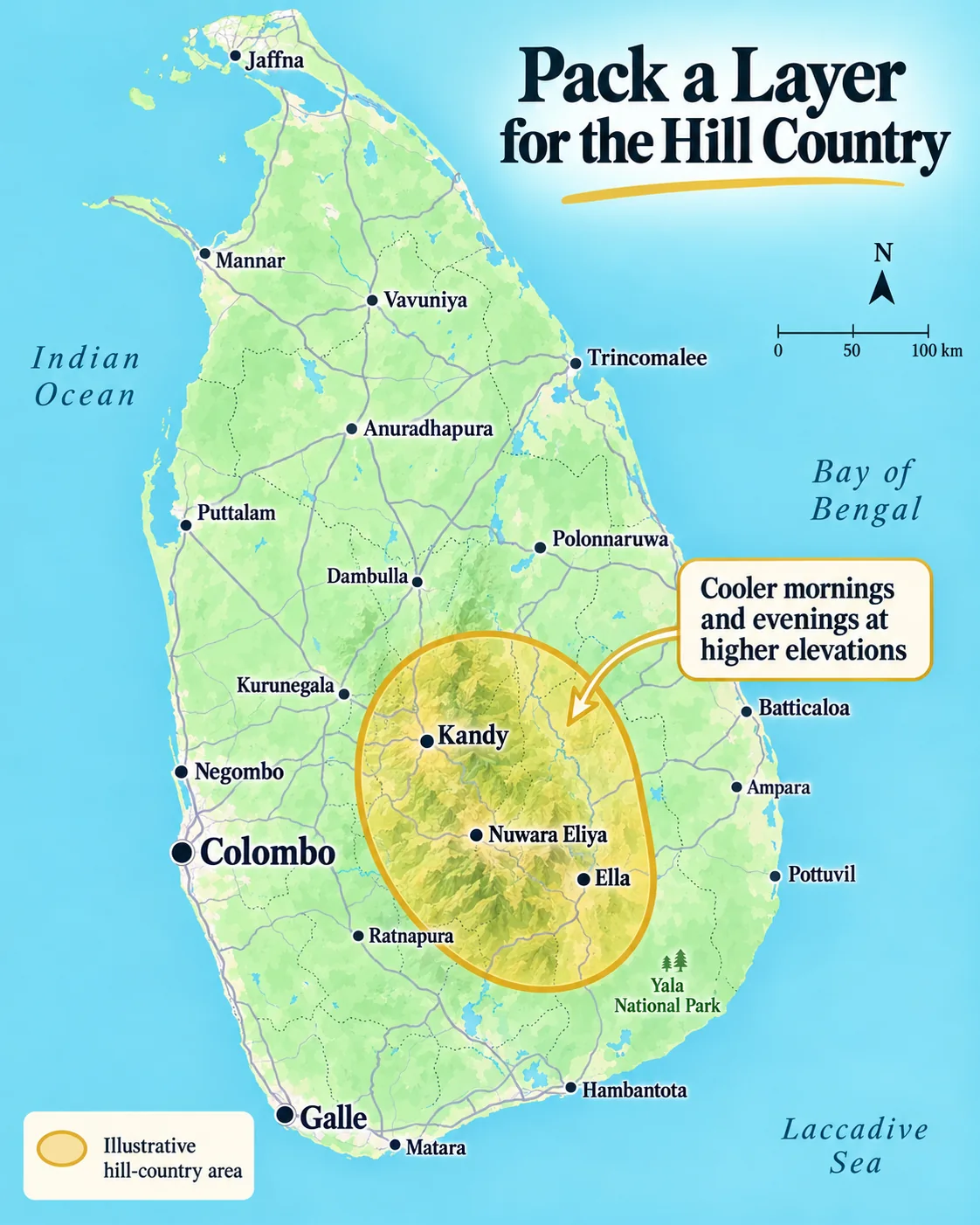
Higher stops can feel noticeably cooler, particularly early in the morning, after rain and in the evening. Pack a jumper or fleece, long trousers and a light waterproof. Kandy is generally warmer than the higher tea-country towns, so avoid treating every inland stop as the same climate. For a sunrise walk or exposed viewpoint, carry an extra layer rather than relying on a T-shirt alone.
Clothing for temples, beaches and wildlife trips
Temples and Buddhist monuments
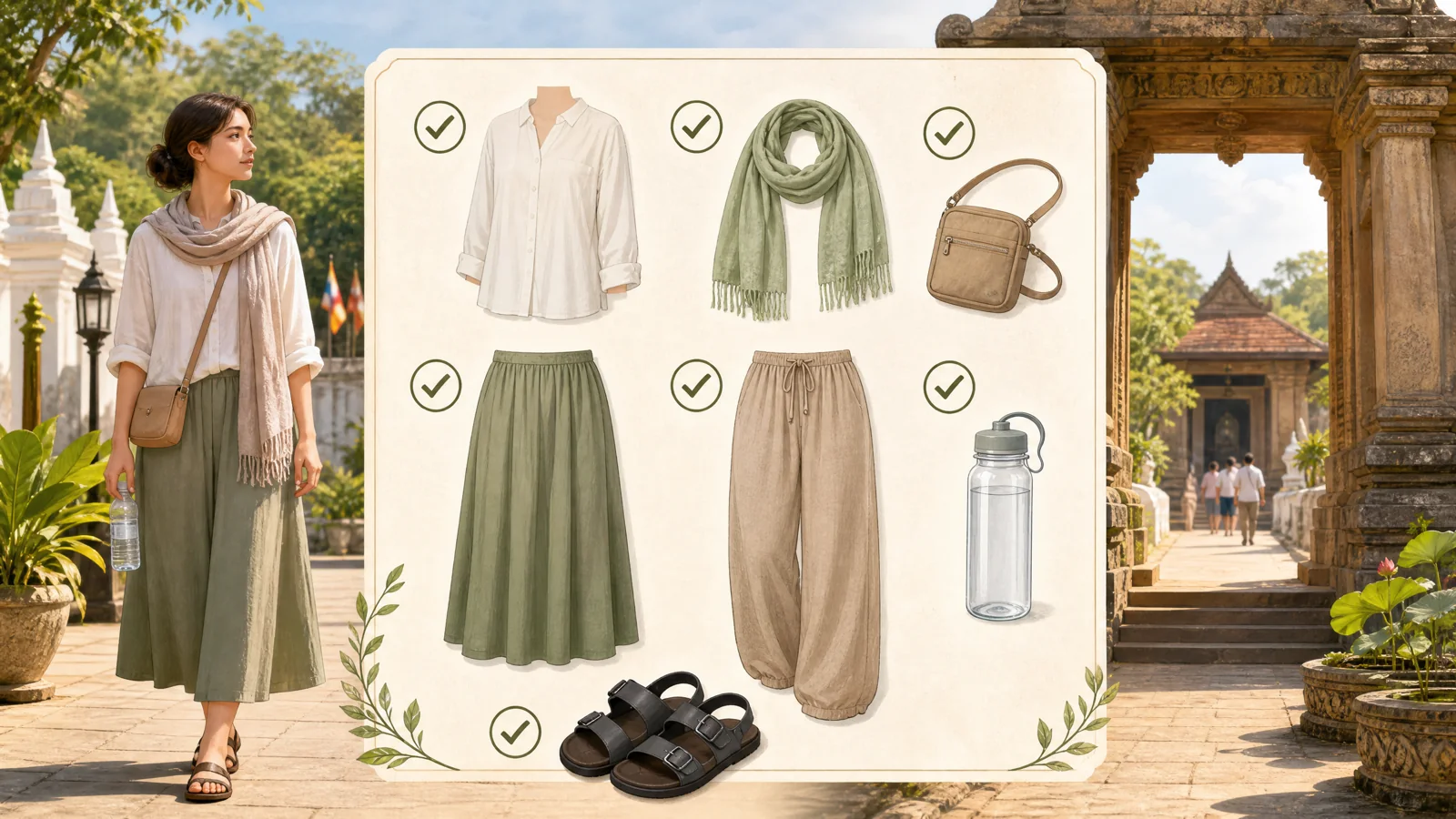
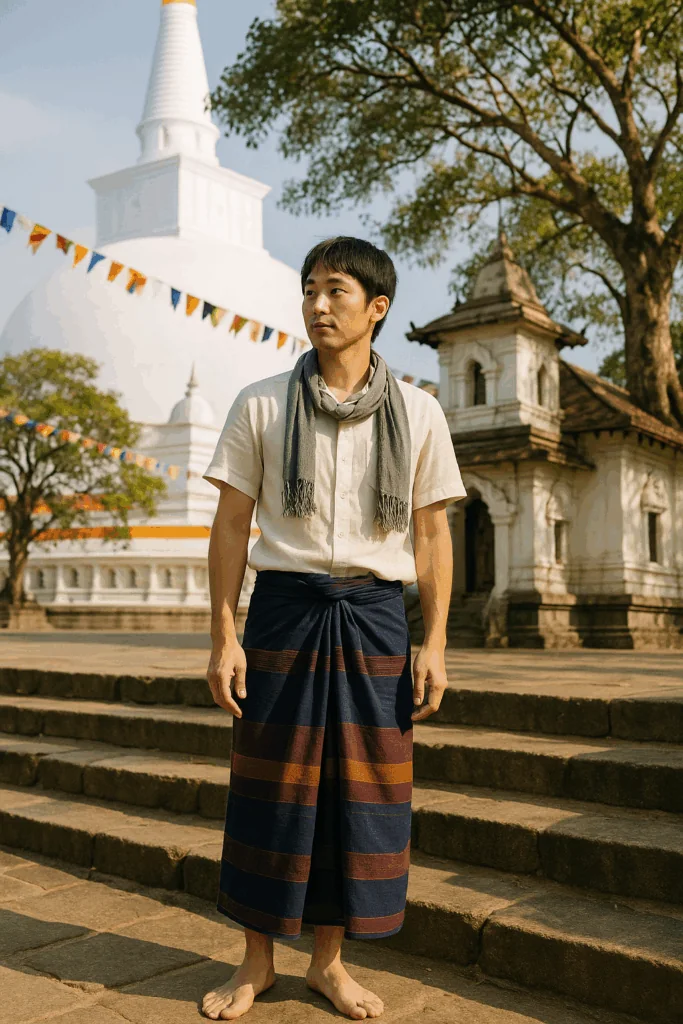
For Buddhist temples, cover your legs and shoulders and remove shoes and hats. Long trousers or a long skirt with a shoulder-covering top are practical choices for all travellers. A scarf can supplement an outfit, but do not assume a small scarf or knee-length shorts will meet every site’s requirements. Follow the staff’s instructions. FCDO guidance on dress codes.
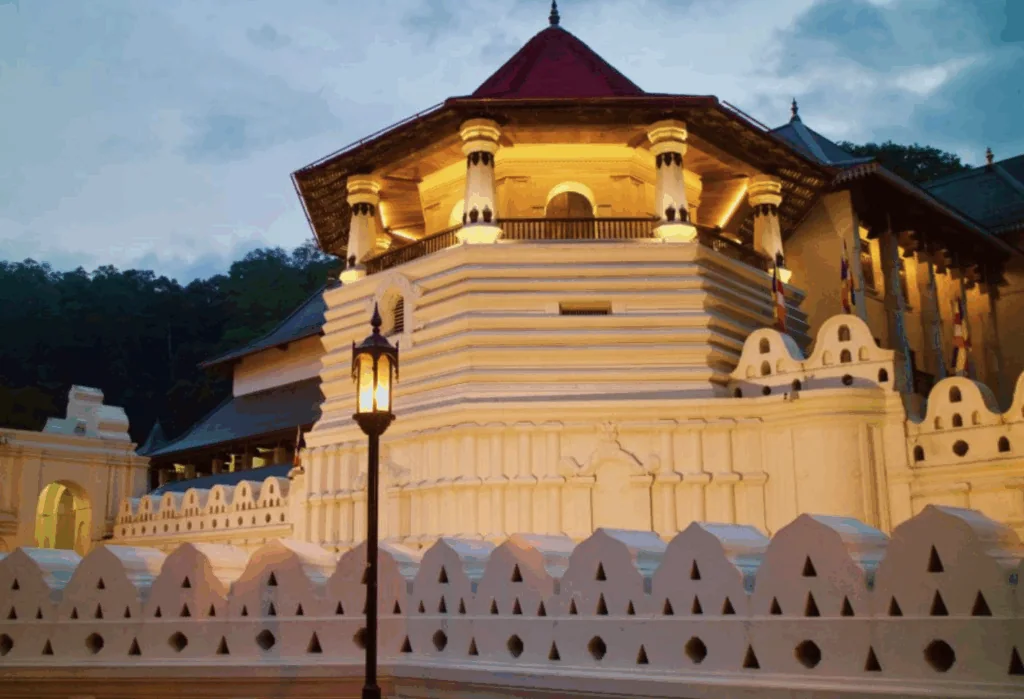
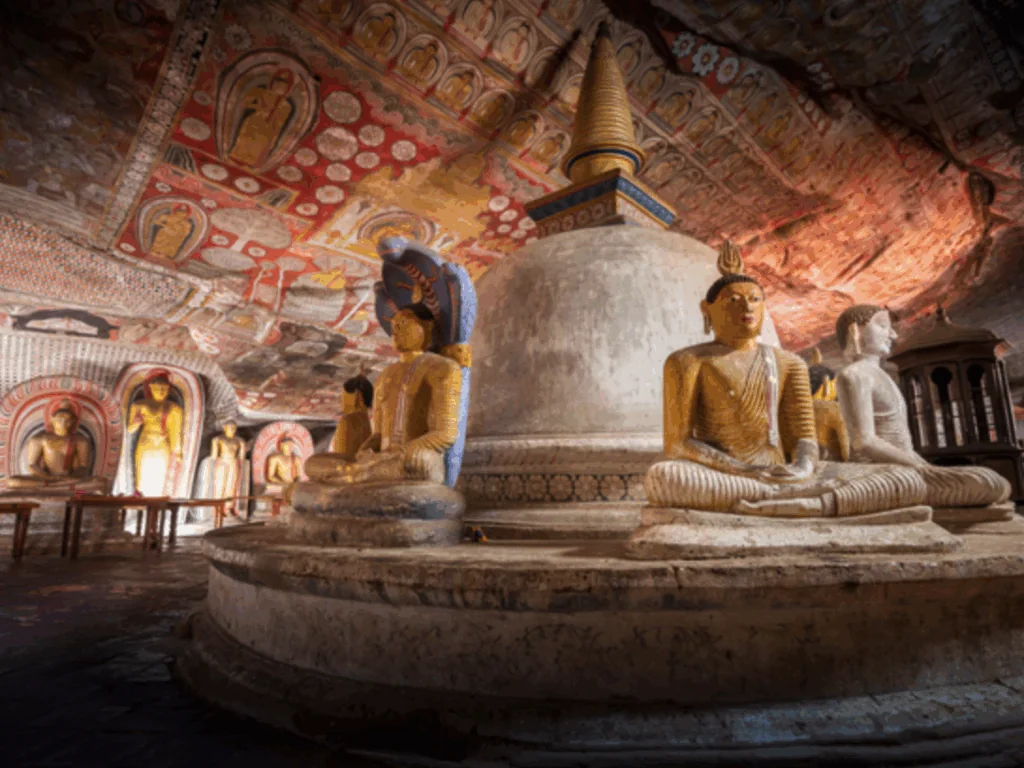
Take a small bag for shoes and consider spare socks where permitted, as paving can be hot. Socks do not replace the requirement to remove footwear, and local rules take precedence. Avoid transparent clothing and outfits that expose the shoulders when you bend or lift your arms. If a visit follows a beach stop, allow time to change.
Beach and pool clothing
Swimwear belongs at the beach or pool. Put on a cover-up or shirt and suitable bottoms before walking through towns, visiting shops or entering restaurants. Nude or topless sunbathing is not permitted. A separate dry outfit makes onward travel more comfortable and avoids bringing wet swimwear into the vehicle.
Safari and outdoor excursions
Muted colours, comfortable layers and closed shoes are practical for dusty jeep trips and uneven ground. Take a hat, rain layer and a small protective bag for your camera. For trekking, use footwear with grip and carry water. Ask the organiser about the terrain and weather before choosing between trainers and walking boots; casual beach sandals are a poor choice for a demanding trail.
Practical outfit ideas for women
Loose trousers, a midi or maxi skirt and breathable tops offer several combinations without overpacking. Include at least one opaque top that covers the shoulders and a skirt or pair of trousers long enough for temple visits. A lightweight scarf, secure sandals and a warmer evening layer are useful additions. Choose clothing you can walk and climb steps in comfortably.
Practical outfit ideas for men
Pack lightweight trousers as well as shorts, plus T-shirts or short-sleeved shirts. Keep a long pair of trousers ready for religious sites. A sarong may be available locally, but availability is not guaranteed, so arriving with a suitable outfit is simpler. A light long-sleeved shirt can also work for evenings and outdoor activities.
Final clothing checklist
- Breathable tops and lightweight trousers or skirts.
- One complete outfit that covers legs and shoulders for temple visits.
- A jumper or fleece and a light waterproof for the hills.
- Comfortable walking shoes, secure sandals and spare socks.
- Hat, sunglasses, sun protection and insect repellent used according to its instructions.
- Swimwear, a cover-up and a separate dry outfit.
Check your route before packing: a beach holiday, a tea-country journey and an Adam’s Peak climb need different layers. For walking excursions, see our trekking guide.
Continue planning your trip
Return to the Sri Lanka travel preparation checklist for clothing, power, phone, money, entry and insurance advice. For a route that fits your dates, see our private tour planning guide.





Comments