

Scenic routes, Nine Arches Bridge
and how to book tickets
Sri Lanka’s Tea Train is one of the country’s most memorable travel experiences. Its tea-estate scenery has also attracted attention in Japan through Kirin’s Gogo-no-Kocha advertising featuring Ren Meguro of Snow Man.


This guide shares first-hand information from our own journeys on the Tea Train, including practical details that are useful when planning your trip.


The Tea Train was not originally built as a tourist attraction. Its roots lie in the railway developed during the British colonial period to connect the hill-country plantations—first coffee, then tea—with the port of Colombo for exports.
The first train ran between Colombo and Ambepussa in 1864, and the line gradually extended into the highlands. Transporting plantation produce to Colombo was a central purpose of the railway.

The railway subsequently reached Kandy in 1867, Nanu Oya in 1885, Bandarawela in 1894 and Badulla in 1924, forming a mountain route through the tea-growing region.
Today’s scenic passenger journeys around Kandy and Ella use this historic railway infrastructure, with its bridges, tunnels and mountain alignments originally developed for transport and trade.


Below, we explain the recommended sections, seat classes and ticket-booking options, with photographs and practical advice from our travels.
Kandy to Nanu Oya: the railway gateway to Nuwara Eliya

Service note — February 2026: This section was suspended following Cyclone Ditwa in late November 2025. Check Sri Lanka Railways’ official updates for the service on your travel date.
If your itinerary takes you from Kandy to Nuwara Eliya before returning towards Colombo, this is the relevant section. The leisurely train journey takes around 3½–4 hours when services are operating.
Tea estates do not cover the entire journey. If you do not have a reserved seat and are prepared to stand, consider the approximately 1½-hour stretch from Hatton to Nanu Oya, subject to services operating.
A private car and driver can take you to the boarding station. If you have no advance reservation, your driver can help you buy a same-day ticket. Arrange to meet the driver again at Nanu Oya and continue your sightseeing in Nuwara Eliya.
In Nuwara Eliya, tea-plucking experiences and afternoon tea at a hotel are enjoyable additions to the itinerary.
Nanu Oya to Ella and Demodara: cross Nine Arches Bridge by train

Service update — late June 2026: Trains from Nanu Oya had resumed as repairs after Cyclone Ditwa progressed. The operating-status illustration below records that period. Check Sri Lanka Railways’ official updates before travelling.
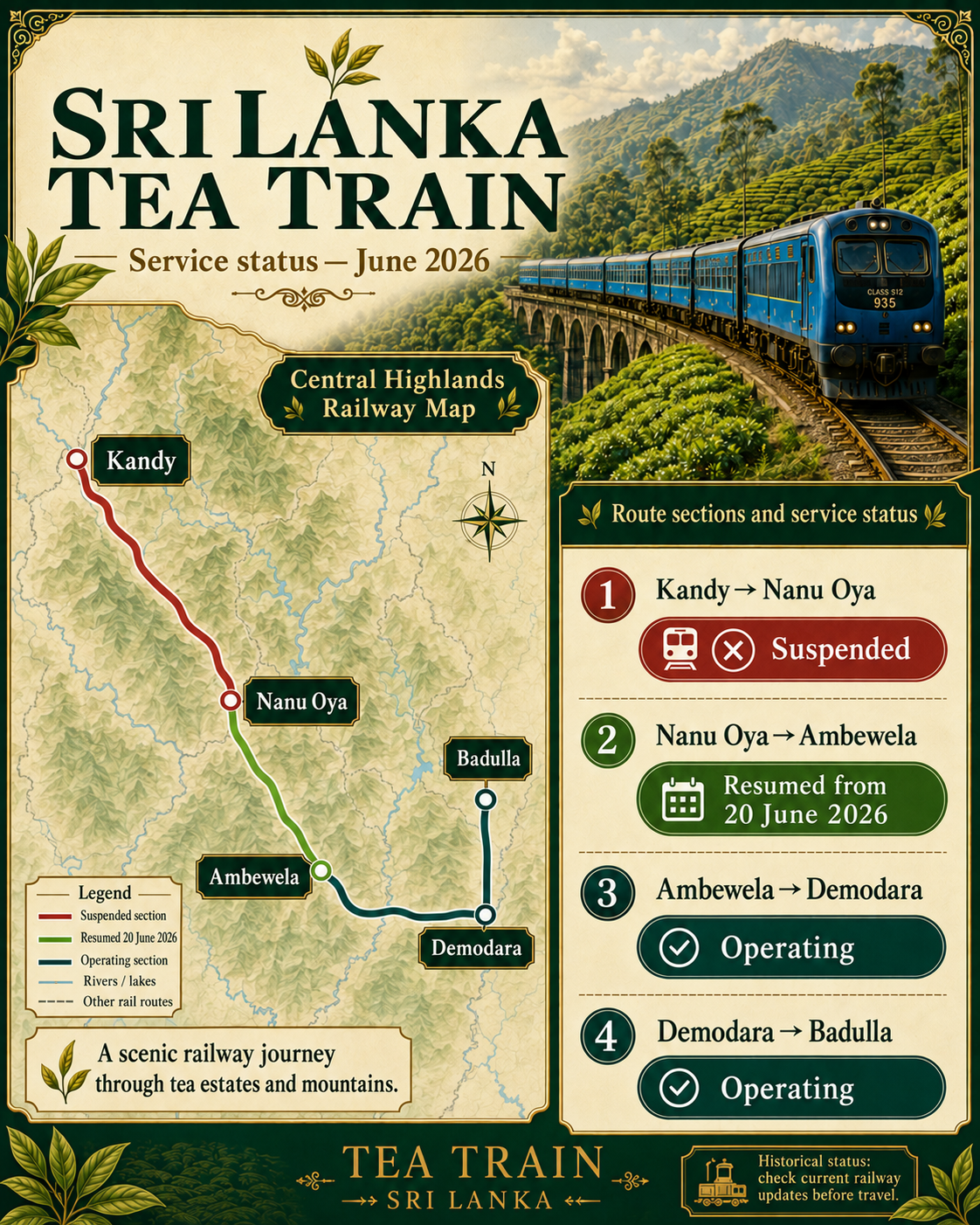
The following departure timetable was recorded in July 2026. Confirm the current times and operating days before travelling.

The photographs below show Nanu Oya station. It is in the highlands and felt chilly during our visit, so bring a light jacket.


Allow around 2½–3 hours for the leisurely journey from Nanu Oya to Ella. Continuing to Demodara to cross Nine Arches Bridge takes longer; the illustrated itinerary below allows about 3½ hours.
 Yui
The first 30 minutes out of Nanu Oya offer beautiful views. The next 40 minutes are less scenic, but after roughly the first hour another spectacular stretch of about 30 minutes begins.
 Arjun
For this direction of travel, we recommend a seat on the left-hand side.
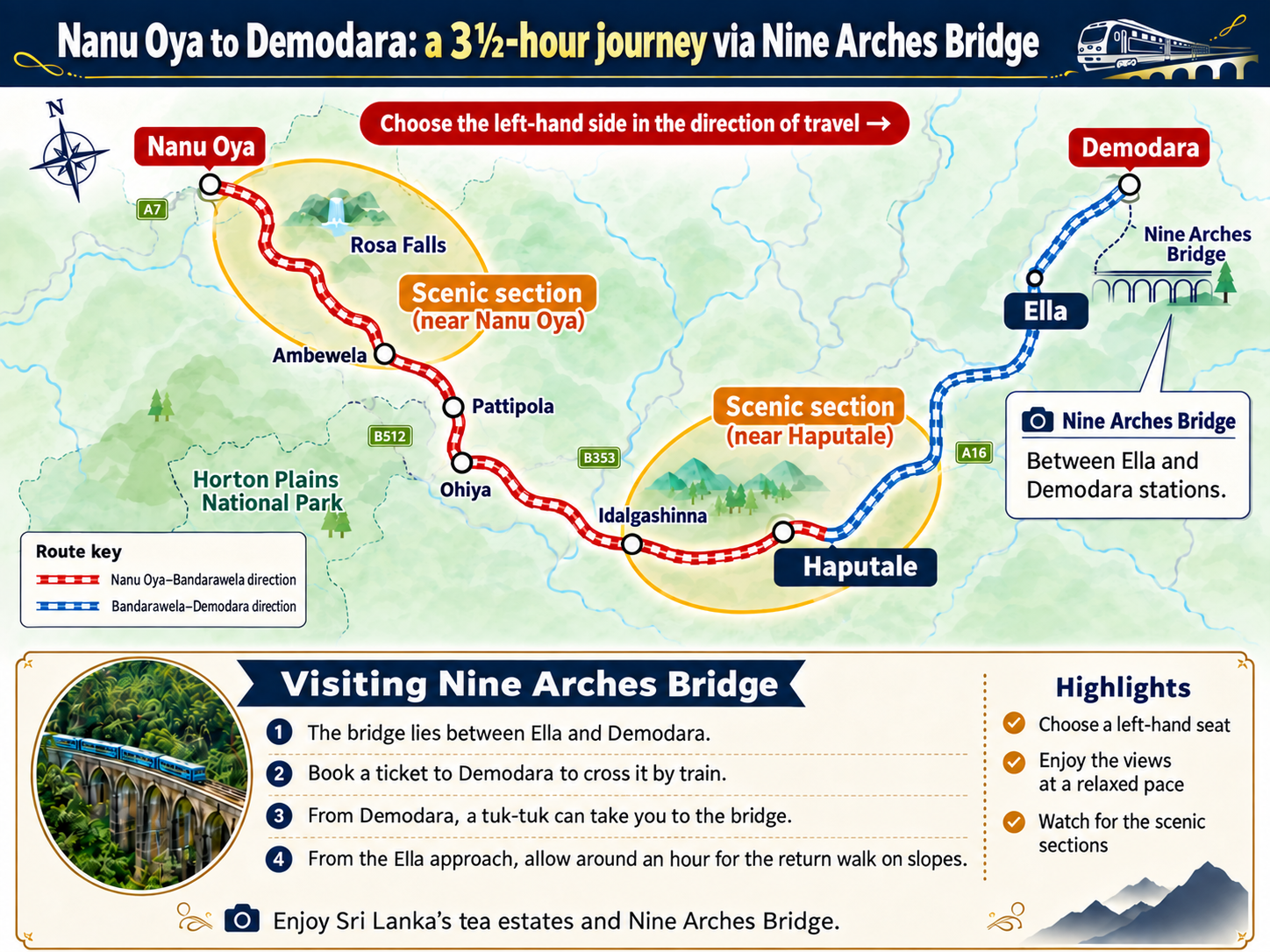
Nine Arches Bridge lies between Ella and Demodara. To cross it on the train, book or buy a ticket to Demodara, one station beyond Ella. Booking methods are explained below.
YuiAfter getting off at Demodara, we recommend visiting the bridge at a relaxed pace. Our tuk-tuk journey took about 10 minutes. A tuk-tuk seating three people cost approximately LKR 3,000 for the return trip during our visit.
ArjunWe recommend the Demodara approach. On the Ella-side approach we used, vehicles could not take us all the way, and the return walk on slopes took about an hour.


Nine Arches Bridge is a stone railway bridge near Ella in Sri Lanka’s central highlands. Its nine arches span a green valley and tea estates, making it a popular photography location. It was built in the colonial railway era in the 1920s; accounts commonly describe stone and brick being used when steel was scarce.
If you cannot reserve a seat and prefer a shorter ride, consider Haputale to Ella or Demodara. Allow roughly 1–1½ hours, depending on the train and destination. Same-day second-class reserved seats may sometimes be available if you reach the station early, but they are not guaranteed.
If you have not secured tickets in advance, the following flowchart shows LankaMe’s suggested approach.
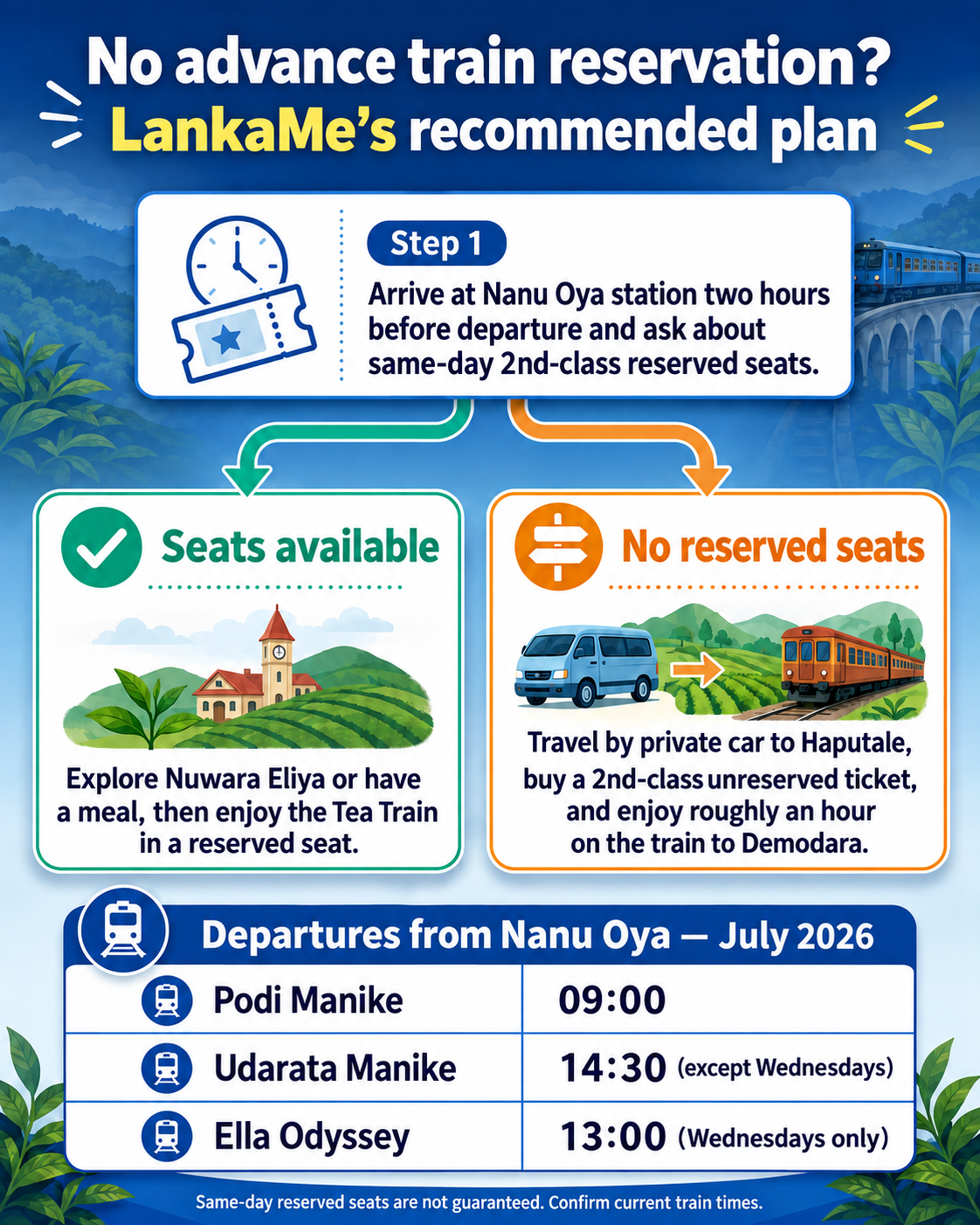
We normally ask travellers to try booking online first. If that fails, special arrangements may be possible through a LankaMe driver under the Royal Plan. Same-day reserved seats can also sometimes be purchased at the station when you arrive a few hours early. Availability is uncertain; the carriage classes are explained below.
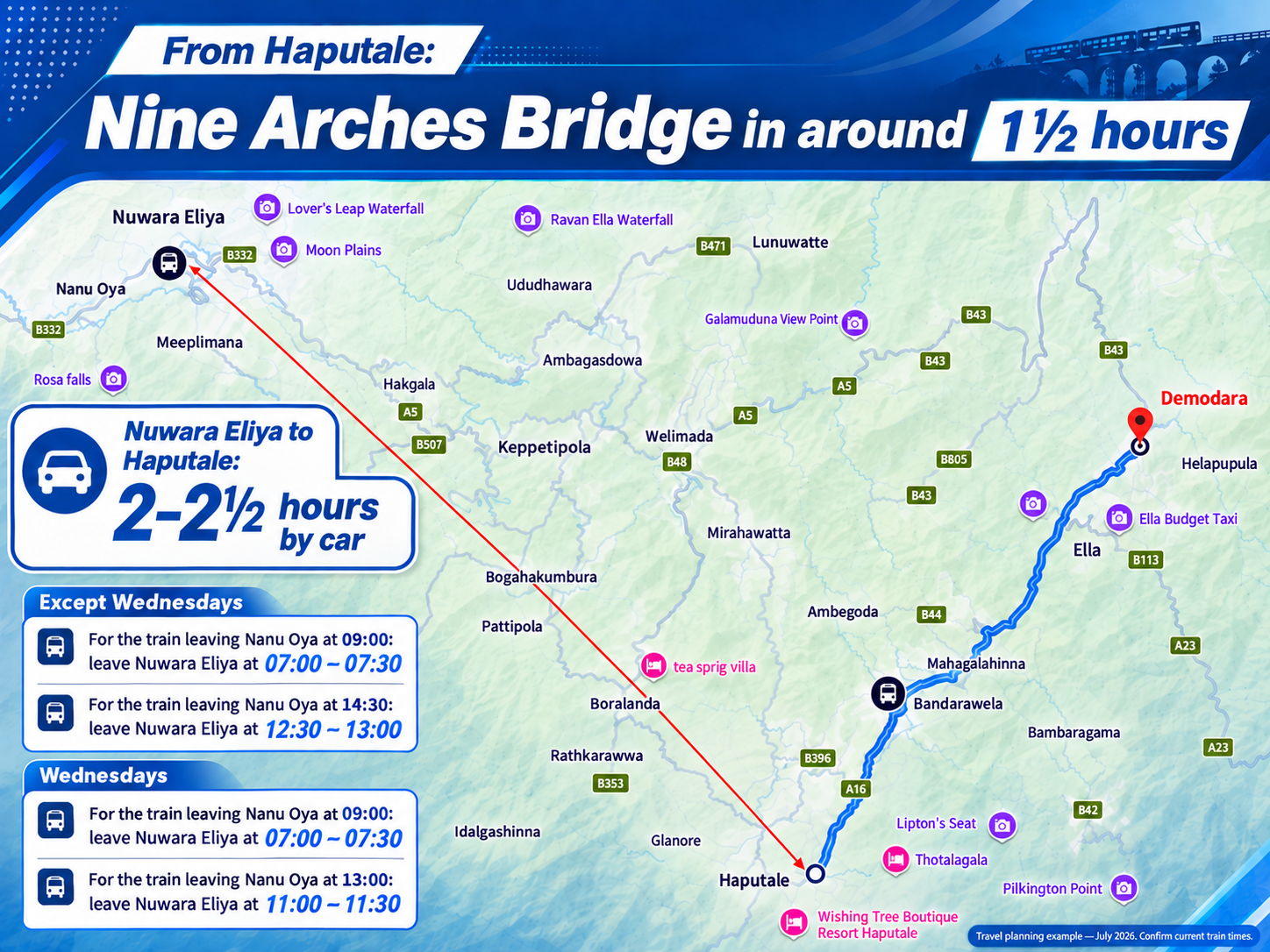
YuiThe drive from a Nuwara Eliya hotel to Haputale station takes about 2–2½ hours. For the morning connection illustrated below, leave Nuwara Eliya by 07:30 at the latest; around 07:00 gives you more time.
The photograph below shows Demodara’s modest station building.
YuiDemodara station may be small, but continue this far if you want to cross Nine Arches Bridge by train.

The photographs below show the Demodara timetable recorded in July 2026. The image on the right presents the same information more clearly. It includes services back towards Nanu Oya; confirm the current timetable for your trip.

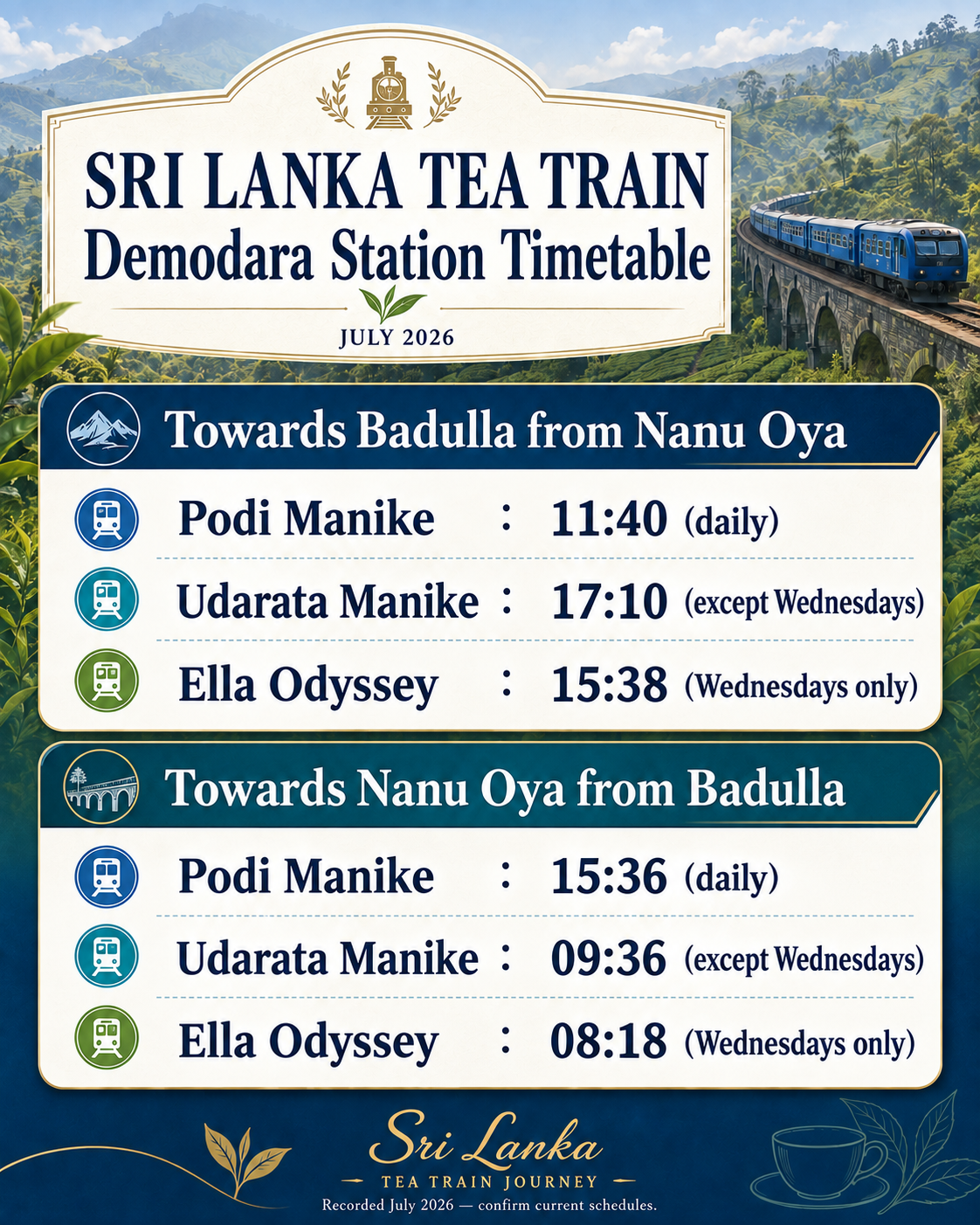
Demodara timetable recorded in July 2026. Confirm current train times.
Which seat class is best? First, second and third class compared
Sri Lankan trains have first-, second- and third-class carriages.
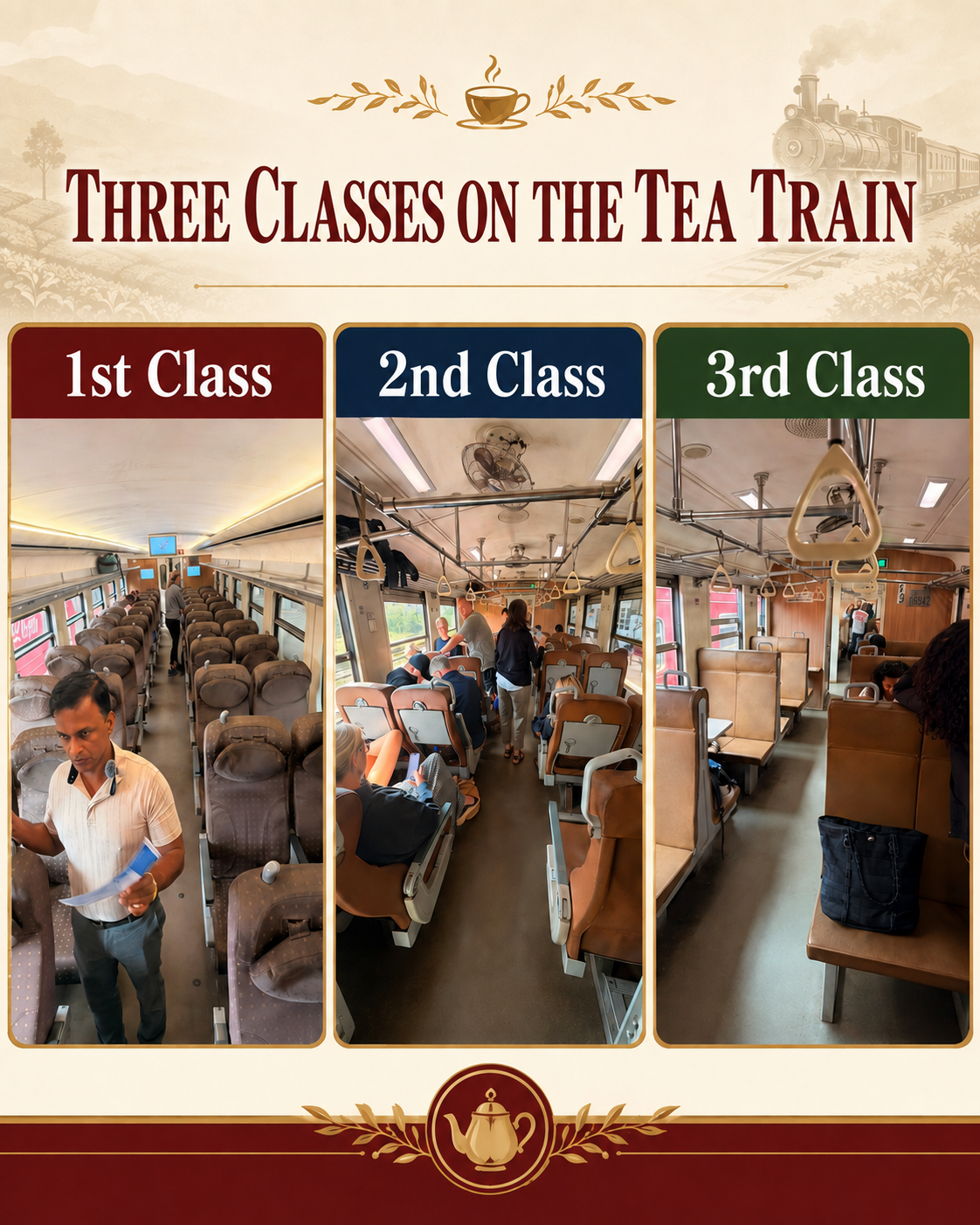
First class is generally the most comfortable, but we recommend reserved seats in second or third class for enjoying the tea-estate scenery.
First-class air-conditioned carriages often have windows that cannot be opened. Second- and third-class carriages commonly have opening windows, allowing a clearer view of the landscape. This is a highland journey, where air conditioning may be less important than on the coast.
The comparison below summarises the options. For a seat and a good view, our preferred choices are second-class reserved seats, followed by third-class reserved seats.
| Class | Windows/Doors | Likelihood of Getting a Seat | Crowding |
|---|---|---|---|
| Observation car (only on some trains) | Large windows (primarily for scenery) | High (reserved) | Low–Medium (popular; competitive) |
| 1st class (AC) | Often not openable | High (usually reserved) | Low |
| 2nd class (Reserved) | Many openable windows (non-AC) | High | Medium |
| 2nd class (Unreserved) | Many openable windows (non-AC) | Low–Medium (may have to stand) | High |
| 3rd class (Reserved) | Openable windows; more basic | High | Medium–High |
| 3rd class (Unreserved) | Openable windows (depends on the car) | Low | Highest |
LankaMe particularly recommends second class because its opening windows make it easier to enjoy the scenery. Here is how the photographs shown earlier in this guide were taken.
A member of the first-class train staff took these photographs during our trip. Second-class travellers could also ask staff in first class for assistance; we offered a tip of LKR 1,000 at that time. Ask the staff about the arrangements on your train and only use positions they permit.
Taking similar photographs from second class depends on whether the photographer can use a suitable position. There was also a queue during our trip, so it was easier to ask the staff near the front of first class about the arrangements.
On the train we travelled on, passengers could move between first and second class, but not between second and third class. Choose first or second class if this matters to you, and follow the staff’s instructions on your actual train.
How to book Sri Lanka Tea Train tickets
There are several ways to obtain tickets. Start with an online reservation, then consider the alternatives below if seats are unavailable.
Book online with 12Go.Asia or Bookaway
Sri Lanka Railways offers an official reservation system, but popular reserved seats can sell out very quickly. We therefore recommend 12Go.Asia as a practical option for travellers arranging tickets themselves.
Enter your departure station, destination and travel date to see available trains. The screenshots below are booking examples; displayed routes, prices and availability are not current offers.

Another option is Bookaway. As with 12Go.Asia, enter your departure station, destination and travel date to find the available services.
Choose 2nd Class Reserved Seat. If second-class reserved seats are unavailable, look for 3rd Class Reserved Seat.
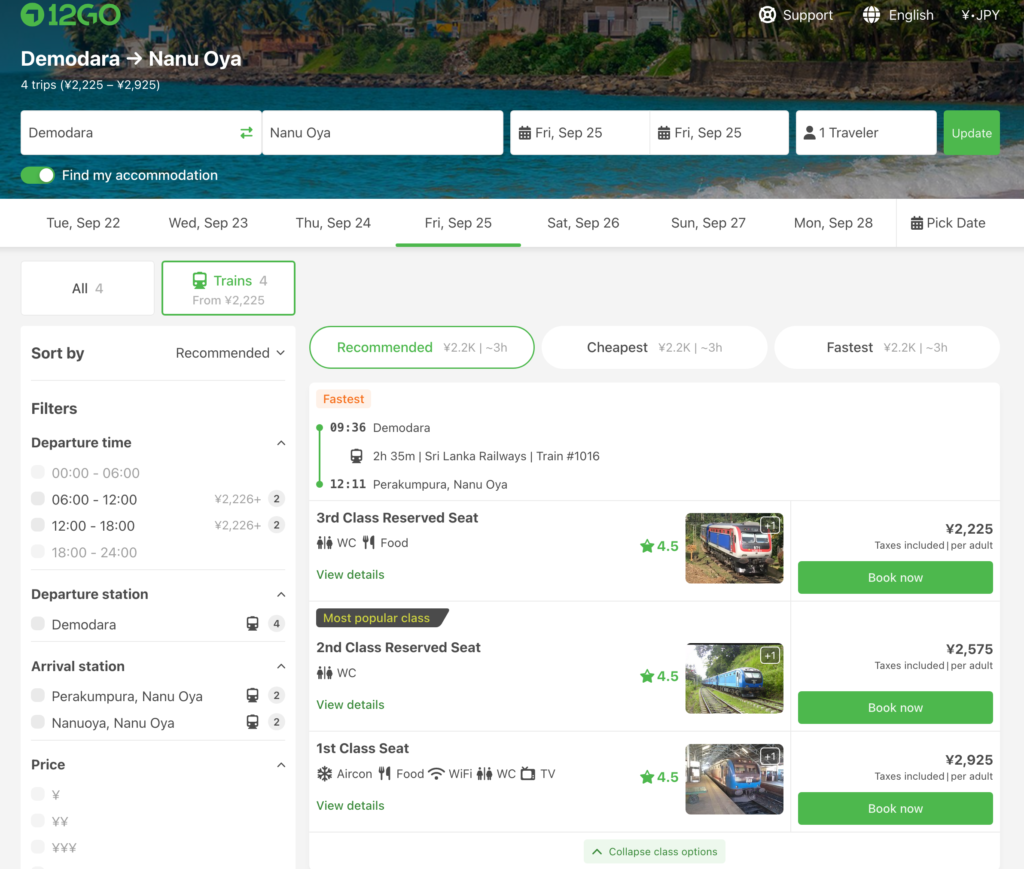
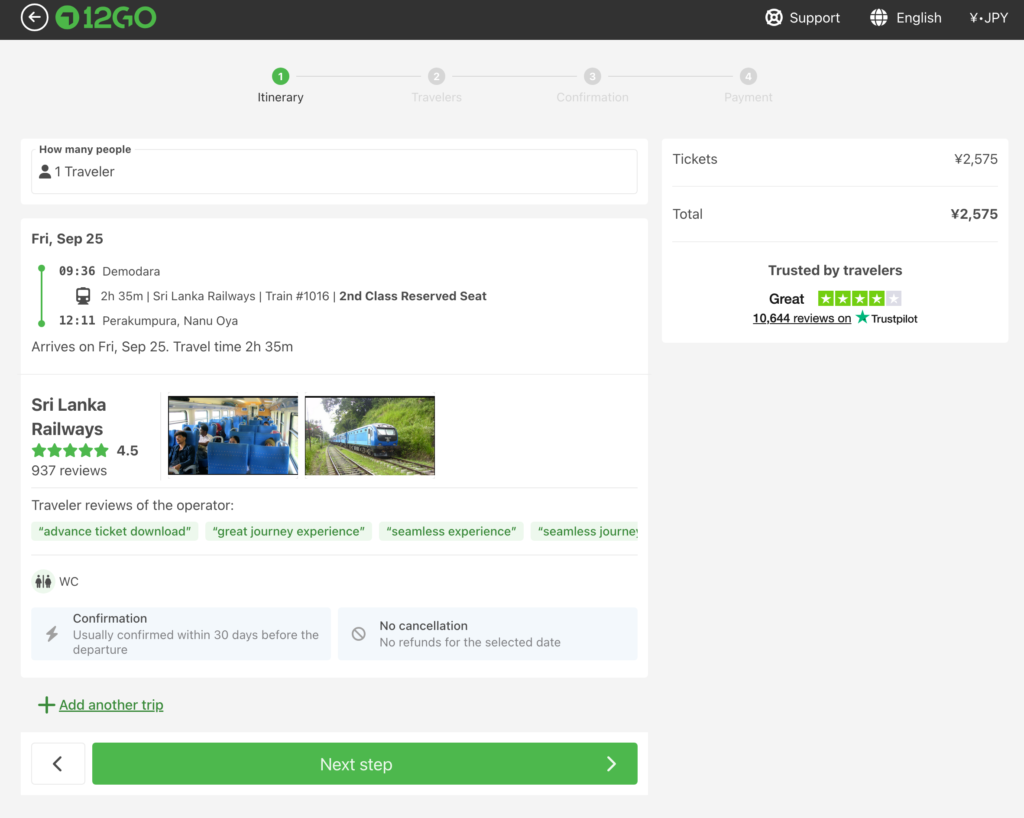
Click Book now to open the itinerary screen. Check the route, date, train and carriage class, then select Next step.
The next option asks what to do if your selected train or class is unavailable. Choose Not Flexible if your itinerary requires that particular service. Choose Flexible if another train or class can fit your schedule. Read the alternative-train and price-difference conditions before choosing.
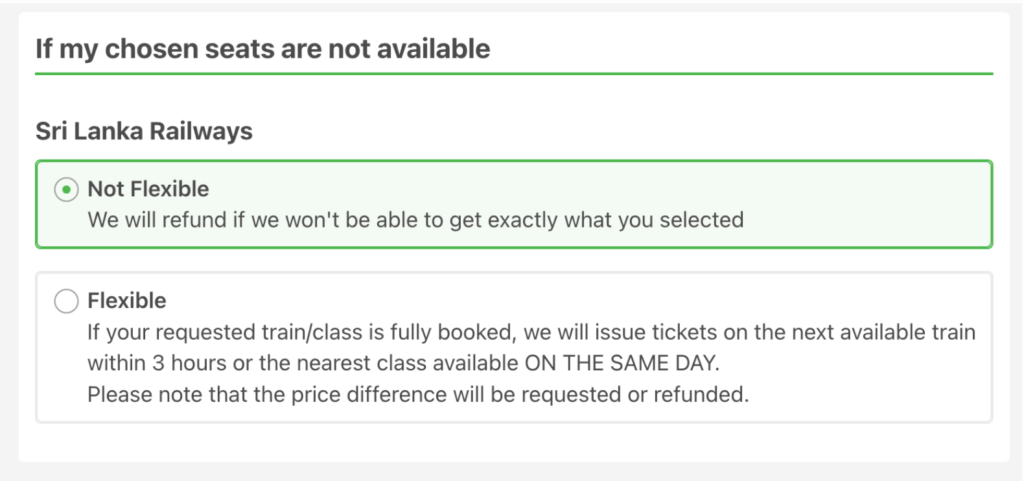
The booking flow below asks where paper tickets should be delivered. A hotel where you will stay before the journey is a practical choice. Enter the hotel details requested on the form and tell reception to expect the delivery.
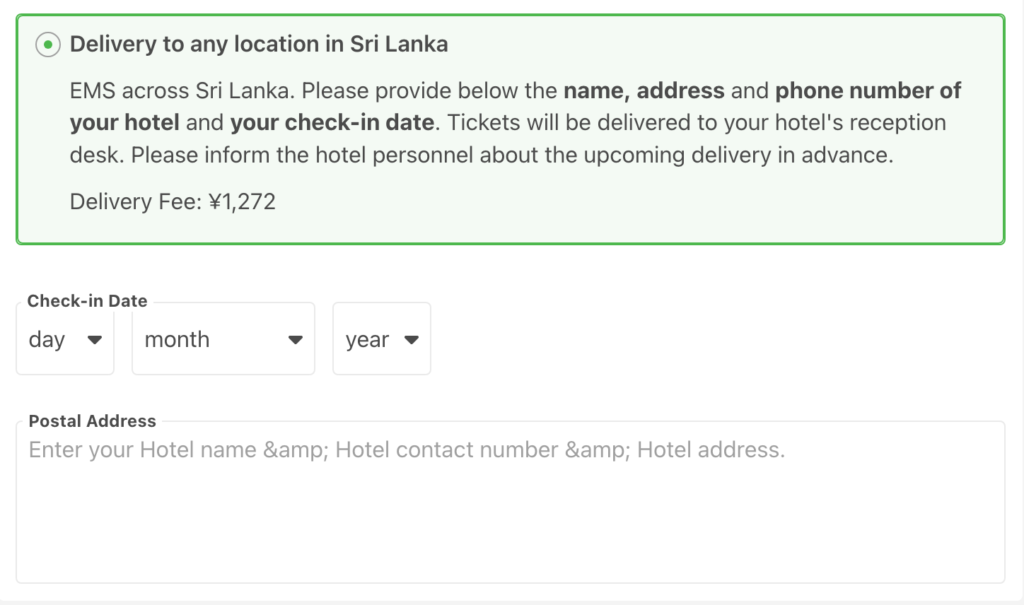
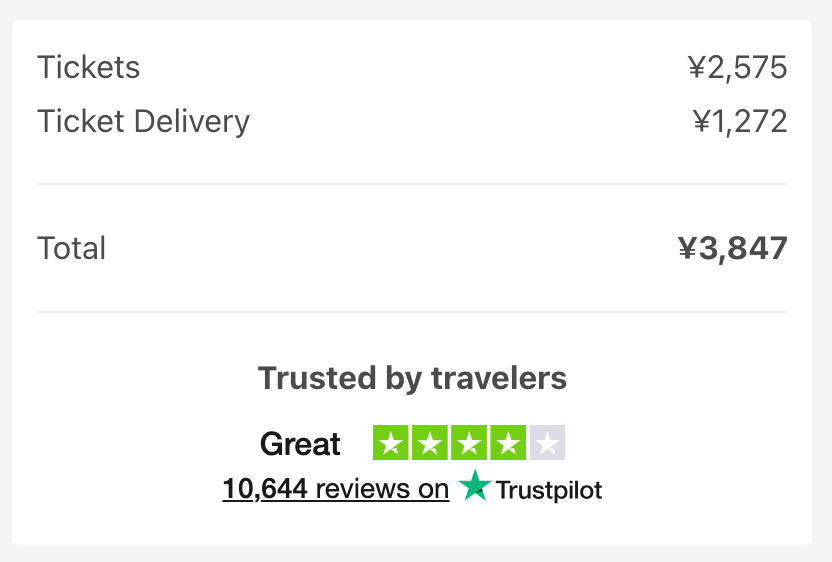
The example total includes a ticket-delivery fee in addition to the ticket price.
The next screen requests card payment to submit the booking request. The example warns that payment does not itself guarantee a ticket. Under the illustrated Not Flexible option, a refund is offered if the selected service cannot be secured. Check the terms shown for your own booking before paying.
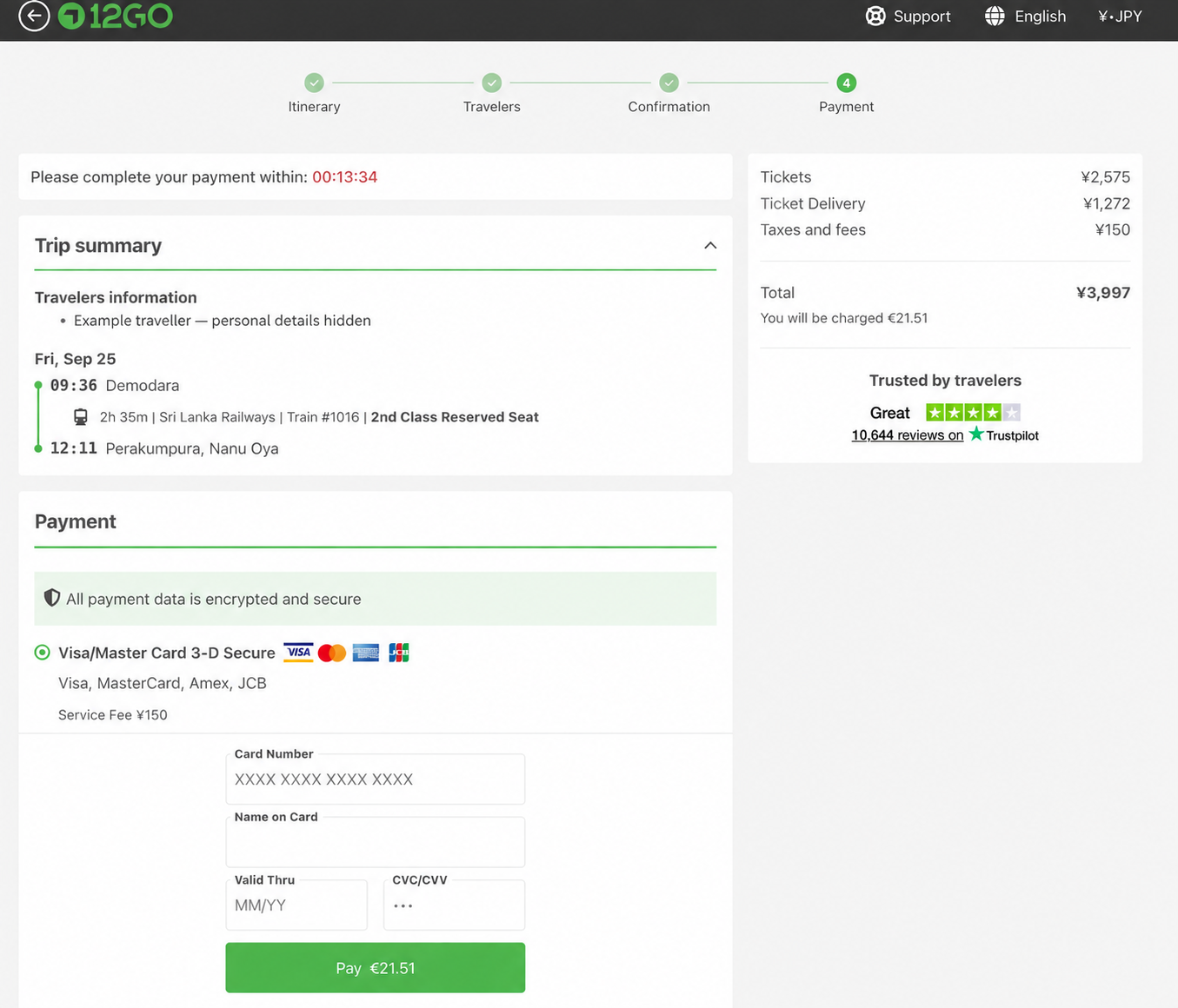
You cannot select an exact seat in this booking example, so a particular view or window-side position is not guaranteed.
Special ticket arrangements with LankaMe’s Platinum or Royal Plan
LankaMe’s Platinum and Royal Plans may provide access to special ticket arrangements. These cost more than ordinary online reservations, so we recommend securing tickets yourself through the booking sites above wherever possible. Treat special arrangements as a fallback.
We will try to obtain a seat on the left-hand side for the recommended views, but competition for seats means we cannot guarantee this.
Special arrangements do not guarantee a reservation. Seats can be difficult to obtain in busy periods, particularly January–March and July–September. Once obtained, these tickets cannot be cancelled. Reservation requests are accepted after a Royal Plan booking has been completed. Please contact us about the arrangements available under your plan before relying on them.
Where possible, we aim to arrange second-class reserved seats on the roughly two-hour Ambewela–Demodara section, with opening windows, tea-estate scenery and a crossing of Nine Arches Bridge. Prices vary by season, so contact us for details.
The additional cost reflects the special procurement arrangements. The online booking sites described earlier remain our first recommendation.
If you cannot book in advance
An unsuccessful advance reservation does not mean you must miss the Tea Train. Your driver can help you buy a ticket at a local station on the day.
Same-day tickets may be unreserved, and you may need to stand during busy periods such as January–March. Arriving several hours before departure may give you a chance of buying a second-class reserved seat, but this is not certain.
Follow the approach illustrated earlier, choosing a shorter highlight section if a reserved seat is unavailable.
LankaMe can help you plan a highlight section of roughly an hour, so the experience can still be enjoyable if you need to stand.
Summary
Sri Lanka’s Tea Train is an increasingly popular sightseeing experience. Choose your section carefully to enjoy tea-estate views and Nine Arches Bridge. For scenery with opening windows, we recommend second- or third-class reserved seats.
Book ahead when possible. If reservations are unavailable, a shorter journey of around an hour can still be a worthwhile way to experience the train.




コメント