Travel guide
Anuradhapura Attractions: Temples, Entrance Fees & Tour Route
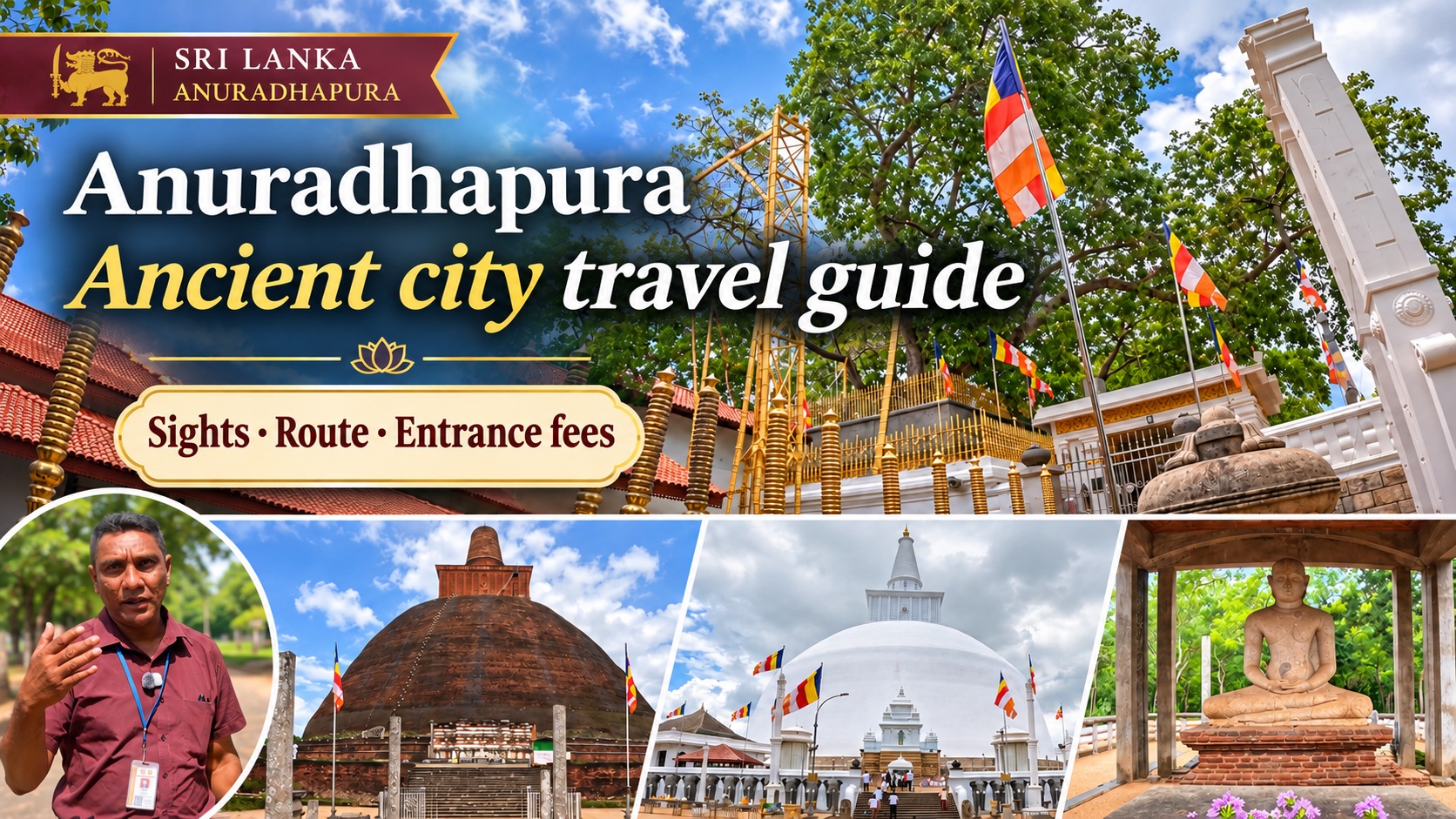
Plan an Anuradhapura tour with the main temples, a practical sightseeing route, entrance fees and LankaMe’s first-hand driving and visiting times.
Anuradhapura, in north-central Sri Lanka, was a royal capital for around 1,300 years. Its sacred city became a UNESCO World Heritage Site in 1982. Huge stupas, monastery ruins and the sacred Bodhi tree reveal the scale of an ancient Buddhist civilisation that remains a living place of worship.
The main attractions are spread across a large area. Choosing your route and transport in advance makes a real difference, especially when arriving from the airport area and continuing to Sigiriya. This guide follows the route visited by LankaMe staff, with observed journey times and practical ticket advice.
Japanese source reviewed by Ranjana D.M.R.U. Kumara, LankaMe’s local driver representative and SLTDA-licensed chauffeur guide (C-1525).
Getting to Anuradhapura from Negombo
Allow about four hours by private car from Negombo near Bandaranaike International Airport. On our field visit, we left the hotel at 07:30, took a toilet break from 09:30 to 10:00 and reached the Isurumuniya car park at 11:38. These are recorded timings, not a guaranteed transfer duration.
After sightseeing, many visitors continue south to a hotel around Sigiriya or Dambulla. Allow roughly another two hours to the Sigiriya area, with extra time for traffic, meals and hotel access.
Negombo
≈ 4 hours · Anuradhapura
≈ 2 hours · Sigiriya
Route overview; not to scale. Travel times are approximate.
Entrance fees: the archaeological ticket and separate temples
The Central Cultural Fund lists the Anuradhapura foreign-visitor ticket at USD 30 for an adult and USD 15 for the half ticket. The payable rupee amount follows the CCF rate. This archaeological ticket does not automatically cover every independently managed temple.
LankaMe’s Japanese field report recorded LKR 500 at Isurumuniya and normally LKR 500 at Sri Maha Bodhi, with free access observed between noon and 13:00. Treat these as visit observations and confirm current local charges and conditions. Walking the approximately 600 metres between Sri Maha Bodhi and Ruwanwelisaya is possible; ticket requirements depend on the sites and controlled areas visited, rather than simply whether you walk or drive.
| Stop | Cost / condition |
|---|---|
| CCF archaeological area — adult | USD 30 |
| CCF half ticket | USD 15; check eligibility with CCF |
| Isurumuniya | LKR 500 observed; reconfirm locally |
| Sri Maha Bodhi | LKR 500 normally observed; reconfirm locally |
How long does an Anuradhapura tour take?
For Isurumuniya, Sri Maha Bodhi and Ruwanwelisaya alone, allow around 1½–2 hours, excluding travel from another town. For the wider circuit below, our staff took 2 hours 38 minutes without a meal break; rain meant viewing Abhayagiri from the car.
A more comfortable visit needs around 3–3½ hours or longer, especially if you walk, photograph the ruins or spend time worshipping. A full day allows a much gentler pace. Our recorded visit is a practical example, not a recommended minimum for everyone.
| Time | Stop |
|---|---|
| 07:30 | Leave Negombo hotel |
| 11:38 | Arrive at Isurumuniya car park |
| 11:45–12:10 | Visit Isurumuniya |
| 12:15–12:38 | Visit Sri Maha Bodhi |
| 12:50–13:18 | Visit Ruwanwelisaya |
| 13:28–13:39 | Elephant Pond |
| 13:44–13:55 | Samadhi Buddha |
| 13:57–14:03 | Twin Ponds |
| 14:08–14:23 | Jetavanaramaya; then leave for lunch |
Anuradhapura attractions in visiting order
- Isurumuniya Temple
- Jaya Sri Maha Bodhi
- Ruwanwelisaya
- Elephant Pond — Eth Pokuna
- Abhayagiri Dagoba
- Samadhi Buddha Statue
- Kuttam Pokuna — Twin Ponds
- Jetavanaramaya
Isurumuniya Temple
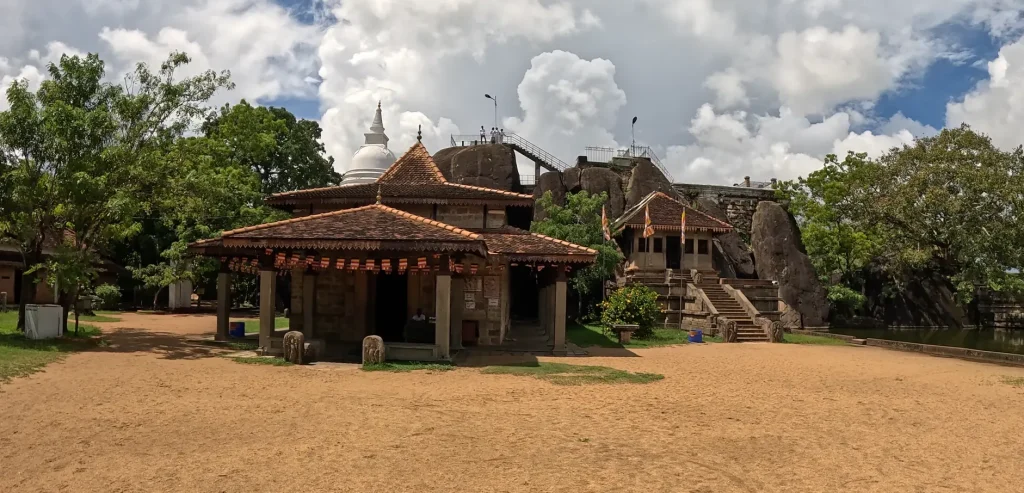
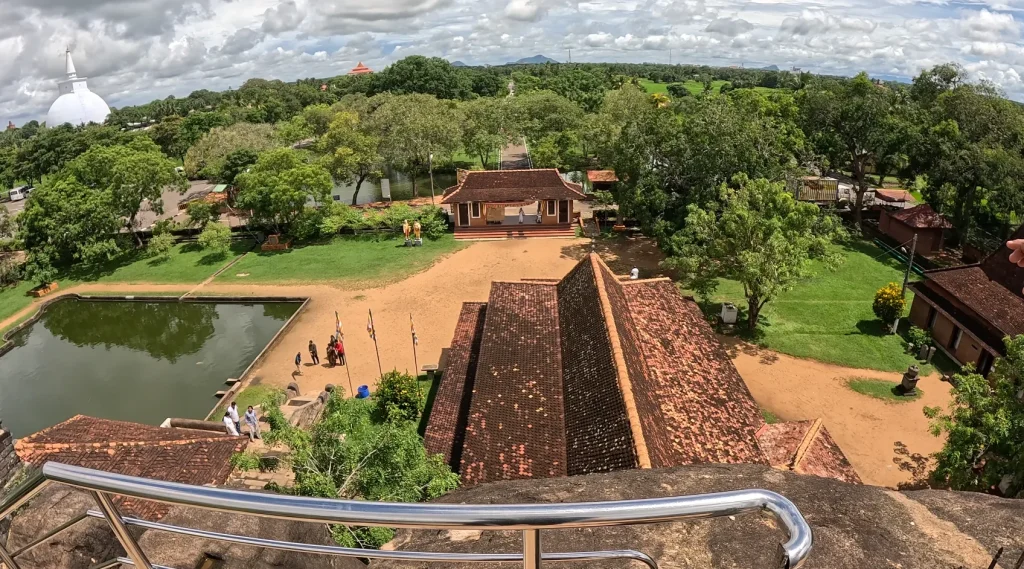
Start at this rock temple on the southern side of the circuit. Look for the reclining and seated Buddha images, the view from the rocky upper area and the celebrated Isurumuniya Lovers carving in the museum. Remove footwear where required and leave enough time for the uneven steps.
Jaya Sri Maha Bodhi
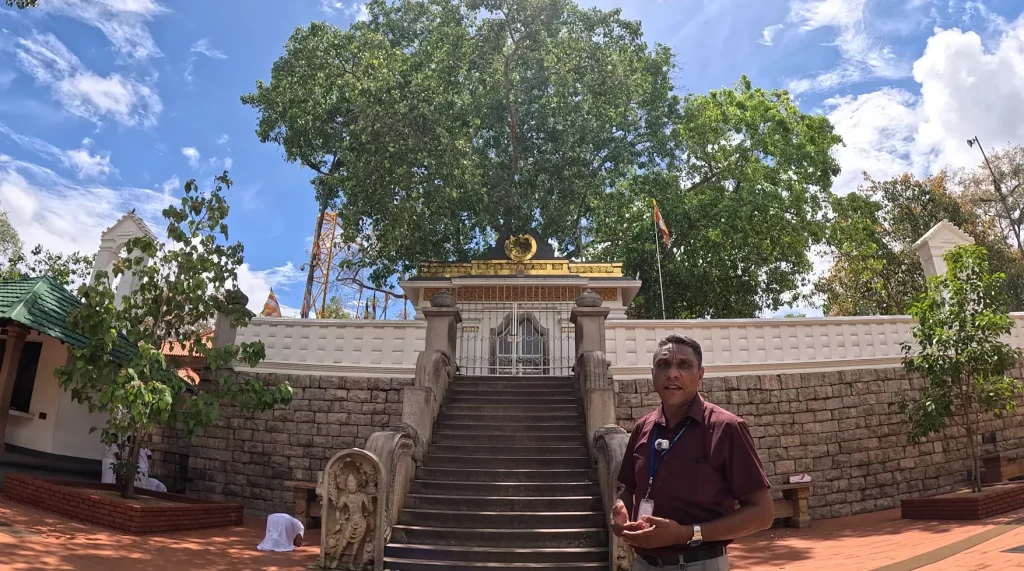
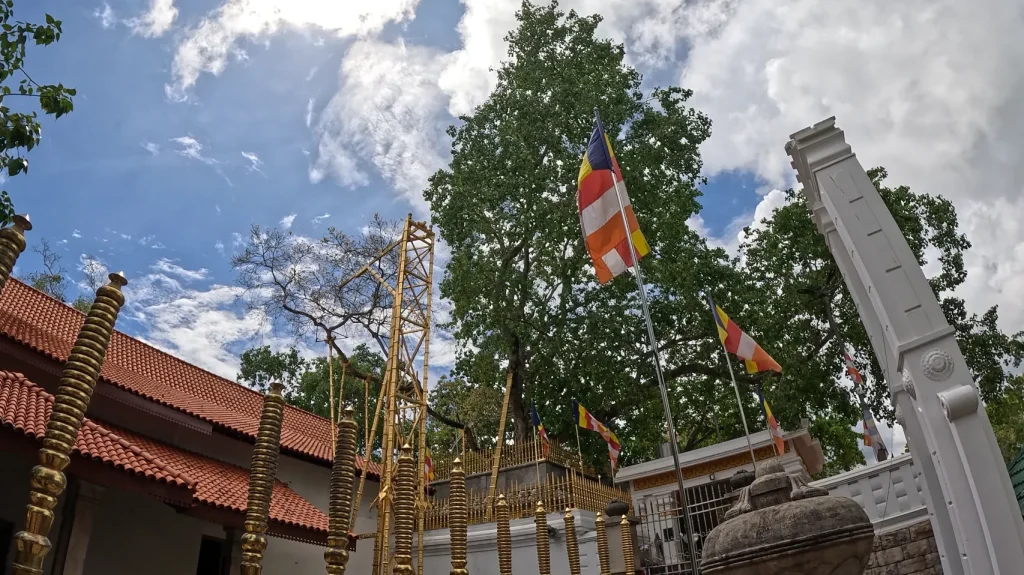
This sacred tree is traditionally linked to a cutting from the tree under which the Buddha attained enlightenment in India. Its recorded history extends back around 2,300 years. The old branch supported by golden props is easy to overlook among the surrounding foliage; a guide helps explain what you are seeing.
Ruwanwelisaya
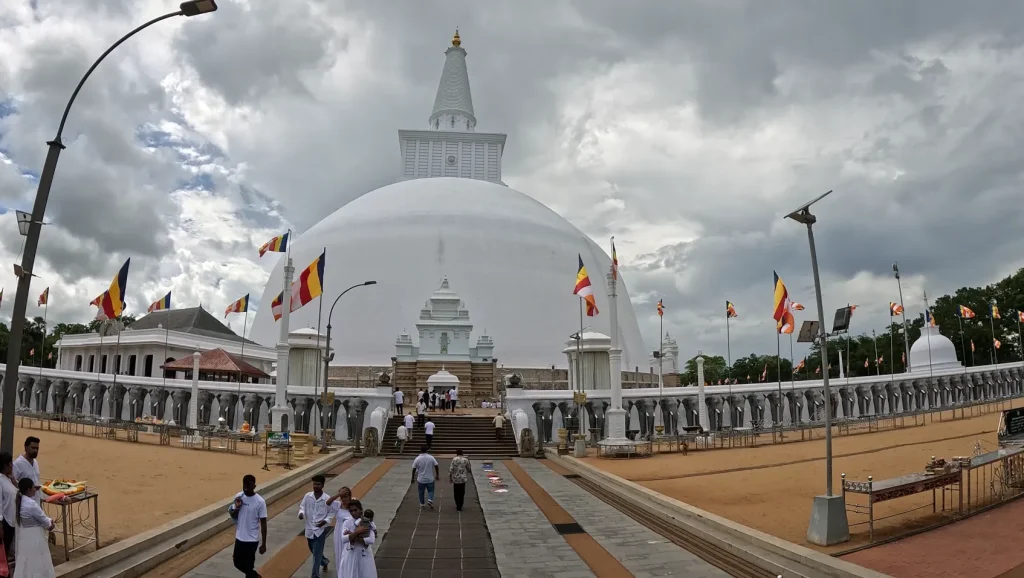
About 600 metres on foot from Sri Maha Bodhi, this huge white stupa is one of the city’s defining sights. King Dutugemunu began its construction in the second century BCE; his brother Saddhatissa completed it. Look closely at the elephant sculptures around the base and remember that pilgrims still come here to pray.
Elephant Pond — Eth Pokuna
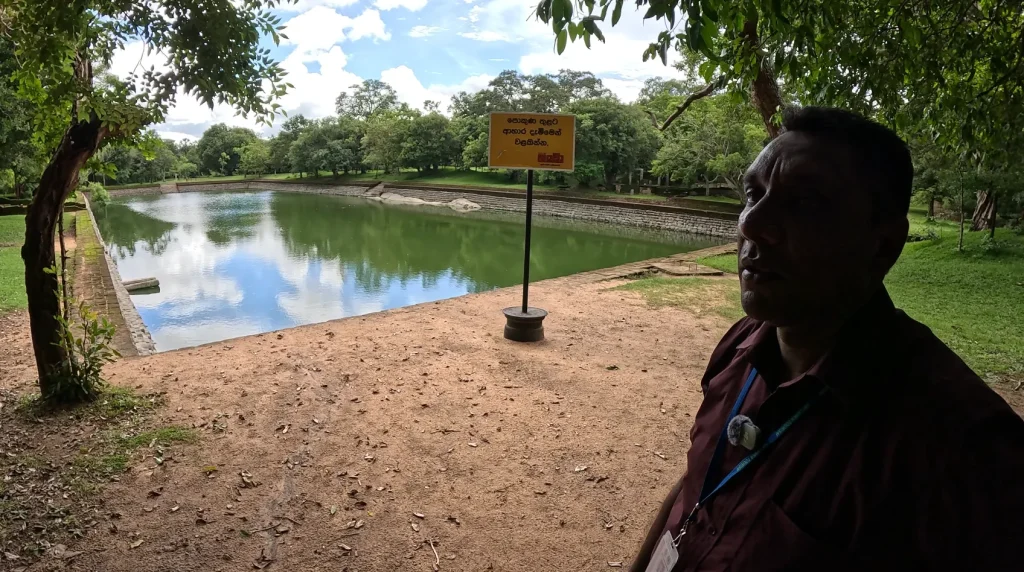
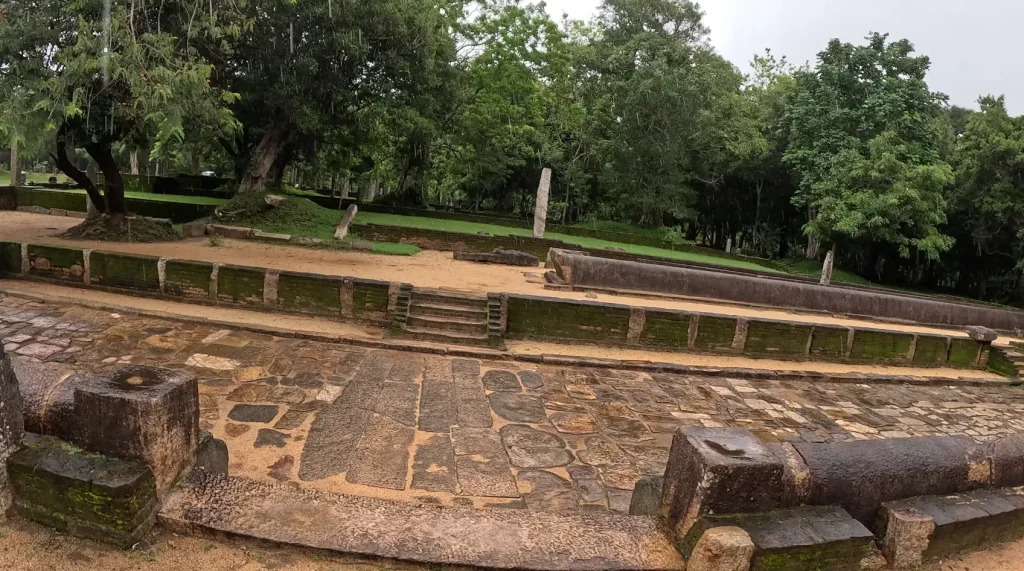
Within the Abhayagiri monastery area, this enormous reservoir measures roughly 159 by 53 metres and about nine metres deep. Nearby refectory ruins and long stone food troughs show how a large monastic community was supplied with water and meals.
Abhayagiri Dagoba
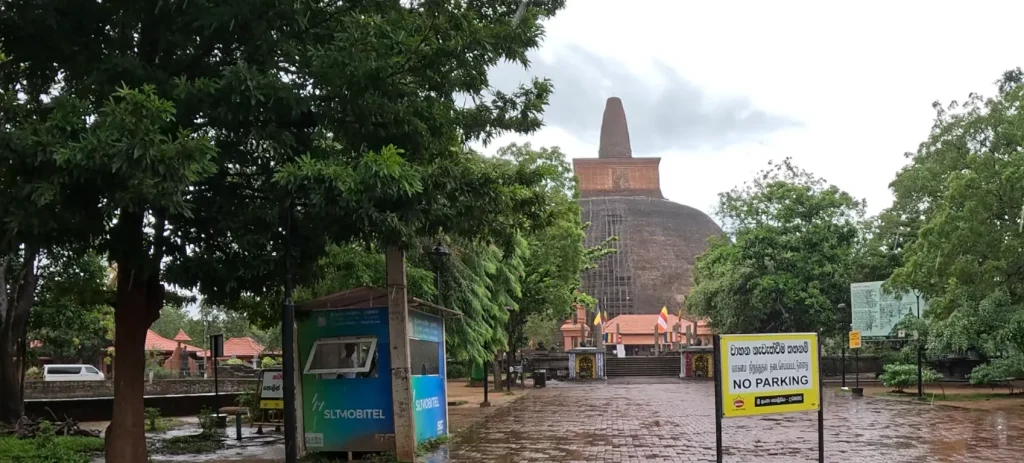
A vast brick stupa associated with King Valagamba in the first century BCE, Abhayagiri belonged to a major monastery and centre of Buddhist study. A downpour interrupted our visit, so we viewed it from the vehicle. Allow time to walk around it if conditions permit.
Samadhi Buddha Statue
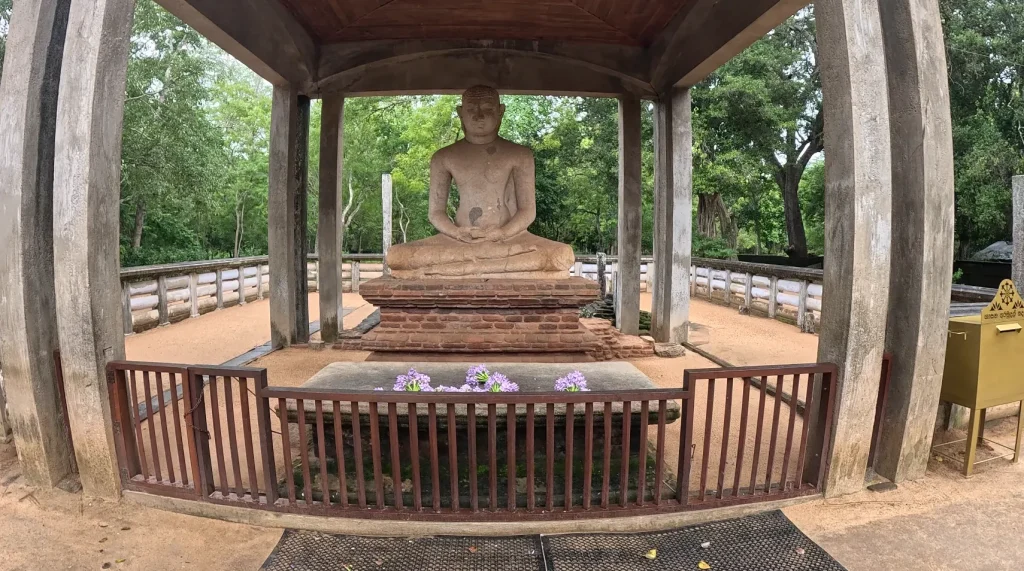
This approximately 2.2-metre stone Buddha, generally dated to around the fourth century, depicts deep meditation. The hands resting together, lowered eyes and calm expression make it a particularly moving stop. It was rediscovered fallen in 1886 and later restored.
Kuttam Pokuna — Twin Ponds
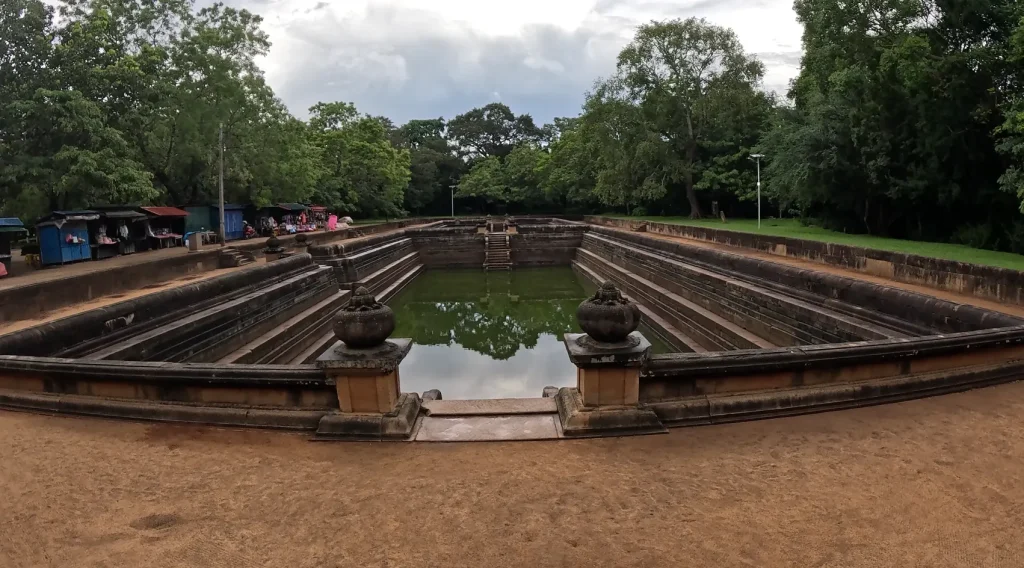
These two finely built bathing pools served the monastery. The larger pool is roughly 40 metres long and the smaller about 28 metres. Stone steps, water-filtering arrangements and naga carvings illustrate the skill of ancient Sri Lankan engineers and stoneworkers.
Jetavanaramaya
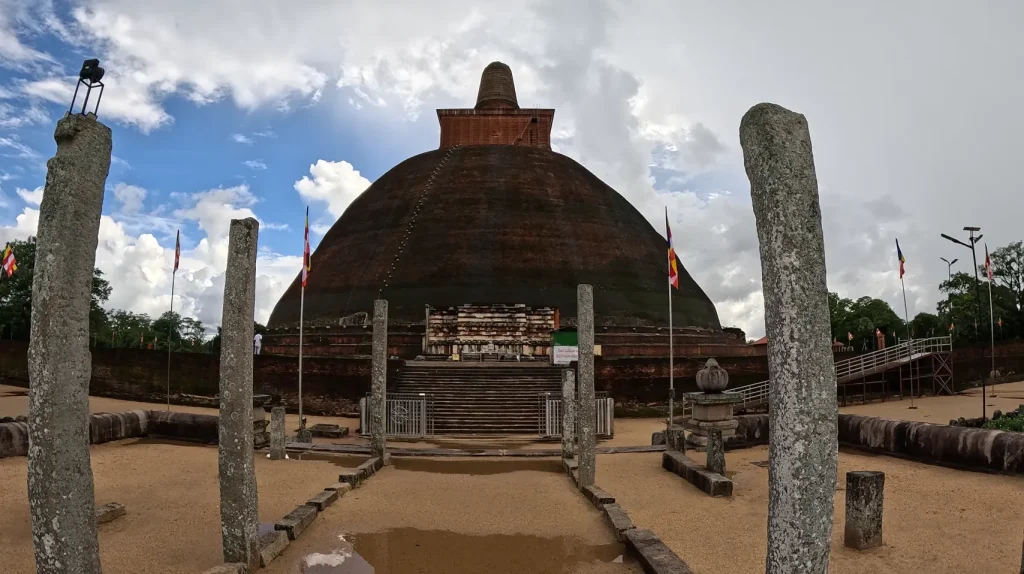
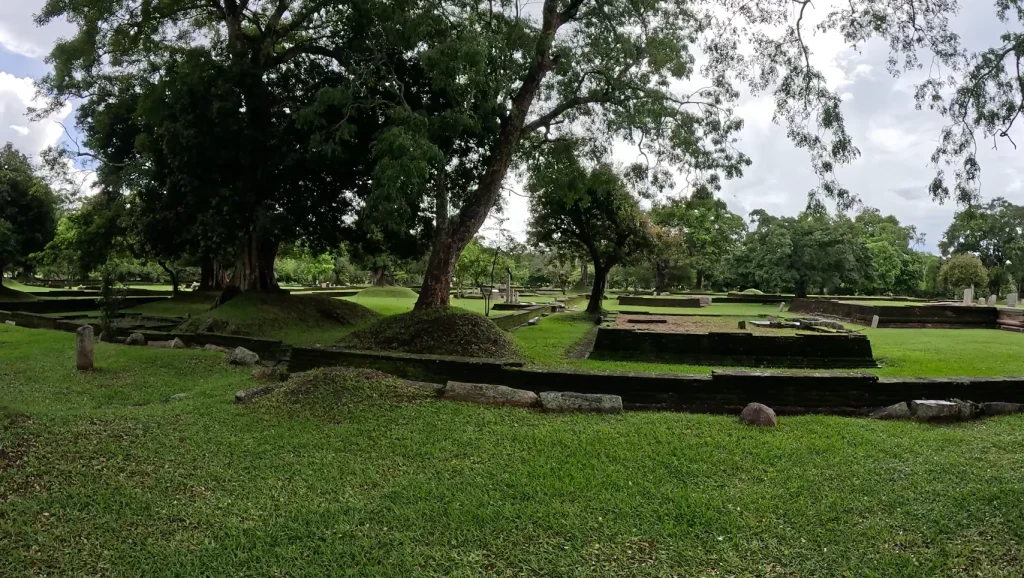
Begun under King Mahasena in the late third century and completed under his successor, this immense brick stupa originally rose to around 122 metres. Its surviving mass and surrounding monastic ruins remain impressive. Take a short walk among the nearby foundations before leaving the site.
Clothing, weather and guiding
Cover your shoulders and knees and follow each temple’s instructions about shoes, socks and photography. Exposed paving can be hot, while rain makes stone slippery. Carry water, sun protection and a small bag for footwear; allow breaks rather than rushing between sacred places.
Guiding arrangements matter here. Ask for a properly licensed chauffeur guide if you want historical explanations inside the sites. LankaMe’s Japanese report describes guided visits under its Platinum and higher plans; confirm the guide licence, language, inclusions and current plan before booking.
Include Anuradhapura in your Sri Lanka itinerary
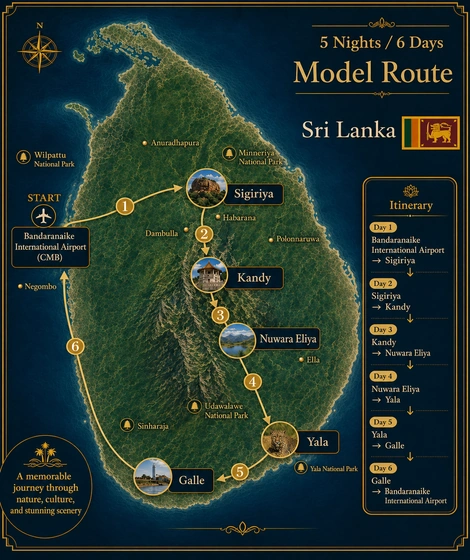
With five nights or more in Sri Lanka, Anuradhapura can be considered as an early stop before Sigiriya. Tell LankaMe your arrival time, hotel plans and preferred pace so the transfer and sightseeing fit together comfortably.
Based on LankaMe’s Japanese field report